The Alentejo Coast: Why Comporta Became Europe's Most Coveted Secret Address
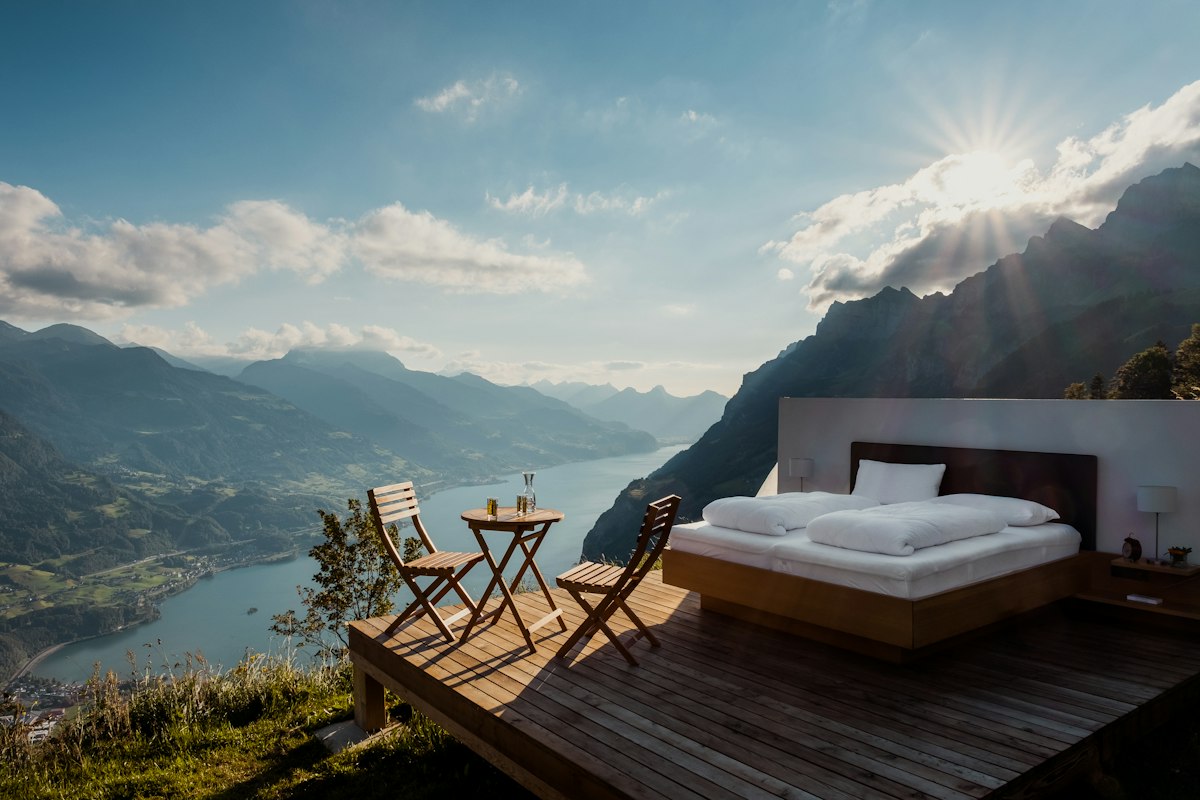
An hour south of Lisbon, past the Arrábida mountains and across the Sado estuary, the landscape changes abruptly. Vineyards give way to rice paddies. Cork oaks replace eucalyptus. The road narrows, sand drifts across the tarmac, and the Atlantic — vast, cold and uncrowded — appears through a curtain of maritime pines. This is the Alentejo coast, and at its heart lies Comporta, the village that rewrote the rules of European luxury.
The Espírito Santo Legacy
Comporta's story begins with land ownership. For most of the 20th century, the Herdade da Comporta — a 12,500-hectare estate encompassing rice fields, pine forests and 60 kilometres of pristine coastline — belonged to the Espírito Santo family, Portugal's most powerful banking dynasty. The estate was managed as a working agricultural property: rice cultivation, cork harvesting, cattle grazing. The beaches remained empty. The villages remained poor. And that very emptiness, that almost deliberate absence of development, became Comporta's greatest asset.
When the Espírito Santo banking empire collapsed in 2014, the estate entered a complex restructuring. Vanguard Properties, a Portuguese-Angolan development group, acquired the development rights and began — carefully, slowly, with an awareness that Comporta's value lay precisely in what it lacked — to transform sections of the estate into residential communities.
Barefoot Luxury: An Aesthetic Philosophy
The phrase "barefoot luxury" has become a marketing cliché, but in Comporta it describes something real: an aesthetic and social code that emerged organically from the landscape. The architecture is low-rise, timber-framed, with thatched or dark-stained roofs that reference the traditional cabanas dos pescadores — fishermen's huts — that dot the coast. Interiors favour raw materials: lime-washed walls, reclaimed wood, linen, cork, ceramic. Air conditioning exists but is concealed. Pools are dark-bottomed, reflecting the sky rather than broadcasting turquoise.
This is not minimalism for its own sake. It is a deliberate rejection of the Mediterranean luxury vernacular — the white-and-blue, the infinity pool, the marble lobby — in favour of something earthier, more Nordic-inflected, more aligned with the wild Atlantic landscape. Comporta's architectural language owes more to Scandinavian summer houses and Japanese wabi-sabi than to the Côte d'Azur or Ibiza.
The Market: What Money Buys
Comporta's real estate market operates across several tiers. At the entry level — €500,000 to €1.5 million — buyers access apartments and small villas within the new developments: Pestana Tróia Eco-Resort, Comporta Dunes, and the expanding communities along the EN261-1 road. These offer shared amenities, proximity to the beach, and the Comporta lifestyle in a managed environment.
The mid-tier — €1.5 million to €5 million — delivers standalone villas on plots of 1,000 to 5,000 square metres, typically within gated communities but with genuine privacy, private gardens and often direct or near-direct beach access. Architecture at this level is curated: buyers work with approved architects to ensure aesthetic coherence with the Comporta DNA.
The top tier — €5 million to €15 million and beyond — is where Comporta becomes exceptional. These are estates of one to five hectares, frequently encompassing multiple structures: a main house, guest cabanas, a pavilion for yoga or meditation, stables, organic kitchen gardens. Properties at this level are architectural statements, often commissioned from Portugal's leading practices: Aires Mateus, Manuel Aires Mateus, ARX Portugal, or Bak Gordon Arquitectos.
The most extraordinary Comporta properties never reach the open market. They circulate through a network of discretionary agents — Portuguese firms with deep local connections — and sell to buyers who have already spent several seasons renting in the area, understand the culture, and are prepared to commit to a multi-year build.
Beyond Comporta: Melides and Grândola
As Comporta prices have risen and availability has tightened, the luxury market has expanded south along the coast. Melides — a sleepy village with a whitewashed church, a single main street and access to one of Portugal's most beautiful lagoon beaches — has emerged as Comporta's creative-class sibling. Christian Louboutin's restoration of the Vermelho hotel and several surrounding properties has drawn an international design crowd. Jacques Grange, Philippe Starck's former partner, has built here. A constellation of small galleries, design shops and farm-to-table restaurants has followed.
Further south, Grândola and Santiago do Cacém offer larger plots at lower prices, attracting buyers who want the Alentejo coast lifestyle with more land and more solitude. The CostaTerra Golf and Ocean Club, a Discovery Land Company development between Melides and Grândola, represents the institutional arrival of American-style luxury resort development, with villas from €3 million and membership fees that signal serious commitment.
The Infrastructure Question
Comporta's appeal has always been its remoteness, but remoteness creates challenges. The Sado estuary crossing — either the ferry from Setúbal to Tróia or the inland route via the A2 motorway — adds time and complexity. Lisbon airport is 90 minutes away in good traffic, two hours or more in summer. Medical facilities are limited. International schools are distant. Year-round dining and retail are improving but remain far from the level that equivalent investment would provide in Cascais, the Algarve or the Riviera.
These constraints are, paradoxically, part of the proposition. Comporta buyers are not seeking convenience — they are seeking escape. The journey itself, the crossing of the estuary, the transition from city to wild coast, is part of the experience. And for those who require year-round urban infrastructure, Lisbon is close enough to maintain a dual life: city apartment plus coastal retreat.
The Investment Outlook
Comporta's trajectory suggests continued appreciation, driven by absolute scarcity (the coastline is finite and heavily protected by Natura 2000 designations), increasing international recognition, and the Alentejo's growing reputation as a gastronomic and wine destination. Land prices have doubled in the past five years. Construction costs have risen 40%. And the buyer pool — once predominantly Portuguese, French and Scandinavian — now includes Americans, Brazilians, South Africans and Middle Eastern families.
The risk is overbuilding. If the balance between development and preservation tips — if the rice paddies become parking lots and the pine forests become gated communities — Comporta will lose the very quality that created its value. The regulatory environment is protective, but regulation follows money, and the money flowing into the Alentejo coast is now substantial.
For discerning buyers, the window is now. Comporta remains one of Europe's last stretches of undeveloped luxury coastline — a place where €5 million buys not just a house but an entire way of living. In five years, that may no longer be true.
Published by Latitudes Media · More from Portugal Latitudes