Amarante: How the Tâmega's Romanesque Bridge Town Became Northern Portugal's Most Poetically Situated Luxury Address
March 2026 · 14 min read
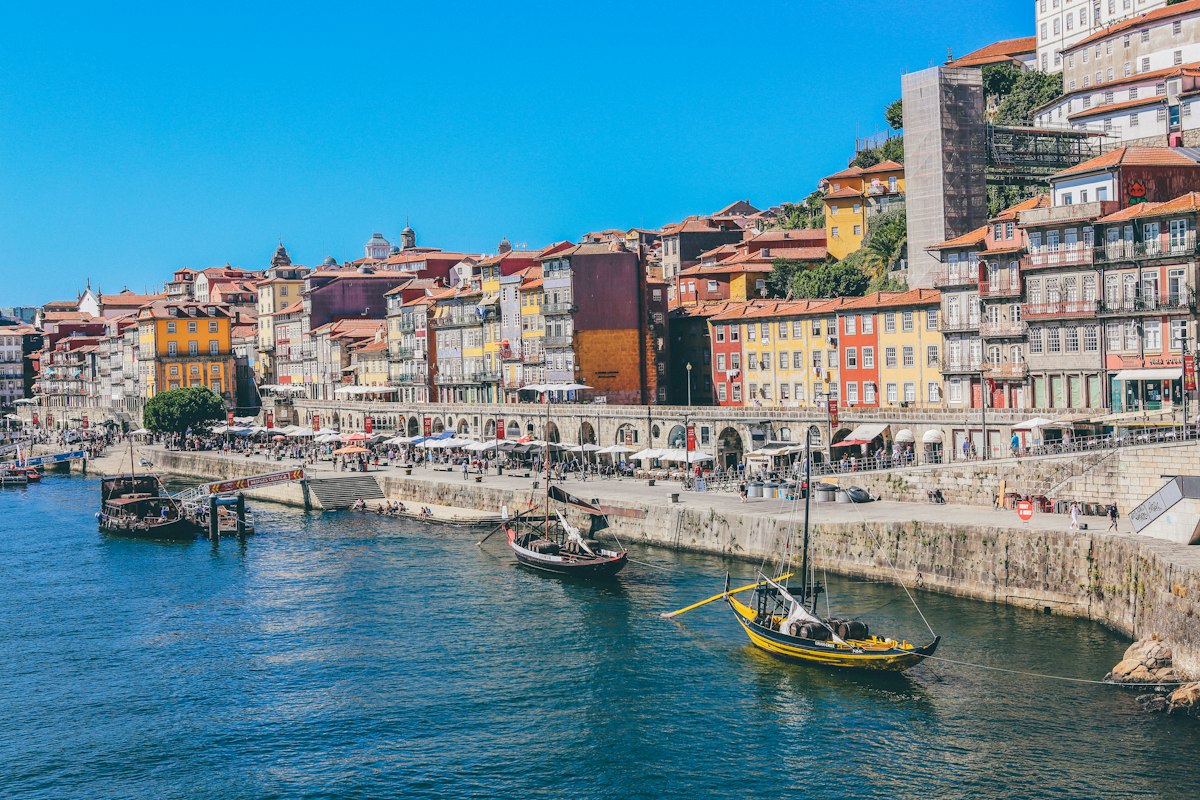
Portugal's north possesses a concentration of architectural beauty that visitors expecting the country's Algarve reputation — sun, golf, retired British couples — find genuinely startling. Between Porto and the Douro valley lies a landscape of granite villages, Romanesque churches, and river valleys of such pictorial intensity that they appear to have been composed rather than geologically formed. Amarante, straddling the Tâmega river sixty kilometres east of Porto, is the masterpiece of this landscape: a town of 12,000 whose physical arrangement — Romanesque bridge, Renaissance monastery, eighteenth-century wooden-balconied houses reflected in green water — constitutes one of the most visually complete urban compositions in Iberia.
The Bridge and the Monastery
Amarante's identity is organised around a single architectural axis: the Ponte de São Gonçalo, a three-arched granite bridge of the sixteenth century, and the Igreja e Convento de São Gonçalo that rises from the bridge's eastern bank with the verticality of a cliff. São Gonçalo — the town's patron saint, a thirteenth-century preacher associated with fertility, matchmaking, and the kind of earthy religiosity that the Counter-Reformation attempted to suppress — gives Amarante both its spiritual identity and its most photographed composition. The bridge, the monastery's Renaissance portal and Baroque dome, and the cascade of wooden-balconied houses descending to the river create an ensemble that has attracted painters since the eighteenth century and photographers since the invention of the medium.
The monastery itself, begun in 1540 and not completed until 1620, is a building of remarkable architectural ambiguity. Its portal, attributed to Italian craftsmen working in the Manueline-Renaissance transitional style, combines classical columns and pediments with the organic, almost biological decorative profusion that characterises Portuguese architecture's resistance to pure classicism. Inside, the cloister — two storeys of granite arcades surrounding a garden of camellia and orange — achieves the contemplative equilibrium that only the best monastic architecture can produce: a space simultaneously open and enclosed, of this world and not.
The Phallic Pastries of São Gonçalo
Every June, during the Festas de São Gonçalo, the town's confeitarias produce and sell thousands of pastries in explicitly phallic forms — a tradition that links Amarante's patron saint to pre-Christian fertility rites with a directness that the Church has found alternately embarrassing and commercially useful for centuries. These pastries — doces fálicos, sweetened egg bread shaped with anatomical frankness — are exchanged between potential lovers as symbols of desire, and their continued production represents one of the most remarkable survivals of folk tradition in modern Europe.
Beyond the festival season, Amarante's confectionery tradition sustains a year-round economy of convent sweets — doces conventuais — that ranks among Portugal's finest. The Papos de Anjo (angel's double chins), Foguetes (firecrackers), and Brisas do Tâmega (breezes of the Tâmega) produced by the town's confeitarias follow recipes developed by the nuns of Amarante's dissolved convents, recipes in which egg yolks, sugar, and almonds are combined with a chemical precision that produces textures — gelatinous, crystalline, silken — for which the English language lacks adequate vocabulary. At €15 to €25 per kilogram, these confections are among Portugal's most accessible luxury foods — and among its most genuinely irreplaceable, since the recipes are local, the techniques are manual, and the flavours cannot be industrially replicated.
The Amadeo de Souza-Cardoso Legacy
Amarante's most improbable cultural asset is its museum dedicated to Amadeo de Souza-Cardoso (1887–1918), one of the most important European modernist painters and the town's most famous native son. Amadeo — who studied in Paris, exhibited alongside Modigliani, Brancusi, and the Delaunays, and was producing work of Cubist and Futurist sophistication by 1912 — died in the Spanish Flu pandemic at thirty, leaving a body of work whose quality and historical significance were only fully recognised decades after his death.
The Museu Municipal Amadeo de Souza-Cardoso, housed in the former Dominican convent adjacent to the São Gonçalo monastery, contains the most important collection of Amadeo's work alongside a broader survey of Portuguese modernism and contemporary art. The museum's quality — in terms of both collection and installation — far exceeds what a town of Amarante's size would normally support, and its presence transforms the cultural equation of the Tâmega valley. For the art-engaged buyer considering Northern Portugal, Amarante offers something that no beach resort can provide: a living connection to one of the great under-recognised narratives of European modernism.
The Tâmega Valley
The Tâmega river, which rises in Spanish Galicia and flows south through the mountains of Trás-os-Montes before joining the Douro below Amarante, creates a valley landscape of exceptional beauty. Steep granite hillsides covered in pine and eucalyptus descend to a river whose green, mineral-rich waters move with the deliberate pace of a river that has been carving its valley for millions of years. Vineyards — producing the Vinho Verde sub-region wines of Amarante, lighter and more mineral than the Douro's robust reds — terrrace the south-facing slopes, and quintas of the seventeenth and eighteenth centuries, built in granite with the architectural sobriety of the Portuguese north, punctuate the valley at intervals that suggest a designed landscape rather than an accidental one.
The valley's microclimate — protected from Atlantic weather by the Serra do Marão to the west, receiving more sunshine than coastal Porto while retaining the rainfall that keeps the landscape green through summer — creates growing conditions that are ideal for both viticulture and residential amenity. Summers are warm but not oppressive (average July maximum: 30°C), winters are mild by northern standards (average January minimum: 4°C), and the transitional seasons — March through May, September through November — produce the kind of gentle, luminous weather that makes Northern Portugal's climate arguably more liveable year-round than the Algarve's dramatic contrast between summer scorching and winter rain.
The Property Market
Amarante's residential market remains one of Northern Portugal's most accessible. In the historic centre, townhouses of 150 to 250 square metres — granite construction, wooden balconies, river views — trade at €1,200 to €2,500 per square metre, prices that reflect the town's distance from Porto's expat-driven inflation (Amarante is 60 kilometres east, a 45-minute drive by autoroute) and the Portuguese property market's persistent undervaluation of inland locations relative to coastal ones.
The surrounding countryside offers quintas — estate properties of 5 to 50 hectares, comprising a main house (often seventeenth or eighteenth century, in various states of restoration), agricultural dependencies, vineyards, orchards, and woodland — at €200,000 to €1.5 million. These properties, which would command ten to twenty times these prices in Tuscany or Provence, represent what may be Western Europe's most significant remaining arbitrage opportunity in luxury rural real estate. The buyer who acquires a Tâmega valley quinta obtains not merely a residence but a landscape, a microclimate, and a cultural context — Romanesque churches, modernist art, convent pastries, granite villages — that comparable regions long ago priced beyond the reach of all but the ultra-wealthy.
The Strategic Position
Amarante's location — equidistant between Porto and the Douro valley, with the Serra do Marão forming a dramatic granite wall to the west and the wine country of the Douro beginning within thirty minutes to the east — gives it a strategic centrality that few northern Portuguese towns can match. Porto airport is 55 minutes by motorway. The Douro's most celebrated quintas — Quinta do Vallado, Quinta da Roêda, Quinta do Crasto — are within an hour's drive. The Romanesque Route, a circuit of the region's finest twelfth and thirteenth-century churches, passes through the municipality.
For the international buyer seeking a Northern Portuguese base that combines urban amenity (restaurants, markets, cultural institutions, a functioning hospital) with rural beauty and viticultural access, Amarante offers a proposition that no other town in the region can precisely replicate. It is too small to be a city, too culturally rich to be a village, too beautiful to be overlooked, and — for now — too far from the coastal tourist circuit to have been discovered by the market forces that have transformed the Algarve, Lisbon, and increasingly Porto itself. This will change. The question is not whether Amarante's real estate values will adjust to reflect its architectural and cultural assets, but when — and whether the discerning buyer will have positioned themselves before the adjustment occurs.
Portugal Latitudes provides private intelligence on Portugal's most exceptional destinations, luxury real estate and lifestyle. Request access →