Aveiro: How Portugal's Venice Became the Atlantic Coast's Most Colourfully Reimagined Luxury Address
March 29, 2026 · 16 min read
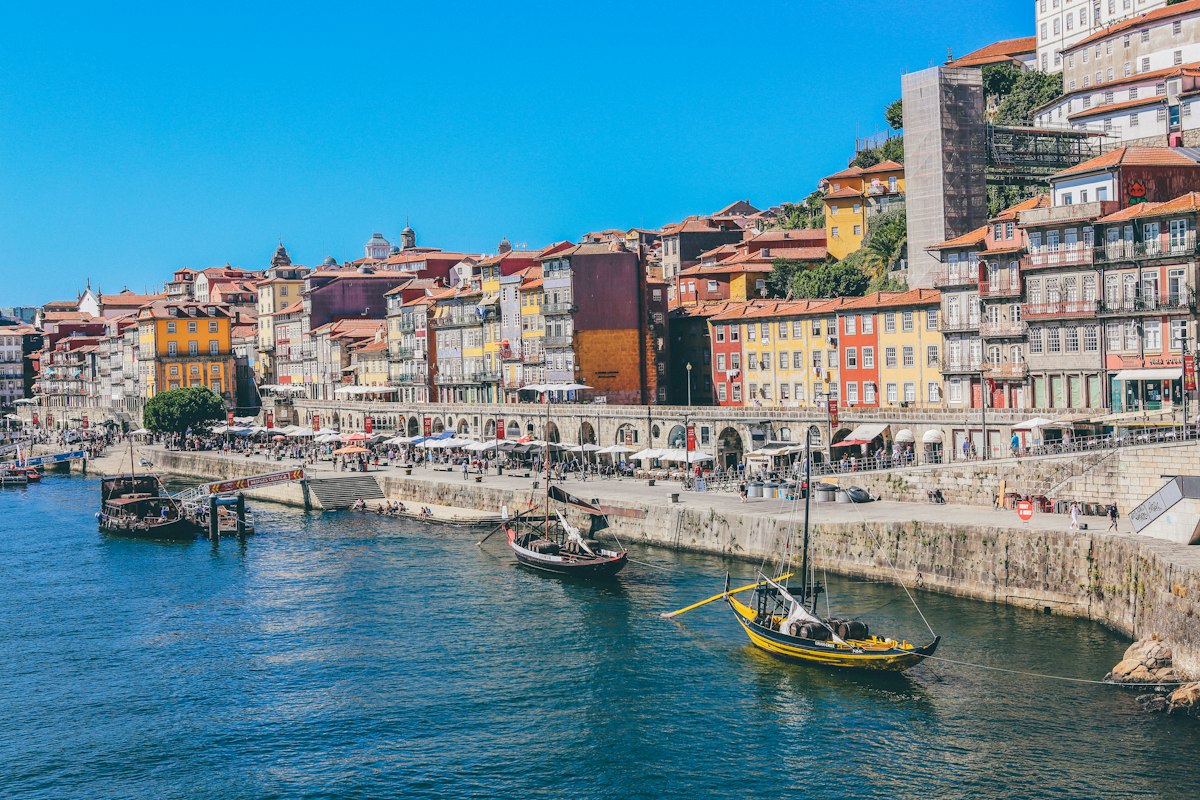
The comparison to Venice is, as these things always are, simultaneously helpful and misleading. Aveiro does have canals — three principal waterways that thread through the city centre, crossed by graceful bridges and lined with buildings whose facades range from austere eighteenth-century stone to flamboyant Art Nouveau confections in mint green, powder blue, and the particular shade of salmon pink that seems to exist only in Portuguese architecture. It does have boats — the moliceiros, flat-bottomed craft originally designed for harvesting seaweed from the Ria de Aveiro lagoon, now painted with elaborate scenes that combine religious imagery, political satire, and a cheerful eroticism that scandalises approximately nobody. And it does have that quality of waterborne urban intimacy that makes Venice unique among world cities.
But Aveiro is not Venice. It is something arguably more interesting: a mid-sized Portuguese city of 80,000 that has organically developed a relationship with water that is functional rather than nostalgic, contemporary rather than preserved, and — critically for the luxury buyer scanning Portugal's secondary cities for the next Lisbon — priced at levels that would acquire a parking space in the Venetian lagoon.
The Art Nouveau Capital
Aveiro's most architecturally distinctive feature is not its canals but its Art Nouveau heritage — the densest concentration of Arte Nova buildings on the Iberian Peninsula, a legacy of the city's late-nineteenth-century prosperity when returning emigrant families, enriched by Brazilian commerce, commissioned architects to build homes that would communicate cosmopolitan ambition. The Museu de Arte Nova, housed in a restored 1907 townhouse on the central canal, catalogues this heritage with scholarly thoroughness, but the real museum is the city itself: block after block of sinuous ironwork balconies, ceramic tile facades depicting maritime scenes, and flowing organic forms that transform the canal-side streetscape into an open-air gallery of decorative arts.
For the property buyer, this architectural heritage creates a distinctive opportunity. Unlike Lisbon, where Art Nouveau buildings have been systematically converted into boutique hotels and short-term rentals at prices that reflect full-market awareness of their value, Aveiro's Arte Nova stock remains substantially underexploited. A canal-facing Art Nouveau townhouse requiring sympathetic restoration — four floors, 300 square metres, wrought-iron balconies, original tile work — currently trades between €400,000 and €800,000. The restored equivalent, as a residential property or boutique hospitality asset, would represent a multiple of that investment.
The Ria: Lagoon as Luxury
The Ria de Aveiro — a coastal lagoon system extending forty-five kilometres along the Atlantic coast and penetrating thirty kilometres inland — is to Aveiro what the Bosphorus is to Istanbul: a geographic feature so defining that it shapes every aspect of the city's identity, economy, and daily rhythm. The Ria's ecosystem supports salt production (the salinas of Aveiro produce some of Portugal's finest flor de sal), aquaculture (the lagoon's oyster and clam beds supply Lisbon's finest restaurants), bird migration (the reserve attracts over 200 species, including flamingos), and a recreational culture of sailing, kayaking, and stand-up paddleboarding that has made Aveiro one of Portugal's most active outdoor lifestyle cities.
The lagoon also creates a microclimate that distinguishes Aveiro from the rest of Portugal's central coast. Morning mists that drift inland from the Ria give the city an atmospheric quality — luminous, slightly mysterious, photographically irresistible — that dissipates by midday into clear Atlantic light. The evening effect is even more striking: sunsets over the lagoon's shallow waters produce reflections that turn the entire western horizon into a continuously shifting canvas of copper, violet, and rose gold. Properties with Ria-facing orientation command premiums of 25-40% over equivalent inland-facing specifications — a differential that is likely to increase as awareness of the lagoon's aesthetic and ecological value spreads beyond the Portuguese domestic market.
The University Factor
The University of Aveiro, established in 1973 and now ranked among Portugal's top three research institutions, has transformed the city's demographic and economic profile in ways that are directly relevant to its luxury market trajectory. The campus — designed by Álvaro Siza Vieira and other leading Portuguese architects — brought 15,000 students into a city that had been quietly provincial, and with them came the cafés, restaurants, cultural spaces, and creative energy that characterise successful university towns throughout Europe.
More significantly, the university's technology transfer programme has generated a cluster of technology companies and research spin-offs that provide Aveiro with an economic diversity unusual for a Portuguese city of its size. The telecommunications research centre — one of Europe's leading facilities for 5G and IoT development — has attracted international tech companies that have established R&D offices in the city, bringing a cohort of well-paid, internationally mobile professionals who are precisely the demographic that drives luxury property demand in the €500,000-€2 million bracket.
Costa Nova: The Instagram Beach
Ten minutes from Aveiro's city centre, across the lagoon via a bridge that offers panoramic views of the Ria's shimmering expanse, lies Costa Nova — a beach settlement whose candy-striped wooden houses have become one of Portugal's most photographed architectural curiosities. These palheiros — originally fishermen's storehouses, built with vertical wooden planks painted in bold stripes of red, green, blue, and yellow — line the beachfront road in a continuous ribbon of chromatic exuberance that defies every expectation of Portuguese coastal architecture.
The Costa Nova beachfront has evolved from a seasonal fishing settlement into a year-round residential community where restored palheiros command prices between €600,000 and €1.5 million — figures that reflect both the properties' architectural uniqueness and their beach-meets-lagoon positioning, with the Atlantic on one side and the Ria's calm waters on the other. New construction along the beachfront, designed to complement the traditional aesthetic while incorporating contemporary standards, has pushed the upper end of the market toward €2 million for premium specifications with dual-aspect water views.
Gastronomy: Salt, Sugar, and Sea
Aveiro's culinary identity rests on three pillars that, taken together, constitute one of Portugal's most distinctive gastronomic profiles. The salt: flor de sal from the Ria's traditional salinas, hand-harvested using techniques unchanged since Roman times, prized by chefs throughout Europe for its mineral complexity and crystalline texture. The sugar: ovos moles, a confection of egg yolk and sugar encased in wafer-thin shells shaped like fish, barrels, and seashells, invented by nuns at the Convento de Jesus and now protected by IGP (Indicação Geográfica Protegida) status. The sea: bacalhau (salt cod), which Aveiro's fishing fleet historically sourced from Newfoundland's Grand Banks, and which the city prepares in variations that number, by local count, in the hundreds.
The contemporary dining scene builds on these foundations with increasing sophistication. A generation of chefs trained at Aveiro's hospitality school and in Lisbon's Michelin-starred kitchens have returned to the city, opening restaurants that combine regional ingredients with contemporary technique. The result is a dining culture that is simultaneously rooted and innovative — exactly the combination that attracts the gastronomically literate luxury buyer who has exhausted Lisbon's restaurant scene and is looking for the next Portuguese culinary destination.
The Connectivity Equation
Aveiro sits on Portugal's principal north-south rail corridor, with direct Alfa Pendular (high-speed) services to Porto (forty minutes) and Lisbon (two hours). The A1 motorway provides equivalent road connectivity. Porto Airport, with its extensive European route network, is one hour by car or train. This positioning — close enough to Porto for day-to-day business connectivity, far enough for genuine lifestyle distinction — mirrors the relationship that successful secondary luxury markets maintain with their metropolitan anchors throughout Europe.
The city's emerging positioning as a technology and innovation hub adds a further connectivity dimension. The designation as one of Europe's "smart city" pilot locations for advanced digital infrastructure means that Aveiro's broadband and 5G coverage is, paradoxically, superior to many larger Portuguese cities — a detail that matters enormously to the remote-working professionals and digital entrepreneurs who increasingly constitute the leading edge of international property demand.
Aveiro's moment is approaching with the quiet inevitability of one of its morning lagoon mists. The ingredients are all present: distinctive architecture, extraordinary natural environment, cultural depth, gastronomic sophistication, and — the catalyst that converts potential into transaction — prices that allow entry at a fraction of what comparable quality commands in Portugal's established luxury markets. The comparison to Venice will continue, because comparisons always do. But Aveiro's future will be its own.
In a country where every coastal city claims to be "undiscovered," Aveiro makes the only honest version of that claim — a canal city whose Art Nouveau beauty, lagoon ecosystem, and candy-striped beaches compose Portugal's most genuinely surprising luxury address.