Cascais: How Portugal's Royal Resort Became the Atlantic Riviera's Most Cosmopolitan Luxury Address
March 23, 2026 · 14 min read
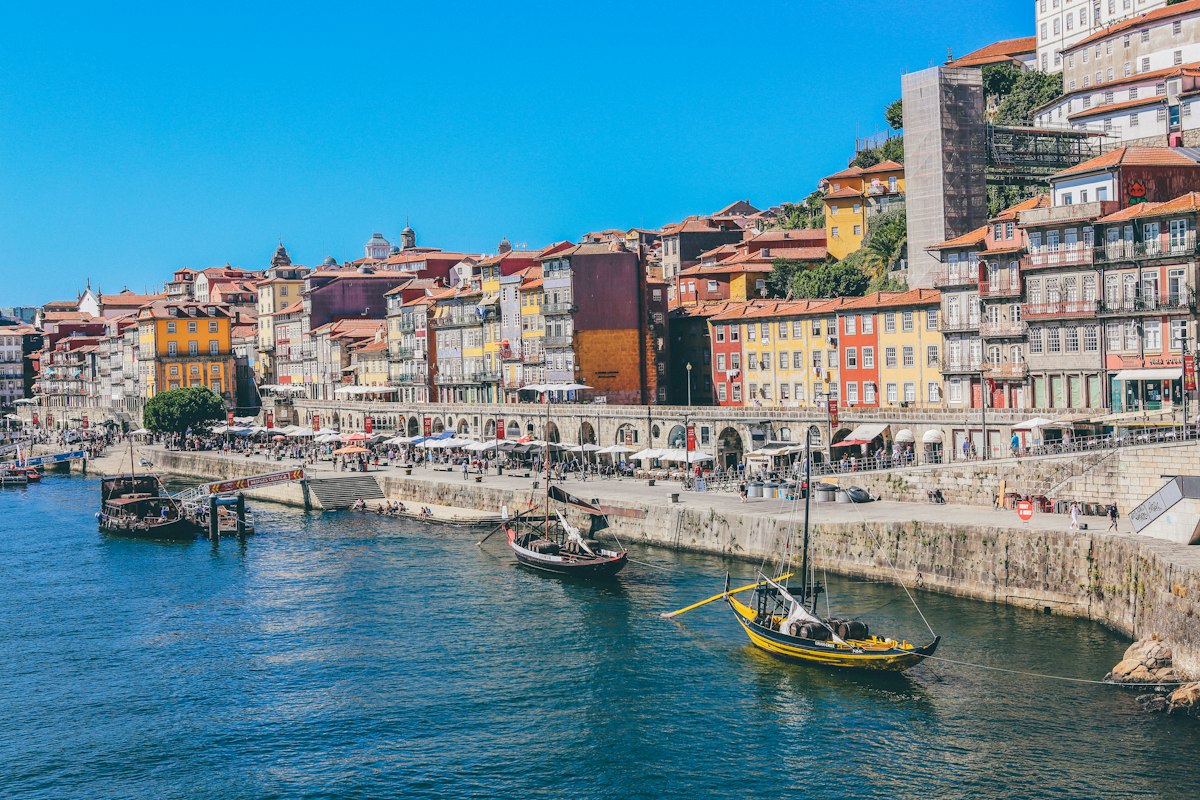
There are resort towns that exist because of climate, others because of geography, and a few because a monarch, at some decisive moment, decided that this particular stretch of coastline would serve as the summer court. Cascais belongs to the last category. When King Luís I chose the small fishing village on the Estoril coast as his summer residence in 1870, he initiated a transformation whose consequences are still unfolding a century and a half later — from fishing village to royal resort, from royal resort to wartime haven for displaced European aristocracy, and from aristocratic refuge to what is, in 2026, Portugal's most internationally sophisticated luxury address.
The town sits at the western extremity of the Estoril coast, where the Tagus estuary meets the open Atlantic at the point where the European continent begins to turn south toward Africa. This position gives Cascais a dual geographic identity that is fundamental to its character: it is simultaneously a Lisbon suburb — thirty minutes from the capital by train, connected by the marginal coastal road that runs through Estoril and Oeiras — and an Atlantic outpost, exposed to the ocean swells, the maritime light, and the climatic systems of the open sea that the sheltered harbours of the Mediterranean never experience.
The Royal Inheritance
King Luís I's decision to summer in Cascais was both personal and strategic. The village offered what Sintra, the traditional royal retreat in the cooled hills above Lisbon, could not: direct access to the sea, the particular quality of Atlantic light that Portuguese painters had been attempting to capture for centuries, and a fishing community whose rhythms — the departure of the boats at dawn, the arrival of the catch, the mending of nets on the harbour wall — provided the picturesque backdrop that nineteenth-century European royalty found irresistible.
The Cidadela, the seventeenth-century fortress that guards the harbour entrance, was adapted as a royal residence, and the town rapidly acquired the infrastructure of a court in miniature: villas for the aristocratic families who followed the king, a promenade for the ritual of the passeio, churches renovated to receive royal attendance, and the Hotel & Golf establishments that would define the Estoril coast's identity well into the twentieth century. The Portuguese aristocracy built along the marginal road and in the hills behind the town, creating a residential landscape of quintas (manor houses), palacetes (small palaces), and jardins (formal gardens) that gives Cascais an architectural density unusual for a town of its size.
The Espionage Coast
Cascais's most cinematically rich chapter occurred during the Second World War, when Portugal's neutrality under Salazar transformed the Estoril coast into the most improbable intersection of displaced European power, espionage, and exile since the fall of Constantinople. The Casino Estoril — which Ian Fleming reportedly used as the model for Casino Royale — became the stage on which spies from every belligerent nation conducted their clandestine theatre. Deposed monarchs — the kings of Italy, Romania, Bulgaria, Spain — maintained courts-in-exile in the villas along the coast, creating a concentration of royal households that no functioning capital in Europe could match.
This wartime chapter left Cascais with a particular cultural inheritance: a cosmopolitan sensibility rooted not in tourism but in the genuine international character of a community that had, for six extraordinary years, housed the displaced elite of an entire continent. The town's restaurants, hotels, and social institutions absorbed this cosmopolitanism, and it persists today in the international composition of Cascais's resident population, the multilingual character of its commercial life, and the ease with which the town accommodates visitors of every nationality without the performative hospitality that characterises purpose-built resort destinations.
The Boca do Inferno and the Atlantic Drama
West of the town centre, the coastline abandons the shelter of the harbour and confronts the open Atlantic with a geological theatricality that justifies any number of superlatives. The Boca do Inferno — Hell's Mouth — is a sea cave carved into the cliff face where the Atlantic swells compress and explode upward through a natural chimney, producing a display of aquatic violence that is particularly spectacular during winter storms. The cliff path that leads from the town to this formation, and continues beyond it toward the Guincho beach and the Serra de Sintra, offers one of Portugal's most dramatically positioned coastal walks.
This Atlantic exposure is central to Cascais's identity and to its distinction from the Mediterranean resort towns with which it is sometimes compared. The ocean here is not the bathwater calm of the Côte d'Azur or the Balearics; it is the North Atlantic, powerful and unpredictable, and its influence on the town is pervasive. The light has the clarity that comes from maritime air masses rather than the haze of enclosed seas. The vegetation — wind-sculpted pines, salt-resistant succulents, the hardy flora of the maritime cliff — has a wildness that no amount of landscaping can domesticate. And the sound of the sea, which reaches every quarter of the town, provides a constant acoustic reminder that Cascais exists at the edge of something vast.
The Contemporary Cultural Renaissance
Cascais's cultural infrastructure has undergone a transformation in the past decade that reflects the broader renaissance of Portuguese cultural life. The Casa das Histórias Paula Rego, designed by Eduardo Souto de Moura (Pritzker Prize 2011) and dedicated to the work of Portugal's most internationally celebrated contemporary artist, is an architectural landmark whose terracotta pyramidal towers have become as iconic to the town's skyline as the Cidadela fortress. The Museu Condes de Castro Guimarães, housed in a fantastical neo-Gothic palace on the waterfront, combines archaeological collections with a setting that is itself a museum of nineteenth-century architectural ambition.
The Centro Cultural de Cascais, occupying a converted convent, hosts exhibitions and events that draw from both Portuguese and international contemporary art. The Mercado da Vila, the renovated market hall, has been reimagined as a gastronomic destination that combines traditional fishmongers and produce vendors with contemporary restaurants — a model of market renovation that respects the building's heritage while adapting it to contemporary culinary culture. These institutions, collectively, have given Cascais a cultural density that it lacked during its decades as a primarily residential and recreational destination.
The Property Market: Value and Vision
Cascais's property market occupies a position in the Portuguese luxury landscape that combines established prestige with what international buyers increasingly recognise as extraordinary value relative to comparable European coastal addresses. A waterfront villa in Cascais trades at a fraction of the price of equivalent properties in Saint-Jean-Cap-Ferrat, Sardinia, or the Balearics, while offering a quality of life — the combination of climate, culture, gastronomy, safety, and international connectivity — that these more expensive addresses do not consistently surpass.
The residential typology ranges from apartments in the historic centre, where Belle Époque buildings have been sensitively renovated to combine period character with contemporary comfort, to substantial villas in the Quinta da Marinha development and the Birre neighbourhood, where contemporary architecture sits within landscaped estates that offer the privacy and space that the town centre cannot provide. The Estoril coast railway, which connects Cascais to Lisbon's Cais do Sodré station in thirty-three minutes, provides a public transport link of a quality that most European luxury addresses lack entirely, making Cascais viable as both a primary residence and a commuter suburb for those whose professional lives are centred on Lisbon.
The Guincho Dimension
No account of Cascais's luxury proposition is complete without Guincho, the Atlantic beach that lies six kilometres to the northwest, where the coastal road emerges from the pine forests of the Serra de Sintra to confront one of Europe's most powerful beach breaks. Guincho is to Cascais what the back country is to Aspen — the wild complement to the civilised centre, the place where the natural forces that the town domesticates are experienced in their unmediated power.
The beach's exposure to the Atlantic and the acceleration of the wind through the Sintra-Cascais gap make Guincho one of Europe's premier windsurfing and kitesurfing destinations, attracting a community of water sports enthusiasts whose presence adds a dimension of athletic culture to Cascais's social life. The restaurants along the Guincho road — several of which hold Michelin recognition — serve seafood of a quality that reflects both the richness of the Atlantic fishing grounds and the Portuguese culinary tradition's deep understanding of marine ingredients. To drive the Guincho road at sunset, with the Sintra mountains darkening to the east and the Atlantic burning orange to the west, is to experience a landscape that makes the comparison with the Mediterranean Riviera not merely flattering but, in certain lights, inadequate.
Explore More from Portugal Latitudes
From the cobbled streets of Lisbon to the terraced vineyards of the Douro, discover the addresses that define Portuguese luxury. Browse all destinations →