Cascais: The Portuguese Riviera's €10M Secret and Why European Old Money Never Left
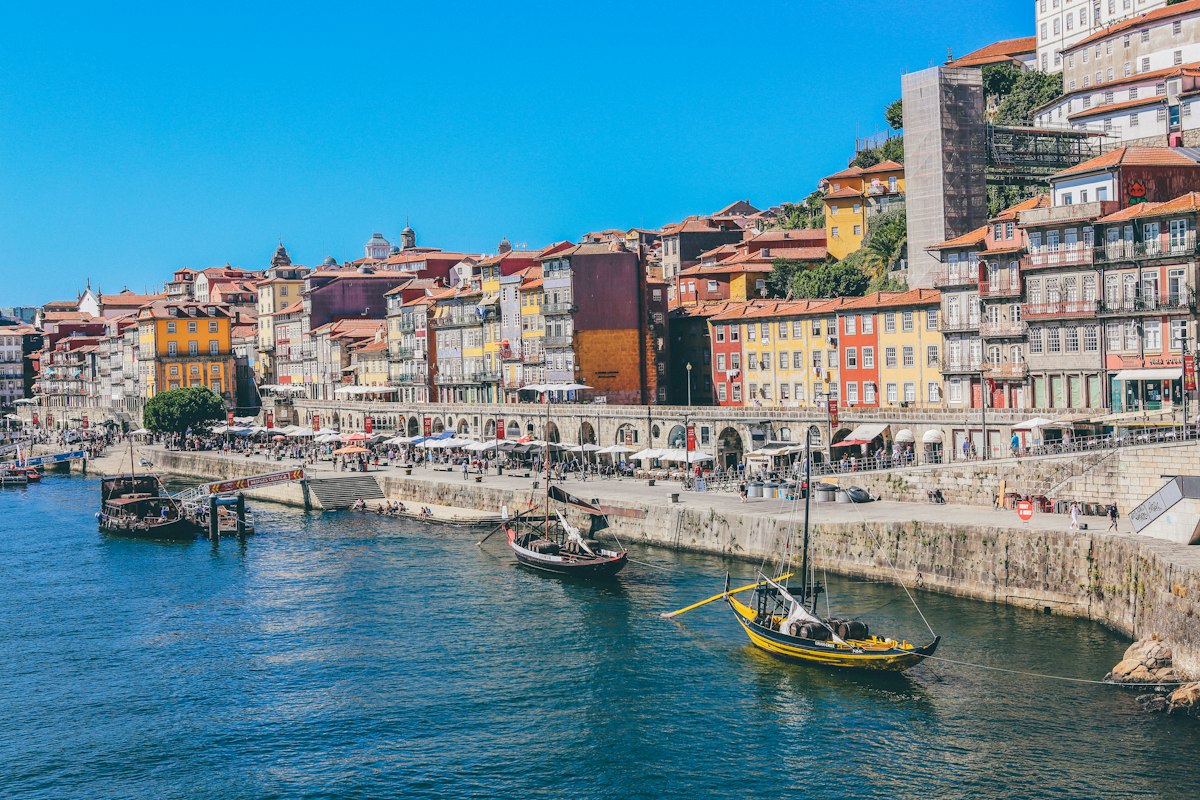
Thirty kilometres west of Lisbon, where the Tagus estuary opens into the Atlantic, a narrow coastal road winds past Belle Époque palaces, surf breaks and fortified cliffs. This is Cascais — a town that has served as the summer residence of Portuguese royalty since King Luís I fell in love with its light in 1870, and that has never, in the century and a half since, lost its hold on Europe's most discerning families.
The Royal Foundation
Cascais' luxury credentials are not manufactured — they are inherited. When King Luís transformed the Cidadela fortress into a royal summer palace, the Portuguese court followed. Within a decade, the town's central bays were lined with aristocratic residences: quintas with azulejo-tiled façades, manicured gardens descending to the sea, private chapels and stables.
This royal patronage attracted a second wave — European exiles and diplomats who found in Cascais a climate and sophistication rivalling the Côte d'Azur, without the social intensity. During the World War II years, Portugal's neutrality made Cascais a haven for displaced royalty: the Spanish Bourbons, the Italian House of Savoy and various Habsburg branches all maintained residences here. Their descendants, in many cases, still do.
The Estoril–Cascais Corridor
The luxury real estate market spans a continuous coastal corridor from Estoril — famed for its casino (which inspired Ian Fleming's Casino Royale) and grand hotels — through Cascais centro to the dramatic Boca do Inferno headland and beyond to Guincho, where the Atlantic crashes against wild cliffs.
Each micro-zone carries its own character. Estoril offers Belle Époque grandeur: villas with mature gardens, proximity to the train line, and a genteel social infrastructure of golf clubs and tennis courts. Cascais centro delivers walkable village life — restaurants, galleries, the marina — with townhouses and converted palaces. The Monte Estoril hillside provides elevation, privacy and views. And Guincho, increasingly, attracts architects and wellness-oriented buyers who prize the raw Atlantic landscape.
Prices vary accordingly: €3,000 to €5,000 per square metre in Estoril's established zones, €6,000 to €10,000 in the most desirable Cascais streets, and €8,000 to €15,000 for exceptional waterfront positions or architectural masterpieces with unobstructed ocean views.
The New Buyer Wave
For decades, Cascais' luxury market was a largely Portuguese and northern European affair — discreet transactions between families who had known each other for generations. The post-2012 Golden Visa programme changed the buyer composition dramatically, introducing American, Brazilian, South African and Middle Eastern purchasers to a market that had been essentially closed.
Although the Golden Visa's real estate pathway was suspended for Lisbon and the coast in 2023, the programme's legacy endures. It introduced Cascais to a global audience of UHNW buyers who discovered something unexpected: a luxury market with genuine value. Compared to the Côte d'Azur (€20,000–€60,000/m² for equivalent positions), Marbella (€8,000–€15,000/m²) or the Italian Riviera (€10,000–€25,000/m²), Cascais offers superior climate, safety and connectivity at prices that feel, to international buyers, extraordinarily competitive.
The Non-Habitual Resident Advantage
Portugal's Non-Habitual Resident (NHR) tax regime — offering a flat 20% income tax rate on Portuguese-sourced professional income and potential exemptions on foreign-sourced income for ten years — has been a powerful accelerant. Although the programme was reformed in 2024, existing NHR holders continue to benefit, and the new IFICI regime (for scientific research and innovation professionals) maintains Portugal's appeal for knowledge-economy wealth.
For retirees, the picture is more nuanced following the elimination of pension exemptions, but the overall fiscal environment — combined with no inheritance tax for direct heirs and competitive capital gains structures — ensures that Portugal remains one of Western Europe's most attractive jurisdictions for wealth preservation.
Architecture: Old and New
Cascais' architectural landscape tells the story of Portuguese luxury across three centuries. The finest 19th-century quintas — Quinta da Marinha, Quinta dos Ingleses — feature the characteristic Portuguese blend of formal European planning and maritime influence: courtyards that echo Moorish precedents, azulejo panels depicting maritime discoveries, gardens combining box hedges with subtropical species.
Contemporary architecture has arrived with increasing confidence. A new generation of Portuguese architects — schooled in Porto's rigorous tradition (the legacy of Álvaro Siza and Eduardo Souto de Moura) — is producing villas that respond to the Atlantic climate with an austerity and material honesty that sets them apart from the Mediterranean mainstream. Exposed concrete, local stone, frameless glass and careful orientation to capture both sea views and protection from the prevailing northwesterly wind.
The Lifestyle Proposition
What ultimately distinguishes Cascais from competing luxury destinations is its completeness as a year-round community. Unlike Saint-Tropez (seasonal), Marbella (resort-dominated) or the Algarve (retirement-oriented), Cascais functions as a sophisticated small town with genuine cultural infrastructure.
The Centro Cultural de Cascais hosts international exhibitions. The Casa das Histórias Paula Rego — designed by Souto de Moura — is one of Portugal's finest contemporary museums. The marina hosts regattas that draw international sailing crews. Three championship golf courses — including the links-style Oitavos Dunes, regularly ranked among Europe's top 20 — provide sporting amenity. And Lisbon, with its Michelin stars, international airport and startup energy, is 25 minutes away by coastal motorway.
For UHNW families considering European residency — whether driven by fiscal optimisation, lifestyle preference or geopolitical diversification — Cascais offers a rare combination: royal heritage, Atlantic beauty, genuine community, and a price point that allows acquisition of a world-class property for what a modest apartment would cost on the Riviera.
Published by Latitudes Media · More from Portugal Latitudes