Guimarães: How Portugal's Birthplace Became the Minho's Most Historically Resonant Luxury Address
March 21, 2026 · 15 min read
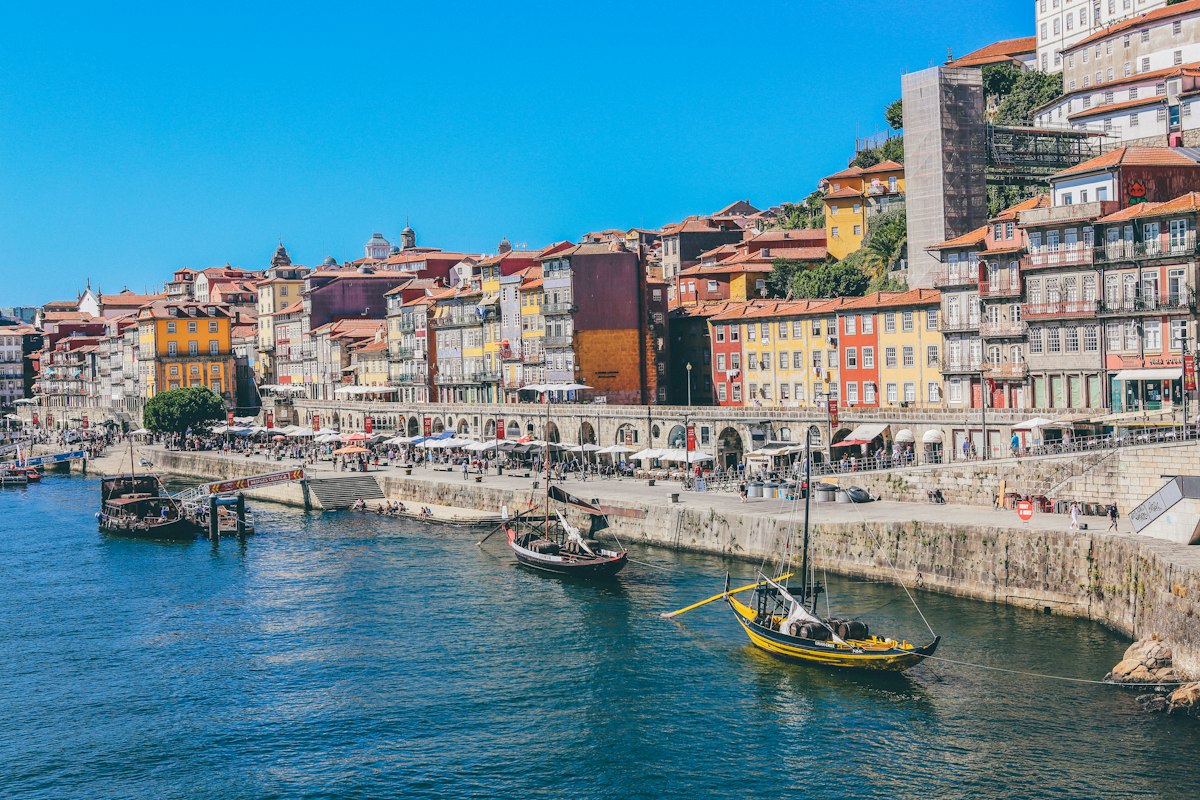
The inscription carved into the ancient wall near the castle is unambiguous: "Aqui nasceu Portugal" — Here Portugal was born. It is not a metaphor. In 1128, in this granite-and-mist town perched above the Ave River valley, the young Afonso Henriques declared himself independent of the Kingdom of León, fought the decisive Battle of São Mamede on the slopes above the castle, and set in motion the creation of what would become Europe's first global maritime empire. Nearly nine centuries later, Guimarães wears its founding mythology with a matter-of-factness that borders on the nonchalant. The castle still stands. The medieval centre — a UNESCO World Heritage Site since 2001 — remains lived-in, functional, and almost disconcertingly authentic. And a new generation of buyers, drawn by the same qualities that have always defined the city — granite permanence, cultural depth, and an absolute refusal to perform for tourists — is transforming Guimarães into northern Portugal's most compelling luxury address.
The Granite Canvas
Guimarães is a city built from a single material: the grey granite of the Minho, quarried from the hills that surround the town and worked by generations of canteiros whose mastery of the stone gives the city its distinctive visual character. Every surface — walls, lintels, window frames, balustrades, the cobblestones of the Largo da Oliveira and the Praça de Santiago — speaks the same geological language. This material unity, combined with the medieval street plan's organic logic (no grid, no symmetry, just the accumulated wisdom of a thousand years of pedestrian circulation), creates an urban environment of extraordinary coherence. Walking through Guimarães's historic centre is less like visiting a preserved monument than like inhabiting a continuous architectural idea.
For the luxury buyer, the granite heritage presents both an opportunity and a constraint. The opportunity: buildings of extraordinary quality, with walls 60-80cm thick that provide natural climate regulation, acoustic isolation, and a permanence that no contemporary construction can replicate. The constraint: UNESCO heritage designation imposes strict controls on exterior modifications, materials, and techniques. Restorations must use traditional granite, lime mortars, and hardwood joinery. Modern insertions — glass, steel, concrete — are permitted within interiors but must be invisible from the street. This regulatory framework, which some buyers perceive as restrictive, is precisely what protects the city's value proposition. Guimarães cannot be cheapened, because the regulatory framework physically prevents it.
The Pousada Effect
The conversion of the Mosteiro de Santa Marinha da Costa — a 12th-century Augustinian monastery perched on the Penha hillside above the city — into a Pousada de Portugal in 1985 established the template for Guimarães's luxury-hospitality proposition. The architect Fernando Távora, a mentor to Álvaro Siza and Eduardo Souto de Moura, approached the conversion with a sensitivity that became a manifesto: new interventions in concrete and glass were inserted into the monastic fabric with surgical precision, creating a dialogue between centuries that was neither pastiche nor provocation. The Pousada remains one of Portugal's finest hotels — and its approach has influenced every significant restoration in Guimarães since.
Souto de Moura's own contribution — the conversion of two ruined houses in the historic centre into a private residence, completed in 2012 and awarded the European Union Prize for Contemporary Architecture — demonstrated that the Távora approach could be applied at domestic scale. The project, which preserved the granite shells of both buildings while inserting a minimal contemporary interior of polished concrete, oak, and steel, has become a pilgrimage site for architects and a benchmark for heritage restoration globally. It also established a price point: comparable granite-shell restorations in the historic centre now command €800,000-2 million, depending on scale and position, with the finest examples — those incorporating courtyards, garden terraces, or views toward the castle — reaching €2.5-3 million.
The Cultural Infrastructure
Guimarães's cultural infrastructure punches dramatically above its weight for a city of 55,000 inhabitants. The Centro Cultural Vila Flor — a contemporary arts complex built around an 18th-century palace — hosts a year-round programme of music, theatre, and visual arts that draws from Porto, Lisbon, and international circuits. The 2012 European Capital of Culture designation catalysed €100 million in cultural investment, including the Platform of Arts and Creativity (a converted leather-tanning factory now housing exhibitions, residencies, and performance spaces) and the comprehensive restoration of the city's public spaces under a masterplan by the landscape architect Paulo Providência.
The university — the Universidade do Minho, with 20,000 students split between Guimarães and Braga campuses — provides the intellectual energy and demographic dynamism that purely touristic heritage cities lack. The student population sustains a café culture, a live-music scene, and a dining ecosystem that operates year-round, insulated from the seasonal volatility that plagues Algarve and Lisbon tourism. On a Thursday evening in February, the bars along the Rua de Santa Maria are as full as they are in August. This consistency of urban life — the absence of an off-season — is one of Guimarães's most underappreciated luxury assets.
The Minho Table
The Minho's gastronomic tradition is Portugal's richest, and Guimarães is its capital. The cuisine is defined by granite and water — by the beef raised on hillside pastures, the cabrito (kid goat) roasted in wood-fired ovens, the bacalhau prepared in forty variations, and the Vinho Verde produced from the pergola-trained vines that drape every available surface in the surrounding countryside. This is not the refined, internationally-calibrated cuisine of Lisbon's Michelin restaurants; it is something older, more grounded, and in its own way more luxurious: a food culture that has never needed to reinvent itself because it was never broken.
The contemporary dining scene builds on this foundation with intelligence rather than disruption. A Cozinha, housed in a restored medieval building overlooking the Largo da Oliveira, serves Minho cuisine with contemporary technique and presentation — the cabrito arrives deconstructed but flavour-faithful, the rojões (pork cubes) are reinterpreted through sous-vide precision while retaining their essential Minho character. The wine lists are revelatory for visitors accustomed to Vinho Verde as a cheap summer aperitif: single-vineyard Alvarinhos from Monção and Melgaço, skin-contact Loureiros from the Lima Valley, and aged Vinhão reds that challenge every assumption about northern Portuguese winemaking.
The Quinta Proposition
Beyond the city walls, the Minho countryside offers a property typology unique to northern Portugal: the quinta. These agricultural estates — typically comprising a granite manor house (solar or casa senhorial), chapel, wine cellars, granary (espigueiro), and productive land planted with vines, fruit trees, and woodland — represent the accumulated wealth and social aspiration of the Minho gentry over five centuries. Many have passed through inheritance to families who lack the resources or inclination to maintain them. The result is a market in which estates of extraordinary architectural quality, historical significance, and landscape beauty can be acquired at prices that would not buy a two-bedroom apartment in central Lisbon.
The most compelling quintas in the Guimarães hinterland — within 20 minutes of the city centre, connected by the A7 and A11 motorways — offer 5-15 hectares of land, manor houses of 500-1,500 square metres, and productive vineyards capable of generating 5,000-20,000 litres of Vinho Verde annually. Acquisition prices range from €500,000 for unrenovated estates requiring significant investment to €3-5 million for fully restored properties with contemporary interiors, swimming pools, and guest accommodation. The restoration economics are favourable: Portugal's IFRRU 2020 programme and its successors offer subsidised financing for heritage restoration, and the construction costs in the Minho — where skilled artisans in granite work, carpentry, and lime plastering remain available — are 40-60% lower than equivalent work in the Algarve or Lisbon.
The Connectivity Premium
Guimarães's strategic position — 50 minutes from Porto's Francisco Sá Carneiro Airport, 25 minutes from Braga, connected to both cities by motorway and rail — resolves the accessibility question that constrains many heritage-city luxury markets. Porto's airport, with direct flights to 100+ European destinations plus transatlantic connections via TAP, provides international connectivity equivalent to a secondary European capital. The drive from the airport to Guimarães, via the A3 and A7, passes through the Minho's vine-draped landscape — a journey that functions as a decompression chamber between the international travel system and the granite tranquillity of the destination.
For the buyer seeking a European base that combines heritage depth, cultural richness, gastronomic excellence, and investment potential at prices that remain — by any Western European standard — remarkable, Guimarães presents an argument that is increasingly difficult to resist. It is not Lisbon. It is not the Algarve. It doesn't want to be. It is something rarer: a city whose identity is so deeply rooted, so materially permanent, so resistant to the ephemeral pressures of fashion and speculation, that it offers what luxury markets increasingly value above all else — authenticity that cannot be manufactured, at a price that still rewards the perceptive.
Published by Portugal Latitudes · Part of the Latitudes Media network