Lagos: How the Algarve's Most Historic Port City Became Southern Europe's Most Compelling Cliff-Edge Luxury Address
March 21, 2026 · 15 min read
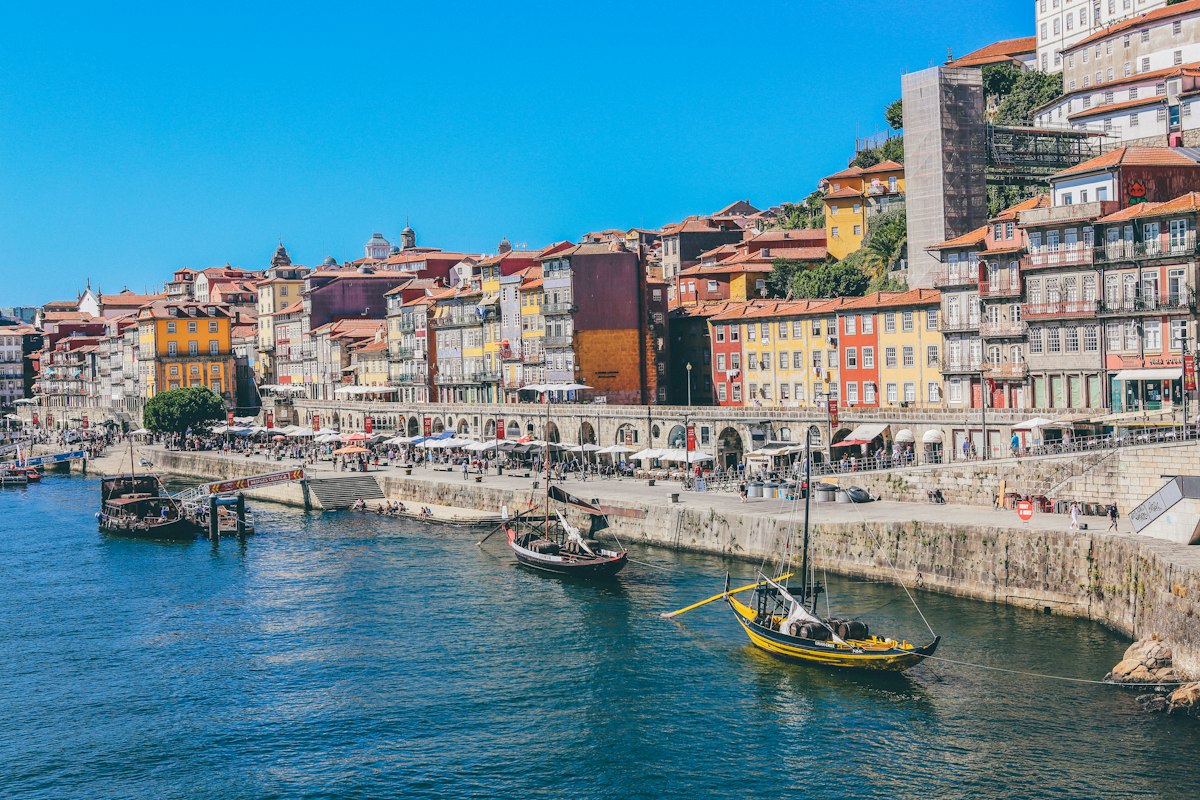
Lagos occupies a peculiar position in the cartography of European luxury. It is simultaneously one of the Algarve's most visited towns — its beaches routinely appear in those "best in Europe" listicles that travel publications generate with metronomic regularity — and one of its most misunderstood. The international perception of Lagos tends toward the reductive: a backpacker favourite with good surf, cheap beer, and spectacular cliffs. This perception is not wrong, exactly, but it is incomplete in ways that have created one of southern Europe's most interesting luxury investment opportunities for those with the patience to look past the obvious.
The Navigator's Legacy
Lagos's claim to historical significance is not the gentle patrimony of a well-preserved medieval village but something altogether more consequential. This was the port from which Prince Henry the Navigator launched the expeditions that would, over the course of the 15th century, fundamentally reshape humanity's understanding of the planet. The caravels that departed from Lagos's harbour — light, manoeuvrable ships whose lateen sails could navigate against the wind — pushed progressively south along the African coast, past Cape Bojador (which contemporary cartography marked as the edge of the navigable world), eventually reaching the Cape of Good Hope and opening the sea route to India. Lagos was, for a critical half-century, the Cape Canaveral of its age: the point of departure for voyages into the unknown.
This history saturates the town's built environment. The 14th-century city walls, among the best preserved in the Algarve, describe a perimeter that speaks to Lagos's strategic importance. The Forte da Ponta da Bandeira, a 17th-century fortress guarding the harbour entrance, now houses a museum of maritime discovery but retains the austere geometry of military architecture designed for function rather than ornament. The Igreja de Santo António, behind its unremarkable facade, contains one of Portugal's most extraordinary baroque interiors — a riot of gilded woodwork, azulejo tilework, and allegorical painting that represents the accumulated wealth of a city enriched by maritime commerce. These are not heritage assets preserved in aspic for tourist consumption; they are the living fabric of a town that has been continuously inhabited for over two millennia.
The Cliff Architecture
Lagos's defining physical feature — the element that elevates it from a pleasant Algarvean town to a landscape of genuine geological drama — is its coastline. The Ponta da Piedade headland, extending south from the town, is one of the most visually extraordinary coastal formations in Europe: a labyrinth of golden sandstone pillars, arches, grottoes, and sea stacks carved by Atlantic erosion into forms that seem to oscillate between the geological and the sculptural. The limestone, deposited during the Miocene epoch and subsequently uplifted by tectonic activity, has been shaped by 20 million years of wave action into a landscape that is simultaneously ancient and impermanent — each winter storm subtly altering the coastline's geometry, collapsing an arch here, excavating a grotto there.
It is this coastline that has created Lagos's most exclusive residential proposition. The villas perched along the clifftops between the town and Ponta da Piedade occupy a landscape position that is, in the strict sense, irreproducible: the combination of elevation, exposure, geological drama, and proximity to a functioning town cannot be manufactured elsewhere. These are not the manicured golf-course villas that dominate the luxury market in Vilamoura or Quinta do Lago — properties whose appeal depends on maintained landscapes and branded amenities. Lagos's cliff-edge properties derive their value from a geological inheritance: the accident of being positioned on sandstone formations that the Atlantic has sculpted into natural architecture of extraordinary beauty.
The Marina Renaissance
Lagos Marina, opened in 1994 and expanded in 2012, has been the catalyst for the town's transformation from a charming but sleepy Algarvean port into a genuine destination for the sailing and superyacht community. The marina accommodates 462 berths, with capacity for vessels up to 30 metres, and its position — sheltered from the Atlantic swell by the Ponta da Piedade headland while remaining open to the prevailing southwesterly winds that make the Algarve one of Europe's finest sailing grounds — makes it a natural staging point for Atlantic crossings, Mediterranean cruises, and coastal voyages along the Portuguese and Spanish seaboards.
The marina's economic impact on Lagos has been transformative. The waterfront promenade that connects the marina to the old town has become the town's social spine — a continuous pedestrian corridor lined with restaurants, bars, and boutiques that operates from early morning (when the fishing boats return with the night's catch) until late evening. The quality of the F&B offering has escalated dramatically: where a decade ago the waterfront was dominated by tourist-oriented restaurants of forgettable quality, the current roster includes chef-driven Portuguese restaurants, natural wine bars, Japanese-fusion concepts, and several establishments that would merit attention in Lisbon or Porto. This culinary elevation has been driven partly by the marina's international clientele — a cosmopolitan community that includes Northern European sailors, British retirees, French second-home owners, and an increasing contingent of remote workers attracted by Portugal's digital nomad visa — and partly by a new generation of Portuguese chefs who have recognised Lagos's potential as a year-round dining destination.
The Price Discovery
Lagos's property market has undergone a recalibration that reflects the town's evolving position within the broader Algarve luxury hierarchy. Historically, Lagos was priced at a significant discount to the "golden triangle" of Vilamoura, Quinta do Lago, and Vale do Lobo — the resort-dominated corridor east of Faro that has long commanded the Algarve's highest property values. This discount — typically 30-40% for comparable properties — reflected Lagos's perception as a town-based, less manicured alternative to the resort model: more authentic, certainly, but less amenitised and less aligned with the expectations of ultra-high-net-worth buyers accustomed to the resort lifestyle.
That discount has compressed dramatically. By early 2026, prime cliff-top villas in the Ponta da Piedade corridor command €4-7 million — prices that overlap with the lower end of the Quinta do Lago market and that would have been inconceivable five years ago. The compression reflects a broader shift in luxury buyer preferences: a growing cohort that values authenticity over amenity, natural beauty over landscaped perfection, and genuine community over resort insularity. Lagos offers all three, wrapped in a historical and geological setting that the golden triangle, for all its polish, cannot match.
The Surf Factor
Lagos's relationship with surf culture has matured from backpacker casualness into a genuine lifestyle economy that contributes both to the town's identity and its property market. The beaches flanking the town — Meia Praia to the east, a four-kilometre sweep of sand that ranks among the Algarve's longest, and the smaller cove beaches of Dona Ana, Camilo, and Batata to the south — offer conditions ranging from beginner-friendly shore breaks to challenging reef setups that attract serious surfers throughout the year. The water temperature, moderated by the Gulf Stream, remains swimmable from May through October and surfable year-round for anyone willing to invest in a quality wetsuit.
This surf culture has attracted a creative class that has, in turn, transformed Lagos's cultural landscape. Studios, galleries, co-working spaces, and design shops have established themselves in the old town's narrow streets, creating an ecosystem that blends Portuguese tradition with international creative energy. The result is a town that feels simultaneously rooted and cosmopolitan — a quality that distinguishes Lagos from both the tourist monocultures of the eastern Algarve and the self-conscious hipsterism of Lisbon's trendier neighbourhoods.
The Quiet Confidence
Lagos's trajectory suggests a town that is gradually discovering — or perhaps rediscovering — its natural position in the hierarchy of European coastal addresses. The qualities that make it compelling are not manufactured or marketing-driven; they are geological (those cliffs), historical (that maritime heritage), cultural (that creative energy), and geographical (a climate that delivers 300 days of sunshine while remaining within three hours' flight of every major European capital). These are durable assets, resistant to the fashion cycles that can elevate or diminish a destination within a single season.
For the investor or buyer seeking a European coastal property that offers both immediate lifestyle value and long-term appreciation potential, Lagos presents a proposition that is difficult to replicate. The town has the rare combination of natural beauty that cannot be manufactured, historical depth that cannot be fabricated, a functioning year-round community that cannot be simulated, and a price point that — despite recent appreciation — remains significantly below comparable coastal addresses in France, Italy, or Spain. In the geometry of European luxury real estate, Lagos is the point where authenticity and value still intersect.
From the same cliffs where Portuguese navigators first glimpsed the edge of the known world, Lagos now offers a different kind of discovery — the revelation that Europe's most dramatically sited luxury address was hiding in plain sight all along.