Melides: How the Alentejo Coast's Best-Kept Secret Became Portugal's Most Artistically Curated Luxury Retreat
March 25, 2026 · 12 min read
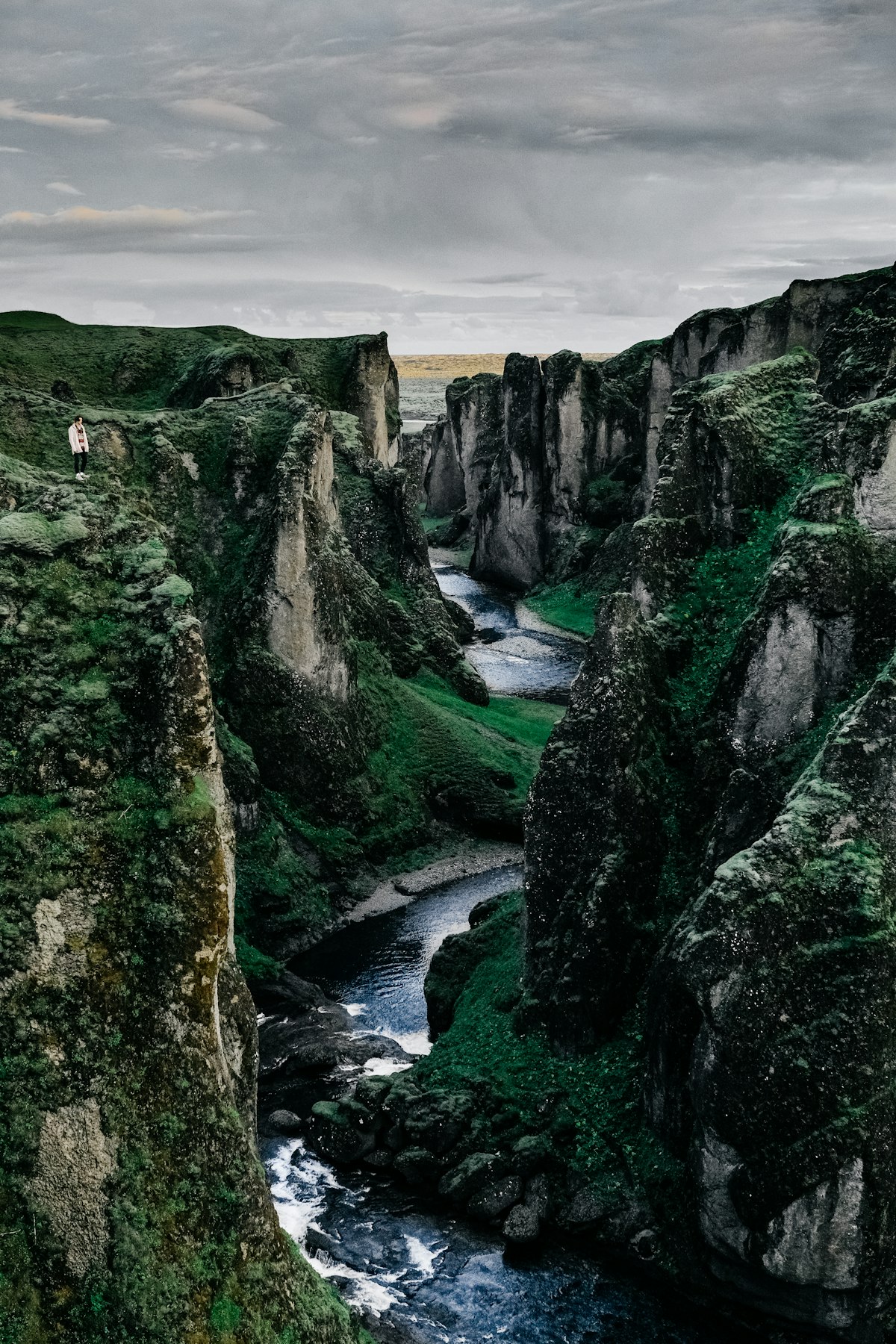
Melides exists in that rarest of luxury categories: the place that the people who have been everywhere else choose to go. This scattering of whitewashed houses along the Alentejo littoral — roughly midway between Lisbon and the Algarve, closer to the rice paddies of the Sado estuary than to any international airport — has no five-star hotel, no Michelin-starred restaurant, no marina for superyachts. What it has, instead, is arguably the most discerning concentration of creative wealth in Southern Europe.
The Louboutin Effect
The story of Melides' transformation begins, as so many luxury narratives do, with a single visionary purchase. In the early 2000s, Christian Louboutin — the red-sole designer whose brand generates over €1.5 billion in annual revenue — acquired a sprawling property on the outskirts of the village. But rather than importing the Parisian maximalism for which he's known, Louboutin did something unexpected: he adapted. His compound, designed in collaboration with local craftsmen, uses traditional Alentejo techniques — lime-washed walls, terracotta floors, cork insulation — elevated to a standard of finish that makes the vernacular extraordinary.
Louboutin's presence attracted a gravitational field of like-minded aesthetes. Jacques Grange, the interior designer whose client list reads like a roll call of Franco-American cultural aristocracy, began designing homes in the area. Philippe Starck visited and returned. A network of Parisian gallerists, Milanese architects, and London-based art collectors began acquiring land — not the dramatic cliff-top plots of the Algarve, but the rolling cork oak forests and dune-backed meadows that give the Alentejo its distinctive melancholy beauty.
The Anti-Algarve Proposition
Understanding Melides requires understanding what it is not. The Algarve, Portugal's traditional luxury coast, operates on a model familiar from the Côte d'Azur to the Costa del Sol: golf courses, gated resorts, foreign-owned apartments, and a service economy calibrated to Northern European expectations. Melides inverts every element of this formula. There are no golf courses. Gated communities are non-existent. The economy remains rooted in agriculture — cork, rice, and the magnificent Alentejo cattle that produce some of Europe's finest beef.
This authenticity is not accidental; it is structural. The Alentejo coast falls within the Parque Natural do Sudoeste Alentejano e Costa Vicentina, one of Europe's most strictly protected coastal zones. Building regulations limit construction to single-story structures that must use traditional materials and maintain the region's architectural character. These constraints, which might frustrate conventional developers, are precisely what makes Melides irresistible to the creative class: the regulation ensures that no amount of money can violate the landscape's integrity.
The New Compounds
The properties being created in Melides today represent a new typology in European luxury real estate. These are not villas in the Mediterranean sense — ostentatious structures designed to impress from the road. They are compounds: clusters of low-slung buildings arranged around courtyards, connected by covered walkways, embedded in the landscape with a discretion that borders on invisibility. A typical Melides estate might comprise 800 to 1,500 square metres of living space distributed across five or six structures — a main house, guest pavilions, a studio, a pool house, and a library — set on five to fifteen hectares of cork oak forest.
Prices reflect this scarcity and sophistication. Raw land with planning potential trades at €150,000 to €400,000 per hectare — a fraction of comparable Iberian coastal land — but the cost of building to the standard that Melides' community expects drives total project costs to €3–8 million. The most exceptional completed estates, those designed by name architects with mature gardens, now trade between €8 and €15 million — numbers that would have seemed absurd a decade ago for a village without a traffic light.
The Cultural Infrastructure
Melides' cultural programme punches spectacularly above its weight. The annual Melides Art festival, founded in 2018, has evolved from a modest village celebration into one of the Iberian Peninsula's most respected contemporary art events. Site-specific installations appear in cork forests, abandoned agricultural buildings, and along the beach. Performance pieces unfold at sunset on the dunes. The curatorial standard — overseen by a rotating committee drawn from the community's collector base — rivals that of European biennials operating with ten times the budget.
The village's restaurant scene, though modest in scale, reflects a similar curatorial intelligence. Sítio Valverde, the boutique hotel that has become the community's unofficial clubhouse, serves a menu rooted in Alentejo tradition — açorda, migas, black pork — but executed with a precision that reflects its clientele's expectations. A new wave of natural wine bars and farm-to-table restaurants has emerged along the village's single main street, each operating with the kind of effortless quality that comes from serving an audience that has eaten everywhere.
The Comporta Contrast
Any discussion of Melides must address its more famous neighbour. Comporta, fifteen kilometres to the north, has received the lion's share of international media attention — "the new Hamptons," "the European Tulum," and a dozen other comparisons that say more about journalistic laziness than about the place itself. Comporta's trajectory has been more conventionally developmental: larger hotels, more visible foreign investment, and a brand recognition that has made it simultaneously more accessible and less exclusive.
Melides' community views this dynamic with strategic equanimity. Comporta absorbs the attention, the Instagram tourism, and the speculative capital, while Melides retains its quietude. The relationship is symbiotic: Comporta's international profile validates the broader Alentejo coast as a luxury destination, while Melides' relative obscurity preserves the qualities that attracted its founders. As one long-term resident observed: "Comporta is where you go to be seen on the beach. Melides is where you go when you no longer need to be seen."
The Buyer Profile
Melides' buyer profile is remarkably consistent: typically 45–65, European or American, operating at the intersection of creativity and capital. These are not retired industrialists seeking sun — they are working artists, designers, gallerists, and entrepreneurs for whom the aesthetic quality of their environment is not a luxury but a professional necessity. Many maintain primary residences in Paris, London, or New York, treating Melides as their creative headquarters — the place where the actual thinking happens.
This demographic creates a self-reinforcing quality filter. The community's social life revolves around studio visits, informal dinners, and shared intellectual projects rather than the conventional luxury circuit of parties and events. New arrivals are evaluated not by their net worth but by their contribution to this ecosystem. The result is a community with the cultural density of a small university town and the discretion of a private club — all set against one of the most beautiful and unspoiled coastlines in Europe.
Melides will never be famous, and that is precisely the point. Its luxury is not the luxury of recognition but of refuge — a place where the world's most discerning creative minds have built, quietly and collectively, an alternative to everything that contemporary luxury has become.
Explore the Latitudes network: Dubai · Monaco · Riviera · Italy · Spain · Saint-Barth · Maison
← Back to Portugal Latitudes