Monsaraz: How the Alentejo's Fortified Hilltop Village Became Portugal's Most Celestially Elevated Luxury Address
March 31, 2026 · 12 min read
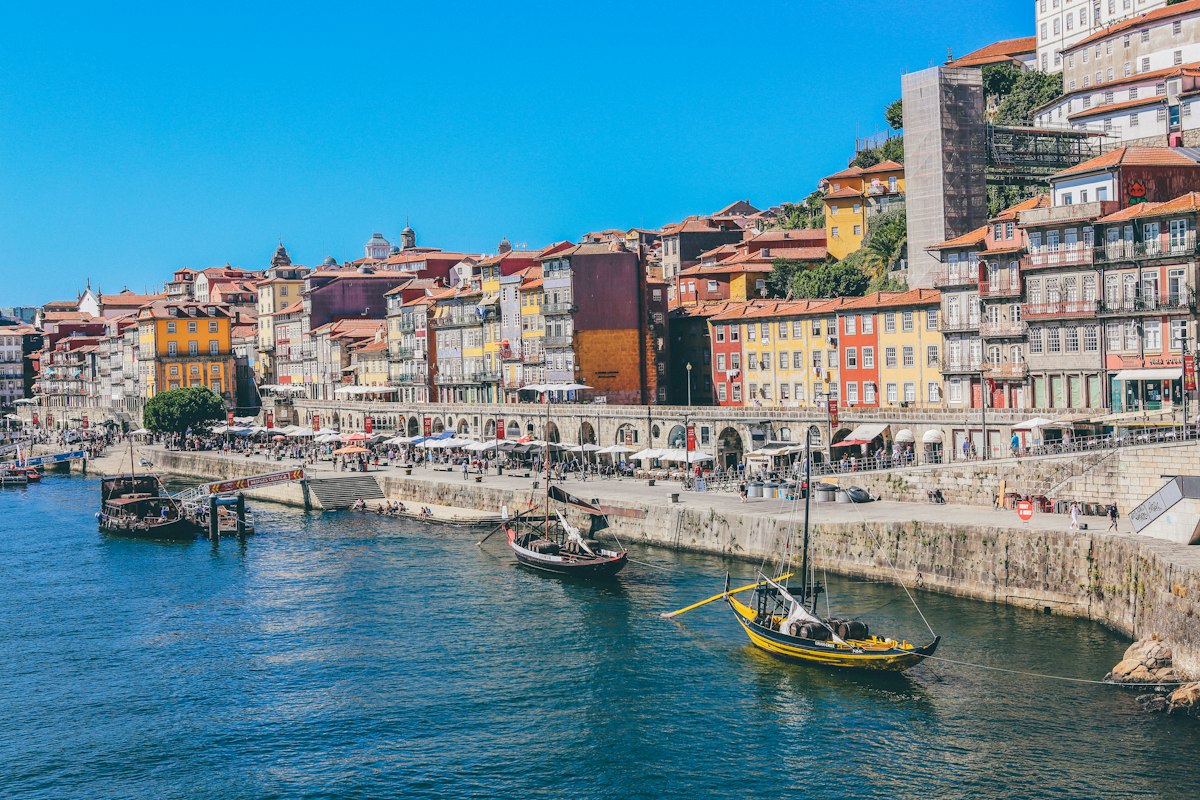
Monsaraz sits at the summit of a granite ridge that commands the entire eastern Alentejo plain — a strategic position that has been fortified since the Neolithic period and that the Knights Templar, who received the village in the 13th century, transformed into one of the most complete medieval defensive systems on the Iberian Peninsula. But the quality that has made Monsaraz uniquely valuable in the 21st century is not its ramparts, its castle, or its whitewashed streets of Moorish-influenced architecture. It is the darkness. In 2011, the Alqueva Dark Sky Reserve — Europe's first Starlight Tourism Destination, certified by UNESCO — was established around the Alqueva reservoir that stretches below Monsaraz's eastern walls, recognising what the village's 150 permanent residents already knew: that on clear nights, the Milky Way arches over the Alentejo with a clarity that most Europeans have never experienced and that no light-polluted luxury resort can reproduce.
The Templar Inheritance: Architecture as Time Capsule
Monsaraz's architectural preservation is extraordinary even by the standards of Portugal's well-maintained medieval villages. The walled perimeter — entered through two monumental gates that still function as the village's only vehicular access points — encloses a single principal street, the Rua Direita, flanked by Gothic and Manueline townhouses whose granite door frames, iron balconies, and lime-washed facades have been maintained with a discipline that reflects both municipal regulation and the quiet conservatism of a community that has resisted the temptation to modernise away its heritage.
The parish church of Nossa Senhora da Lagoa, dating from the 14th century, contains a remarkable 15th-century fresco of O Bom e o Mau Juiz — "The Good and the Bad Judge" — that is considered one of the most important secular medieval paintings in Portugal. The castle, built by King Dinis I in the early 14th century, occupies the village's highest point and now functions as an open-air arena for bullfighting and cultural events — a use that, however controversial, has kept the structure maintained and financially viable while other Portuguese castles have crumbled into picturesque ruin. The Torre do Relógio, the clock tower that marks the village's northern gate, provides panoramic views that extend across the Alqueva reservoir to the Spanish border — a reminder that Monsaraz's strategic value was always about surveillance and control of the Guadiana river crossing.
The Alqueva Effect: Water and Darkness
The creation of the Alqueva reservoir — completed in 2002 when the Alqueva Dam, Europe's largest, flooded 250 square kilometres of the Guadiana river valley — transformed Monsaraz's landscape and economic prospects simultaneously. Where the village had previously looked down upon a semi-arid river valley punctuated by cork oak plantations and subsistence agriculture, it now overlooks an inland sea whose surface area creates a microclimate of reflected light and maritime breeze that softens the Alentejo's notorious summer heat. The reservoir also created Europe's largest artificial freshwater body, attracting sailing, kayaking, and fishing tourism that provides an active-leisure complement to Monsaraz's contemplative cultural attractions.
But Alqueva's most significant contribution to Monsaraz's luxury proposition is paradoxically what it lacks: light. The reservoir's location in one of the least populated regions of Western Europe — the Portuguese-Spanish border zone where population density drops below 10 inhabitants per square kilometre — means that the night sky above Alqueva is among the darkest in Europe. The Dark Sky Reserve designation, which requires participating municipalities to install downward-directed, warm-temperature street lighting and to enforce restrictions on commercial light pollution, has created a formal infrastructure for astrotourism that attracts serious amateur astronomers, astrophotographers, and a growing demographic of luxury travellers for whom darkness — real, enveloping, pre-industrial darkness — represents the ultimate scarcity luxury.
The Hospitality Landscape: Intimate Scale, Exceptional Quality
Monsaraz's hospitality sector reflects the village's physical constraints. Within the walled perimeter, a handful of small hotels and guesthouses occupy restored medieval townhouses — typically offering between four and twelve rooms, decorated in a style that combines Alentejo craft traditions (hand-painted furniture, terracotta tiles, woven textiles) with contemporary comfort. The São Lourenço do Barrocal estate, located in the countryside below Monsaraz, has established itself as one of Portugal's most acclaimed rural luxury hotels — a 780-acre working farm that was restored by architect Eduardo Souto de Moura into a 40-room hotel that seamlessly integrates agricultural production, contemporary art, and landscape-driven luxury.
The surrounding municipality of Reguengos de Monsaraz — the Alentejo's largest wine-producing region — provides a gastronomic infrastructure that elevates Monsaraz beyond its medieval-village charm. The local wines, produced from indigenous grape varieties (Trincadeira, Aragonez, Antão Vaz) grown in the region's schist and granite soils, are among the Alentejo's most respected, with estates like Herdade do Esporão, José de Sousa, and Ervideira offering cellar-door tastings and vineyard experiences that have made the Reguengos appellation a destination for serious wine tourism.
The Megalithic Landscape: Deep Time as Luxury
The countryside surrounding Monsaraz contains one of the densest concentrations of megalithic monuments in Western Europe — dolmens, menhirs, and stone circles dating from 4000 to 2000 BCE that predate the village's medieval structures by three to four millennia. The Cromeleque do Xerez, a Neolithic stone circle visible from Monsaraz's ramparts, and the Menhir da Meada, the tallest standing stone in the Iberian Peninsula at over four metres, connect the landscape to a timescale that makes even medieval history feel recent. This deep-time dimension — the sense of inhabiting a landscape that has been sacred and strategically significant for six thousand years — creates a quality of place that no contemporary development can fabricate.
For the luxury traveller accustomed to destinations defined by recent investment — the new hotel, the renovated palace, the emerging wine region — Monsaraz offers a different temporal luxury: the accumulated weight of continuous human habitation in a landscape whose essential character remains legible from the Neolithic through the medieval period to the present. The village's small scale, its resistance to expansion, and its dark-sky preservation create a condition of sensory reduction that functions as genuine luxury in an era of overstimulation: fewer rooms, fewer restaurants, fewer attractions, fewer people, and — when night falls — fewer photons between the observer and the stars.
Investment and Preservation: The Alentejo Equation
Property within Monsaraz's walls is extremely limited — the entire walled village contains fewer than a hundred buildings — and transactions are rare enough that meaningful market statistics are impossible to compile. When properties do become available, they are typically acquired by Portuguese families, established foreign residents, or small hospitality operators, with prices reflecting both the renovation costs that heritage regulations impose and the village's growing reputation as one of Portugal's most singular destinations. Outside the walls, the surrounding countryside offers more scope for acquisition, with quintas (country estates) and agricultural properties available at prices that, while rising, remain significantly below the Algarve or Lisbon coast equivalents.
Monsaraz's luxury proposition is ultimately an argument about what scarcity means in the 21st century. In a world where five-star hotels, infinity pools, and tasting-menu restaurants can be constructed anywhere capital and ambition converge, Monsaraz offers things that cannot be built: a six-thousand-year continuum of sacred landscape, a medieval defensive architecture whose completeness is unmatched in southern Portugal, and a darkness so profound that the Milky Way becomes not a metaphor but a visible, structural feature of the night sky. These are not amenities. They are inheritances — and their value appreciates precisely because they cannot be replicated.