Óbidos: How Portugal's Most Perfectly Walled Medieval Town Became Europe's Most Literarily Enchanted Luxury Address
April 2, 2026 · 11 min read
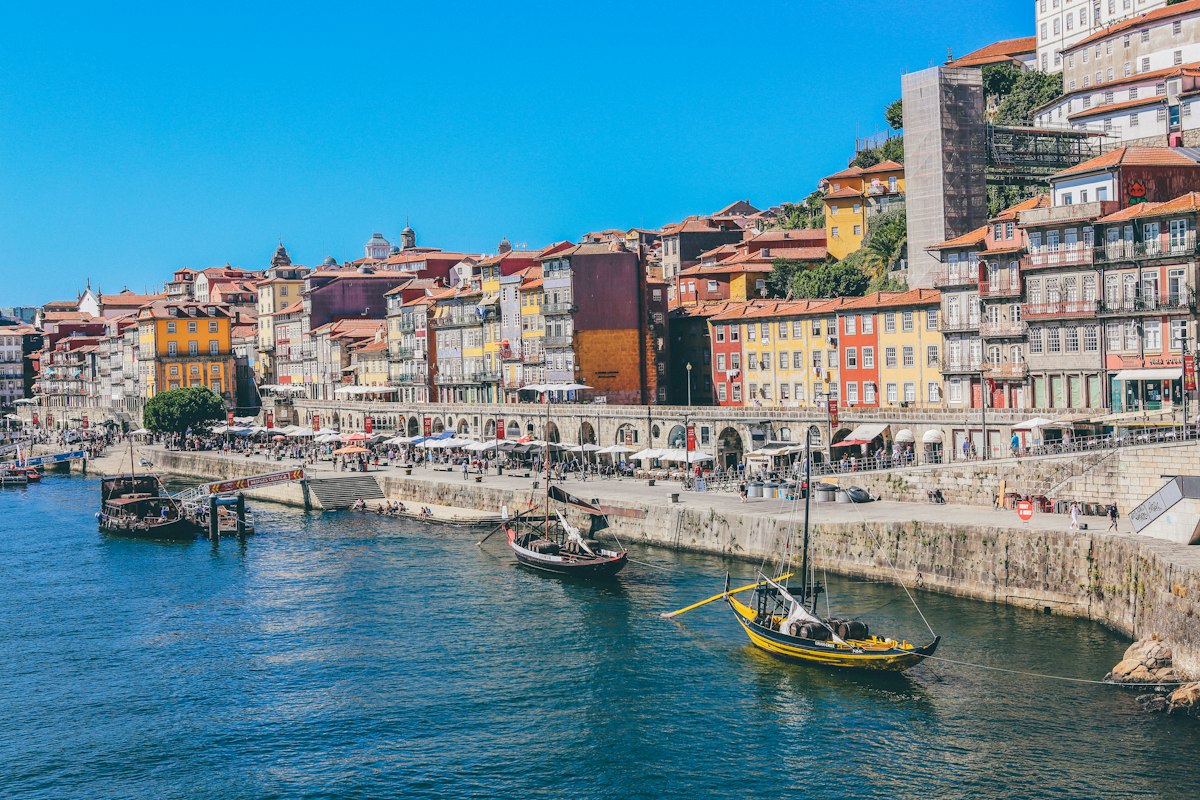
There exists, roughly eighty kilometres north of Lisbon, a town so completely enclosed within its medieval walls that entering through its main gate feels less like arriving at a destination than stepping into a different century. Óbidos — its name derived from the Latin oppidum, meaning fortified town — has survived earthquakes, invasions, revolutions, and the relentless pressures of modern development with its thirteenth-century walls, narrow cobblestone streets, and whitewashed houses essentially intact. It is, by any architectural or historical measure, the most perfectly preserved medieval town in Portugal. And in the twenty-first century, it has become something its Moorish founders and Portuguese reconquistadores could never have anticipated: a UNESCO Creative City of Literature, a globally recognised cultural destination, and one of the most intellectually rarefied luxury addresses in southern Europe.
The Queen's Town: Eight Centuries of Royal Patronage
Óbidos' relationship with luxury is not modern; it is genealogical. In 1282, King Dinis presented the town to his wife, Queen Isabel, as a wedding gift — establishing a tradition that would endure for six centuries. Subsequent Portuguese queens received Óbidos as part of their royal endowment, a practice that transformed the town from a military fortification into a royal retreat. The queens' patronage funded churches, convents, and the aqueduct that still supplies water to the town, creating a built environment of unusual refinement for a settlement of fewer than three thousand inhabitants.
This history of royal stewardship produced an architectural paradox: a fortified town with the aesthetic sensibility of a palace. The houses within the walls — uniformly whitewashed, with borders painted in the Óbidos blue and yellow that have become the town's chromatic signature — reflect a culture of care and aesthetic attention that has been maintained across centuries. Walking the Rua Direita, the main street that bisects the town from the southern gate to the castle, one encounters a streetscape that has changed in its essential character less than any comparable thoroughfare in Europe.
The Literary Transformation: Books as Urban Strategy
In 2015, UNESCO designated Óbidos a Creative City of Literature — a recognition that capped a decade-long strategy by the municipality to reinvent the town's cultural identity around books and reading. The strategy was audacious in its simplicity and radical in its implications. Beginning in the early 2000s, the town government systematically converted disused churches, cellars, and commercial spaces into bookshops. The Igreja de Santiago, a twelfth-century church deconsecrated after the 1755 earthquake, became a bookshop of extraordinary atmosphere — its nave lined with shelves, its altar replaced by a reading area, its medieval acoustics now amplifying the rustle of pages rather than plainchant.
Today, Óbidos contains more bookshops per capita than any town in the world — a statistic that, given the town's permanent population of roughly three thousand, is perhaps less impressive in absolute numbers than in cultural ambition. But the bookshops are not the point; they are the visible expression of a deeper strategy. The annual FOLIO — Festival Literário Internacional de Óbidos — draws writers, publishers, and readers from across Europe and Latin America. The Óbidos Literary Residence programme hosts international authors for month-long writing stays within the walls. The town's primary school has integrated literary creation into its curriculum. Literature, in Óbidos, is not an amenity; it is the town's operating system.
The Pousada: Sleeping Inside the Castle
The Pousada Castelo Óbidos — a nine-room hotel installed within the medieval castle itself — represents the most historically immersive luxury accommodation in Portugal. Guests sleep within walls that have stood since the twelfth century, in rooms furnished with period pieces that blur the boundary between hotel and museum. The castle's battlements, accessible to guests, offer views across the town's terracotta roofscape to the Silver Coast and the Óbidos Lagoon beyond. It is, in the most literal sense, a stay within history — and the waiting list for its most sought-after rooms, particularly the tower suite, extends to months.
Beyond the Pousada, a carefully curated ecosystem of boutique accommodation has emerged within and immediately outside the walls. Restored manor houses, converted to five-suite guesthouses with pools concealed within medieval gardens, offer an intimacy and architectural authenticity that no purpose-built hotel can replicate. The best of these — identified by their discreet entrances and their absence from booking platforms, accepting guests only through direct referral — represent the kind of accommodation that the most discerning travellers now seek: places where the architecture is the experience, where the walls have stories, and where luxury is measured in centuries rather than stars.
The Ginjinha Economy: Terroir as Cultural Currency
No account of Óbidos is complete without its most famous liquid export: ginjinha, the cherry liqueur that has been produced in and around the town for centuries. In Óbidos, ginjinha is served in the most distinctively local of vessels — an edible chocolate cup, a tradition that originated in the town's confectioneries and has become one of Portugal's most recognisable gastronomic rituals. The combination — tart cherry liqueur in bittersweet chocolate — is a small masterpiece of flavour engineering, and the act of drinking it while walking the walls has become a secular pilgrimage for visitors.
The ginjinha tradition has spawned a broader artisanal food economy within the walls. Chocolate workshops, pastry ateliers producing regional specialities, and a growing number of restaurants sourcing exclusively from the Oeste region's farms have created a gastronomic ecosystem of remarkable density for a town of this size. The annual Festival do Chocolate, held within the castle walls, draws tens of thousands of visitors and has established Óbidos as a credible node in Portugal's expanding luxury food tourism network — a network that increasingly rivals the established circuits of northern Spain and southern France.
The Silver Coast Position: Óbidos as Gateway
Óbidos' strategic position — equidistant from Lisbon and Coimbra, minutes from the Silver Coast's finest beaches, and at the centre of a wine region (the DOC Óbidos) producing increasingly acclaimed whites and reds — makes it the natural gateway to a stretch of Portuguese coastline that international luxury travellers are only beginning to discover. The Óbidos Lagoon, a saltwater lagoon separated from the Atlantic by a narrow sand spit, offers kitesurfing, sailing, and swimming in water warmer than the open ocean. The golf courses of Praia d'El Rey and Royal Óbidos, both within fifteen minutes of the town, rank among Portugal's finest.
For the luxury property buyer, Óbidos presents a proposition that is becoming increasingly rare in southern Europe: a town of genuine historical significance, with a living cultural programme, excellent transport connections, and property prices that — while rising steadily — remain a fraction of equivalent addresses in the Algarve, the Comporta coast, or the Sintra hills. A restored house within the walls, with two to three bedrooms and a garden, can still be acquired for between €400,000 and €800,000 — figures that would secure little more than a parking space in Cascais or a studio in central Lisbon. The gap, to borrow a term from equity markets, represents a significant cultural arbitrage — and one that the town's growing international reputation is steadily closing.