Óbidos: How Portugal's Most Perfectly Preserved Medieval Walled Town Became the Silver Coast's Most Literarily Refined Luxury Address
March 31, 2026 · 15 min read
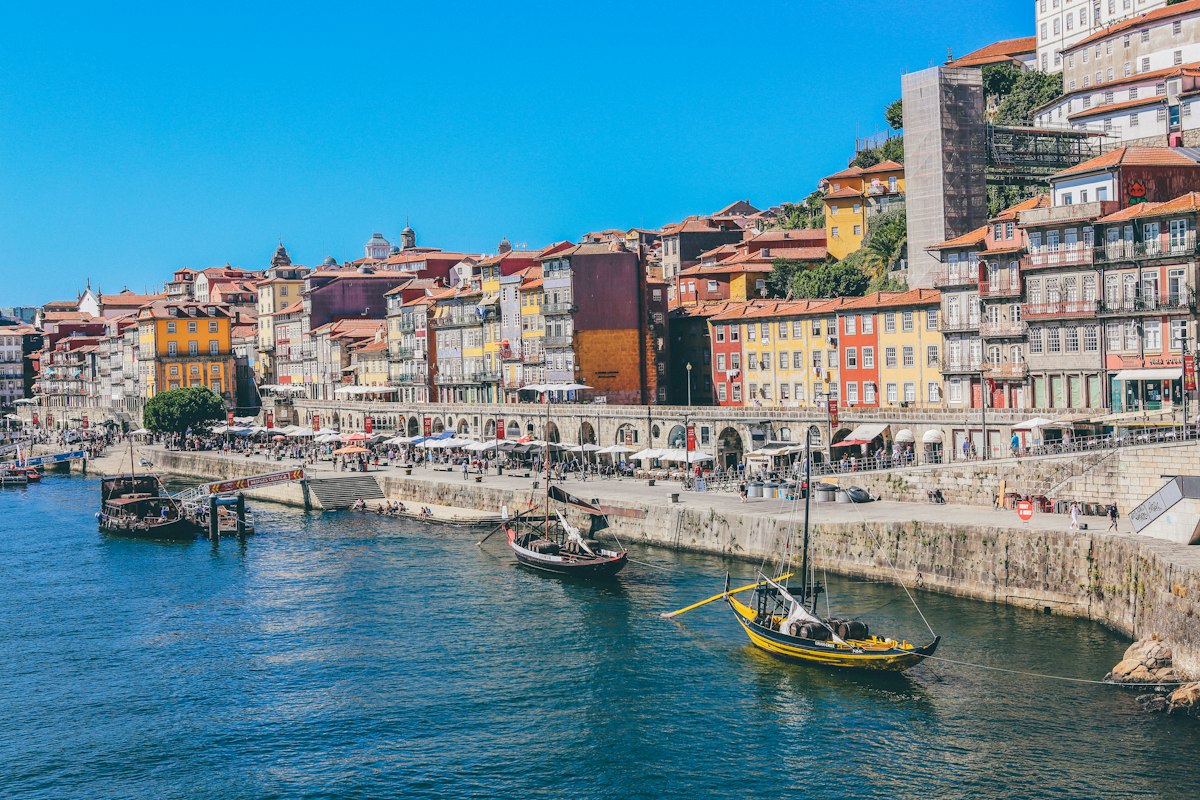
For seven centuries, the kings of Portugal gave Óbidos to their queens — a wedding gift of an entire walled town, its castle, its churches, its orange groves, and the revenue from its surrounding farmland. It was, by any measure, one of history's more extravagant matrimonial gestures, and it established a precedent that persists in the town's DNA: Óbidos is not a place that does things modestly. Today, within walls that have enclosed the same labyrinth of cobbled streets since the twelfth century, a new chapter of distinction is being written — one where the town's medieval architecture, its UNESCO City of Literature designation, and its proximity to the Silver Coast's most pristine lagoon create a luxury proposition of genuinely uncommon cultural depth.
The Architecture of Enclosure
Óbidos' walls — continuous, crenellated, walkable for their entire 1.5-kilometre circumference — create a spatial experience that is fundamentally different from any other small town in Portugal. The single entrance, the Porta da Vila, functions as a threshold between centuries: one steps through an eighteenth-century azulejo-lined archway and into a medieval townscape whose scale, proportions, and materials have remained essentially unchanged since the reign of King Dinis. The streets are too narrow for most vehicles. The houses — whitewashed, with painted borders of cobalt blue, ochre, or terracotta — climb the hillside in a compact vertical composition that rewards exploration at walking pace and resists comprehension at any other speed.
For the luxury buyer, this enclosure is the proposition. Properties within the walls — there are approximately 150 residential buildings, many subdivided into apartments — offer the rarest commodity in contemporary real estate: genuine spatial intimacy in a historic setting that is protected by its own architecture from the dilution that afflicts more accessible heritage towns. The walls do not merely define Óbidos' boundary; they enforce its character. There is no suburban sprawl, no commercial strip, no gradual transition from historic core to modern periphery. Inside is medieval. Outside is countryside. The distinction is absolute, and it is carved in stone.
The Literary Infrastructure
Óbidos' designation as a UNESCO Creative City of Literature in 2015 was not a bureaucratic formality but the recognition of a genuine cultural transformation. The town has integrated bookshops into its medieval fabric with a creativity that approaches installation art: a former church houses a bookshop whose volumes are shelved in the nave, a former market hall has been converted into a literary space whose architecture — stone arches, wooden beams, terracotta floors — gives the act of browsing a spatial quality that no purpose-built retail environment can replicate. The annual literary festival draws 100,000 visitors across ten days, transforming the town into a celebration of the written word that is, by any measure, disproportionate to its population of 3,000.
This literary identity is not merely cultural decoration; it constitutes a genuine amenity for the luxury buyer. The concentration of bookshops, cultural events, and literary infrastructure creates a community of residents and visitors whose interests skew toward the intellectual and the creative — a self-selecting demographic that produces the kind of social environment that wealth alone cannot purchase. The dinner conversations in Óbidos are not about property prices; they are about Portuguese poetry, contemporary fiction, and the relationship between architecture and narrative. For the buyer who has exhausted the social possibilities of the conventional luxury market, this is not trivial.
The Lagoon Dimension
Three kilometres west of the walls, the Óbidos Lagoon — a 6-square-kilometre tidal lagoon separated from the Atlantic by a sand barrier — adds a coastal dimension to the town's proposition that distinguishes it from inland heritage competitors. The lagoon is a protected natural area, home to flamingos, osprey, and an ecosystem of salt-marsh biodiversity that is incompatible with the jet-ski and beach-bar culture that characterises more developed coastal destinations. Kitesurfing and sailing are the dominant activities, pursued by an audience whose aesthetic and environmental values align with the town's own cultural positioning.
Properties between the walls and the lagoon — renovated farmhouses, quintas with vineyard parcels, and the occasional modernist intervention — command €1.5–€4 million for estates of 200–500 square metres on plots of 5,000–20,000 square metres. These are serious agricultural properties that combine residential luxury with productive capacity: wine, olive oil, fruit orchards. The combination of medieval town access and lagoon-adjacent rural estate creates a lifestyle proposition — morning swim in the lagoon, afternoon in the walled town, evening on a private terrace overlooking vineyards — that has no equivalent on the Algarve and only the most distant analogues on the Comporta coast.
The Ginja Economy
Óbidos' signature spirit — ginjinha, a sour-cherry liqueur served in edible chocolate cups from windowsill bars throughout the town — has become a symbol of the kind of hyper-local, artisanal economy that luxury markets increasingly prize. But the ginja is merely the most visible expression of a broader culinary identity that includes the town's Michelin-recognised restaurant, its artisanal cheese producers, and a growing cohort of natural winemakers who are exploiting the Atlantic-influenced microclimate of the Silver Coast to produce wines of startling freshness and originality.
The annual chocolate festival, the medieval market, the opera season at the castle — these are not tourist attractions bolted onto a heritage shell but expressions of a civic culture that has maintained its vitality precisely because the walls have preserved the town's scale and coherence. Óbidos does not need to invent traditions; it needs only to continue the ones it has sustained for eight centuries. This continuity is, in itself, a form of luxury — the knowledge that the rituals of the town will outlast any individual owner, and that to purchase property within the walls is to acquire not merely a residence but a position within a living cultural organism whose pulse has never faltered.
The Lisbon Equation
Óbidos sits 80 kilometres north of Lisbon — a journey of 55 minutes on the A8 motorway, or 75 minutes on the scenic route through Torres Vedras and the wine country of the Oeste region. This distance is calibrated with almost mathematical precision: close enough for a day trip to the capital's international airport, cultural institutions, and commercial infrastructure; far enough that the town experiences no commuter pressure, no suburban encroachment, and no dilution of its medieval character by metropolitan overflow.
The Silver Coast — the stretch of Atlantic coastline from Ericeira to Nazaré, of which Óbidos' lagoon forms the centrepiece — is Portugal's emerging luxury frontier, driven by surfing culture, natural wine, and a generation of international buyers who arrived in Lisbon, fell in love with Portugal, and then moved north in search of space, authenticity, and value. Óbidos is the cultural anchor of this coast: the town that gives the region its intellectual credibility and its historical depth. To own property here is to occupy the strategic centre of Portugal's next luxury chapter — a chapter whose opening pages are being written now, in medieval ink, on volcanic stone, within walls that have endured everything that eight centuries can deliver.
Portugal Latitudes
Premium intelligence on Portuguese luxury real estate, lifestyle, and Atlantic living.
Request Access →