Porto Santo: How Madeira's Golden Island Became the Atlantic's Most Therapeutically Compelling Luxury Address
March 21, 2026 · 17 min read
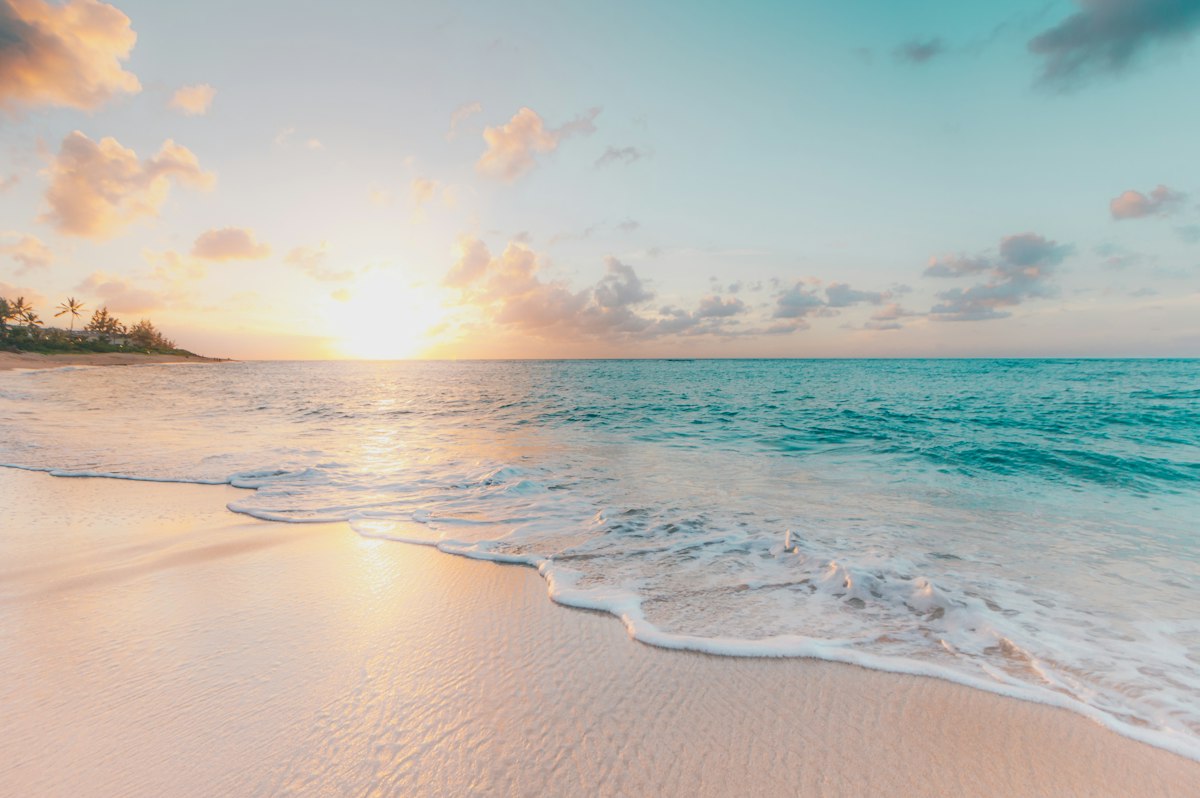
The paradox of Porto Santo is immediately visible from the air. Approach from the east — the standard flight path from Funchal, a fifteen-minute hop across forty-three kilometres of Atlantic — and you see two entirely different islands occupying the same archipelago. Madeira, receding behind you, is a vertical explosion of green: laurel forests, terraced vineyards, cloud-draped peaks reaching 1,862 metres. Porto Santo, emerging ahead, is its geological opposite: flat, golden, arid, a sun-bleached sliver of sand and volcanic rock that looks as though it belongs in the Cyclades rather than 500 kilometres off the Moroccan coast. The nine-kilometre beach that defines the island's southern shore — a continuous, unbroken crescent of golden sand — is visible from cruising altitude as a luminous edge between the dark Atlantic and the ochre interior. It is, by a considerable margin, the finest beach in Portuguese territory, and its therapeutic properties have been documented since the fifteenth century.
Christopher Columbus lived on Porto Santo before he sailed for the Americas. He married Filipa Moniz Perestrelo, daughter of the island's governor, in the small stone house that now serves as the Casa Museu Cristóvão Colombo in Vila Baleira, the island's only town. The marriage gave Columbus access to his father-in-law's maritime charts and navigational papers — documents that, according to several historians, directly informed the route he would propose to the Spanish Crown. Porto Santo, in this reading, is not merely a footnote in the history of exploration but a cause of it: the island that armed Columbus with the cartographic intelligence to conceive the Atlantic crossing.
The Therapeutic Sand
Porto Santo's beach is not merely beautiful. It is, in a clinically documented sense, medicinal. The sand is composed of calcium carbonate derived from coral and shell fragments, with a mineral profile that includes strontium, magnesium, and iodine in concentrations that have been the subject of peer-reviewed studies at the University of Madeira and the University of Aveiro since the 1990s. Patients with rheumatic conditions, orthopaedic injuries, and dermatological disorders have been prescribed psamoterapia — therapeutic sand burial — on Porto Santo since at least the eighteenth century, and the island's Centro de Geomedicina, established in 2004, formalises a practice that local residents have followed for generations.
The mechanism is both thermal and chemical. The dark carbonic sand absorbs solar radiation efficiently, reaching temperatures of 40–60°C at shallow depth during summer months. When patients are buried in warmed sand — a treatment typically lasting thirty to sixty minutes — the combination of heat, pressure, and transdermal mineral absorption produces measurable reductions in inflammation, joint stiffness, and chronic pain. A 2019 study published in the International Journal of Biometeorology demonstrated statistically significant improvements in patients with knee osteoarthritis after a ten-day psamotherapy programme on Porto Santo, with effects persisting for up to six months post-treatment. The island is, in effect, a naturally occurring medical spa — its therapeutic infrastructure geological rather than architectural.
The Water
The therapeutic narrative extends offshore. Porto Santo's seawater contains elevated concentrations of calcium, magnesium, iodine, and strontium — a mineral profile that, combined with the water's consistently warm temperature (20–24°C from May to November), creates conditions that thalassotherapy centres elsewhere spend millions attempting to replicate artificially. The island's single five-star resort — the Vila Baleira Thalassa — has built its entire wellness programme around the indigenous water and sand, offering treatments that are not imported luxury concepts but direct applications of the island's natural resources.
For serious wellness buyers, this geological authenticity represents something fundamentally different from the branded spa experiences available in the Algarve or the Balearics. Porto Santo does not need to construct wellness infrastructure because it is wellness infrastructure. The beach is the treatment room. The ocean is the mineral pool. The volcanic springs that emerge at several points along the coast provide naturally heated water without the energy costs and mechanical systems that thermal resorts elsewhere require. This is not wellness as amenity but wellness as geography — and it cannot be moved, replicated, or franchised.
The Property Landscape
Porto Santo's property market has historically been overshadowed by Madeira's — understandably, given that Funchal offers international connectivity, a cosmopolitan dining scene, and a property stock that ranges from restored quintas to contemporary clifftop villas. But the dynamics are shifting. The island's inclusion in Portugal's revised Non-Habitual Resident (NHR) programme — which offers a flat 20% income tax rate on qualifying foreign income — has attracted a small but growing cohort of Northern European buyers who are seeking not Madeira's infrastructure but Porto Santo's radical simplicity.
The market segments into three tiers. Apartments within walking distance of the beach — typically two-bedroom units in low-rise complexes — range from €200K to €400K. Detached villas with sea views and private pools — the dominant luxury typology — command €600K to €1.5M. And the rarest category — beachfront plots with direct sand access, of which perhaps a dozen remain undeveloped — have attracted offers above €2M, though transactions at this level are infrequent and typically private.
The most compelling investment thesis on Porto Santo, however, is not residential but hospitality. The island has approximately 800 hotel beds — a fraction of the demand during the June-September season, when occupancy rates exceed 95% and room rates at the Vila Baleira reach €400/night. The Regional Government of Madeira has approved a Strategic Tourism Plan for Porto Santo that envisions 1,200 additional beds by 2030, distributed across boutique and luxury properties that respect the island's low-rise, low-density character. For developers with the patience to navigate Portuguese planning processes and the sensitivity to work within the island's scale, the opportunity is substantial.
The Golf Equation
Porto Santo Golfe — the island's single course, designed by Severiano Ballesteros and opened in 2004 — occupies the island's northern coast, a links-style layout that plays across volcanic terrain with views of the Ilhéu de Cima and Ilhéu de Ferro. The course is consistently rated among Portugal's top twenty, which is remarkable given the island's size and remoteness. For the luxury buyer who combines golf with wellness — a demographic that the Algarve has courted successfully for decades — Porto Santo offers both at a fraction of the Algarve's entry price, with the added distinction of island exclusivity and Atlantic scale.
Ballesteros's design exploited the volcanic topography to create a course that feels larger and more varied than its 6,434-metre length suggests. The Par 3 sixth hole — a 190-metre carry across a volcanic ravine to a green perched on a basalt promontory above the Atlantic — is one of the most photographed holes in Portuguese golf. The clubhouse terrace, elevated above the course's back nine, offers what might be the finest sunset view in the Madeiran archipelago: the Atlantic stretching unbroken toward the Americas, with the Desertas islands silhouetted to the southeast and Porto Santo's golden beach glowing in the evening light to the south.
The Columbus Proposition
Porto Santo's heritage is not merely decorative. Columbus's residence on the island — the years he spent studying oceanic currents, wind patterns, and the navigational charts inherited from his father-in-law — connects Porto Santo to one of the most consequential moments in human history. The Casa Museu in Vila Baleira is modest in scale but profound in implication: the rooms where Columbus is believed to have conceived his Atlantic theory, the courtyard where he would have observed the prevailing northeasterly winds that would carry him to the Caribbean, the harbour from which Portuguese caravels departed on voyages that mapped the world's coastlines.
For a certain category of buyer — one who values historical resonance, intellectual narrative, and the sense of inhabiting a landscape that has shaped global history — Porto Santo's Columbus connection transforms the island from beach destination to cultural pilgrimage. The annual Columbus Festival in September, which includes historical re-enactments, maritime exhibitions, and a replica caravel anchored in Vila Baleira harbour, draws 30,000 visitors to an island with a permanent population of 5,500. It is the moment when Porto Santo's two identities — therapeutic retreat and historical fulcrum — merge into a single, compelling proposition.
The Future Golden Shore
Porto Santo's trajectory is clear: from overlooked satellite of Madeira to independent luxury destination with a wellness proposition that no competitor can replicate. The island's constraints — limited air access (Funchal and Lisbon only), minimal nightlife, a single town, no international retail — are precisely its strengths for the buyer who has moved beyond the Algarve's accessibility and seeks something more essential. The nine-kilometre beach is not going to get longer, but it is not going to get more crowded either: the island's planning framework limits development density to levels that will preserve the current ratio of sand to humanity for generations.
For the luxury buyer, Porto Santo offers a proposition that is increasingly rare in European real estate: entry prices that remain accessible (by international standards), a therapeutic USP that is scientifically validated and geographically unique, Portuguese fiscal advantages that reward international relocation, and the profound satisfaction of owning property on an island that gave Christopher Columbus the knowledge to discover the New World. The golden sand stretches nine kilometres. The opportunity will not last as long.
Explore Portuguese luxury
Discover more exceptional destinations across Portugal
Browse All Destinations →