Príncipe Real: How Lisbon's Coolest Neighbourhood Became Its Most Expensive
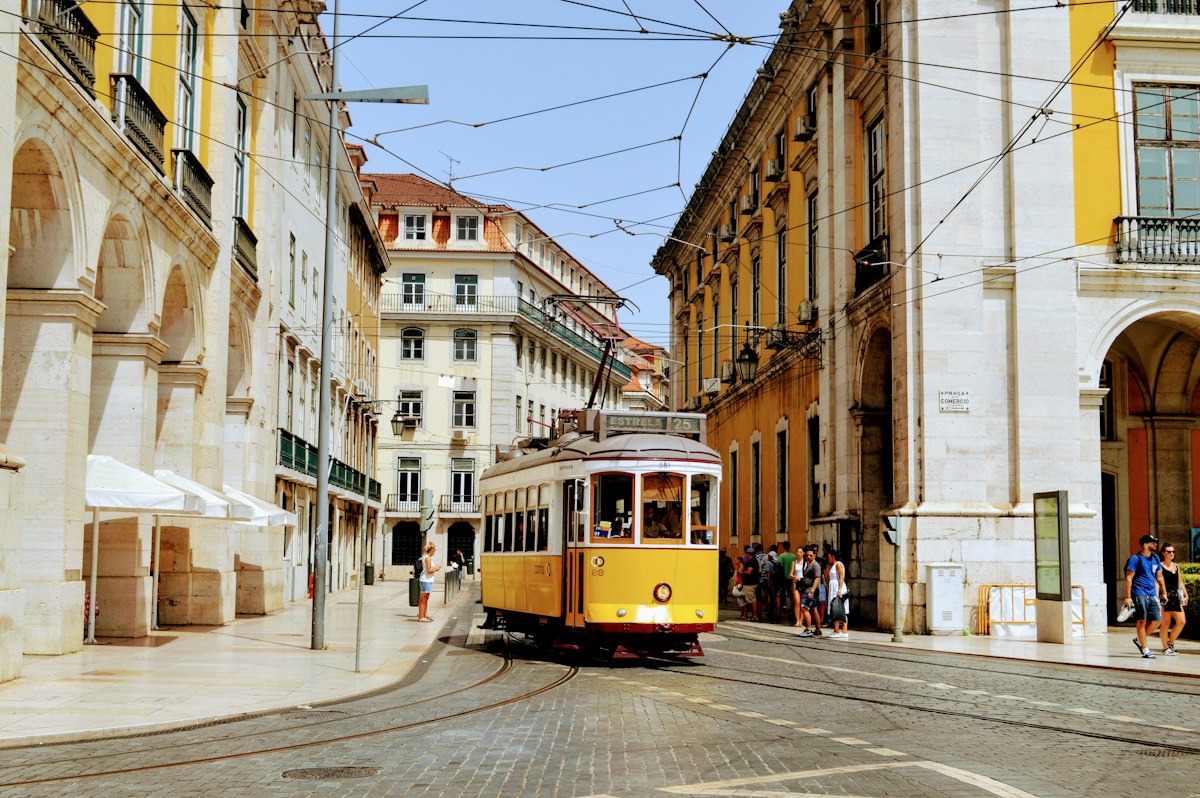
Climb the Rua da Misericórdia from the Chiado, past the São Roque church with its ceiling that cost more than the building, turn left at the Jardim Botânico, and you arrive at a small square dominated by an enormous cedar tree — its canopy so broad that an entire terrace of café tables fits beneath it. This is Príncipe Real, and the property surrounding this garden now commands prices that would be unremarkable in Mayfair or the 7th arrondissement but are, for Lisbon, revolutionary.
Geography of Desire
Príncipe Real occupies the highest point of central Lisbon, a hilltop plateau between the Bairro Alto's nocturnal chaos and the Jardim Botânico's Victorian calm. The neighbourhood is compact — perhaps ten streets in total — and its topography creates natural boundaries that preserve a village intimacy rare in European capitals. From its western edge, the view stretches across the Tagus estuary to the Serra da Arrábida; from its eastern terraces, Lisbon unfolds in a cascade of terracotta roofs down to the Alfama.
The built environment is predominantly 19th-century: four- to six-storey bourgeois apartment buildings with ornate iron balconies, azulejo-clad façades, and internal patios that flood the upper floors with light. Interspersed among these are a handful of grander structures — the Ribeiro da Cunha palace (now a concept store), the Torel palace (now a boutique hotel), and several aristocratic townhouses that have been subdivided, abandoned, and are now being meticulously restored to single-ownership residences.
The Price Revolution
In 2015, prime residential property in Príncipe Real traded at €3,000 to €5,000 per square metre. A spacious apartment with period features — high ceilings, original hardwood floors, balconies — could be acquired for €400,000 to €700,000. Today, equivalent properties command €10,000 to €15,000 per square metre. The finest penthouses — restored with contemporary interiors, roof terraces, and river views — have crossed €20,000 per square metre, bringing Príncipe Real into alignment with premium European neighbourhoods.
This 300% appreciation in a decade is driven by several converging forces: Portugal's Golden Visa programme (now largely ended for real estate but responsible for the initial capital inflow), the Non-Habitual Resident tax regime (attracting high-net-worth retirees and remote workers), Lisbon's emergence as a global tech hub (Web Summit, startup ecosystem), and the simple recognition that Lisbon was dramatically undervalued relative to its beauty, climate, safety, and cultural richness.
The Design District
What distinguishes Príncipe Real from Lisbon's other premium neighbourhoods — Chiado, Lapa, Estrela — is its concentration of design, fashion, and contemporary culture. The neighbourhood's transformation was catalysed by a generation of Portuguese designers and entrepreneurs who chose Príncipe Real as their base precisely because it was, in 2010, slightly worn, slightly forgotten, and irresistibly atmospheric.
Embaixada, a concept store occupying the neo-Moorish Ribeiro da Cunha palace on Praça do Príncipe Real, was the catalyst. Opened in 2013, it assembled Portuguese fashion, design, and lifestyle brands in a setting so architecturally extraordinary that the building became as much the attraction as the merchandise. Around it, a constellation of independent boutiques followed: Loja das Meias for Portuguese knitwear, A Vida Portuguesa for artisanal heritage products, Miguel Vieira and Luís Buchinho for Portuguese fashion.
The Jardim Botânico — 25 hectares of subtropical gardens descending the hillside, established in 1873 — provides an unexpected green counterpoint. Few European neighbourhoods of this density offer a botanical garden of this scale within walking distance. The garden functions as Príncipe Real's private park, used for morning runs, children's play, and the quiet contemplation that makes residential life in a capital city sustainable.
The Gastronomic Scene
Príncipe Real's restaurants reflect its demographic: international but not generic, creative but not pretentious, expensive but not exclusive. A Cevicheria — José Avillez's Peruvian-inspired space with the giant octopus sculpture suspended from the ceiling — established the neighbourhood as a dining destination. Bistro 100 Maneiras, the more accessible sibling of Ljubomir Stanisic's fine dining restaurant, packs in locals and visitors nightly. And a proliferation of natural wine bars — notably By the Wine, operated by the José Maria da Fonseca family from their 1834 cellars — has established Príncipe Real as Lisbon's enological centre.
The Saturday organic market in Jardim do Príncipe Real draws the neighbourhood's residents and a wider Lisbon audience: biodynamic vegetables from the Alentejo, raw-milk cheeses from the Serra da Estrela, sourdough from small-batch bakeries, flowers cut that morning. It is the kind of market that luxury developers worldwide attempt to manufacture; in Príncipe Real, it is organic and effortless.
The Buyer Profile
Príncipe Real attracts a specific archetype: the culturally fluent cosmopolitan who could live anywhere and chooses Lisbon for quality of life rather than tax optimisation. French buyers constitute the largest foreign cohort (approximately 25% of transactions), drawn by linguistic affinity, gastronomic standards, and the perception that Príncipe Real is what the Marais was thirty years ago — but with better weather. American buyers — particularly from New York and San Francisco's tech ecosystems — have increased sharply since 2022, attracted by Lisbon's time zone (overlapping with both US East Coast and European business hours), safety, and the digital nomad infrastructure.
Brazilian buyers, who had retreated during Portugal's Golden Visa restrictions, have returned as investors and end-users, often maintaining dual lives between São Paulo and Lisbon. And a discreet but significant cohort of Portuguese buyers — entrepreneurs and professionals who grew up in Lisbon's suburbs and are now returning to the city centre — provide the domestic demand that ensures the market is not purely speculative.
The Restoration Economy
Much of Príncipe Real's remaining potential lies in unrealised buildings. A survey conducted in 2024 identified 23 properties in the immediate neighbourhood classified as "devoluto" — officially uninhabitable — including three palaces of significant architectural merit. These represent the pipeline: each restoration adds supply at the premium end of the market, but the finite stock of heritage buildings ensures that completed properties will always be scarce.
The restoration process in Portugal is complex — heritage regulations, structural engineering challenges in seismic zones, planning approvals that can take 18 to 36 months — but the results, when executed by experienced architects (Eduardo Souto de Moura, Álvaro Siza's practice, Bak Gordon), produce residences that combine historical authenticity with contemporary comfort in a way that new construction cannot match.
Outlook
Príncipe Real is approaching maturity. The easy gains — buying derelict buildings at €2,000 per square metre and selling restored apartments at €10,000 — are over. But the neighbourhood's structural advantages persist: finite supply of heritage buildings, concentrated lifestyle infrastructure, proximity to Lisbon's commercial centre, and a community that is genuinely diverse and self-sustaining rather than seasonally dependent.
For buyers seeking a European pied-à-terre in a neighbourhood that combines Parisian sophistication with Lisbon's light, warmth, and accessibility, Príncipe Real remains compelling. The comparison is not to other Lisbon neighbourhoods — it is to Saint-Germain, Notting Hill, or the Jordaan. At €15,000 per square metre, it is still 50% cheaper than any of them.
Portugal Latitudes provides private intelligence on Portugal's most exceptional destinations and luxury real estate. Request access →