Sesimbra: How the Arrábida Coast's Secret Fishing Port Became Central Portugal's Most Authentically Mediterranean Luxury Address
March 23, 2026 · 14 min read
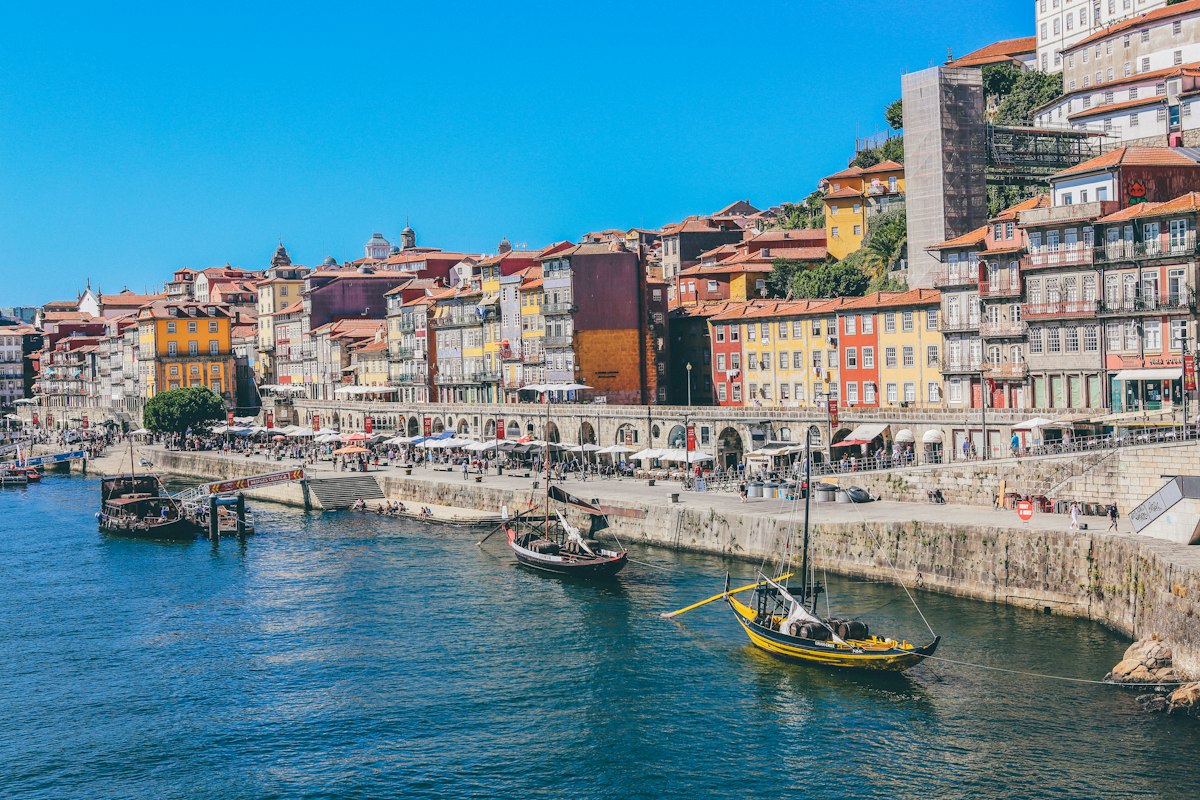
There are coastal towns that tourism discovers and transforms beyond recognition, and there are those that resist — not through deliberate exclusion, but through a geography so protective, a fishing culture so stubbornly alive, and a regulatory framework so conservation-minded that mass development simply cannot gain the purchase it requires. Sesimbra belongs firmly to the second category. Pressed between the Serra da Arrábida Natural Park's limestone escarpments and a bay of water so improbably turquoise it reads as Caribbean rather than Atlantic, this town of fifteen thousand permanent residents has emerged as arguably the most compelling coastal luxury proposition within an hour of Lisbon — precisely because it has refused to become anything other than what it has always been.
The drive from Lisbon takes forty minutes along the A2 and then through the Arrábida's forested switchbacks — a transition so abrupt in its shift from motorway modernity to Mediterranean wildness that first-time visitors routinely question whether their navigation has erred. It has not. The descent into Sesimbra is the point. The town reveals itself gradually, through pine and cork oak, the castle's silhouette appearing first, then the harbour's arc, then the beach — and by the time you arrive, the psychological distance from Lisbon feels not like forty minutes but like forty years.
The Fortress and the Fleet
Sesimbra's identity rests on two architectural facts: the Moorish castle that crowns the hill above the town, and the fishing fleet that still operates from its harbour every morning. The castle, extensively restored but dating to the twelfth century, provides the strategic high ground that explains why anyone settled here at all — its walls command views north to the Tagus estuary and south along the Arrábida coast that would satisfy any military planner. Today it functions as the town's symbolic anchor, the visible reminder that Sesimbra existed long before anyone thought to build boutique hotels along its waterfront.
The fleet is more significant. In an era when most Portuguese fishing villages have seen their working harbours converted to marina berths and pleasure craft, Sesimbra's port remains operationally authentic. The morning fish auction at the Lota — where restaurateurs and market vendors bid on the night's catch — is not a performance staged for tourists but a commercial transaction that determines what Sesimbra eats that day. The swordfish, the espada preta (black scabbardfish), the lulas (squid) that appear on restaurant menus by noon were swimming twelve hours earlier. This is not farm-to-table; it is net-to-plate, and the difference is not merely semantic but gastronomic.
The Arrábida Effect
The Serra da Arrábida Natural Park, which wraps around Sesimbra's western and southern flanks, is simultaneously the town's greatest amenity and its most effective development constraint. The park's protected status — established in 1976 and progressively tightened — means that the coastline immediately west of Sesimbra, which includes some of the most beautiful beaches in Europe (Praia de Galapinhos was voted Europe's best beach in 2017), will never be developed. No hotels, no beach clubs, no residential towers. The limestone cliffs will remain limestone cliffs, the Mediterranean maquis will continue to scent the air with cistus and rosemary, and the waters will stay the particular shade of transparent teal that results from limestone geology and zero coastal development.
For Sesimbra's luxury market, this creates what economists call a permanent amenity guarantee — the certainty that the natural asset base underpinning property values will not be degraded by future development. It is the same dynamic that operates in Amalfi, where the national park status of the hillsides ensures that the views will never be obstructed, or in Cap Ferrat, where zoning restrictions maintain the peninsula's density limits. Sesimbra's protection is arguably more robust than either, because it is geological as much as regulatory: the Arrábida's terrain is simply too steep, too fragile, and too ecologically significant to build on, even if the regulations were relaxed.
The Quiet Luxury Market
Sesimbra's property market operates in a register unfamiliar to those accustomed to the Algarve's resort dynamics or Lisbon's urban investment frenzy. There are no gated resort communities, no branded residences, no golf courses. What there is, increasingly, is a discreet market in renovated fishermen's houses along the Rua da Fortaleza and the streets climbing toward the castle — two- and three-bedroom properties with thick stone walls, tiled floors, and terraces overlooking the bay, purchased by Lisbon professionals, Northern European retirees, and a small but growing cohort of remote workers who have discovered that a forty-minute commute to the capital is a price worth paying for waking to the sound of the Atlantic.
Prices remain remarkably reasonable by European coastal standards — prime waterfront renovations trading between €400,000 and €800,000 for properties that would command three to five times that figure on the Algarve's golden triangle or the French Riviera. The arbitrage opportunity is clear to anyone who visits, and the market has begun to respond: transaction volumes in 2025 rose 35 per cent year-on-year, with the average holding period shortening from seven years to four, suggesting that Sesimbra is transitioning from a buy-and-hold market to something more dynamic.
The Gastronomic Case
Sesimbra's culinary identity is inseparable from its harbour. The town's forty-odd restaurants — an extraordinary density for its population — operate on a simple premise: the fish is local, the cooking is Portuguese, and the quality of the raw material does the heavy lifting. This is not a town of molecular gastronomy or imported Nordic techniques; it is a town where a grilled robalo (sea bass), caught that morning, prepared with olive oil, garlic, and sea salt, and served on a terrace overlooking the bay from which it was extracted, constitutes a luxury experience that no amount of culinary theatre can improve upon.
The standout addresses — Casa Mateus for its espada preta preparations, O Velho for its cataplanas, Ribamar for its terrace position and its consistent ability to serve the freshest fish in town — are not fine dining establishments in the Michelin-star sense. They are neighbourhood restaurants that happen to operate at a level of ingredient quality that most starred establishments would struggle to match. The distinction matters: Sesimbra's gastronomy is luxurious not because of what is done to the food but because of what the food is.
The Diving Capital
Sesimbra has quietly established itself as one of Europe's premier dive destinations — a distinction that sounds niche but has measurable implications for the town's luxury positioning. The Arrábida coast's underwater geography, which includes submerged caves, limestone reef systems, and visibility that routinely exceeds twenty metres, attracts a global diving community that tends toward the affluent and the adventurous. The area's marine biodiversity — a consequence of the cold Canary Current meeting the warmer Mediterranean-influenced waters inside the Arrábida bay — means that a single dive can produce sightings of octopus, moray eels, sunfish, and, in summer, ocean sunfish (Mola mola) so large they resemble submerged vehicles.
For the property market, the diving community provides a secondary demand driver that operates independently of the beach-holiday market. Dive tourism is year-round, weather-tolerant (divers care about underwater conditions, not sunshine), and generated by a demographic that skews toward high disposable income and repeat visits. Several of Sesimbra's most significant recent property purchases have been made by diving enthusiasts who arrived for a week's holiday and returned to buy.
What Sesimbra Teaches
The town's lesson for the luxury coastal market is deceptively simple: the most durable property premiums are not created by development but by the absence of it. Sesimbra's value proposition is not what has been built — the architecture is modest, the infrastructure is adequate rather than exemplary, the nightlife is essentially non-existent — but what has been preserved. The fishing fleet. The natural park. The limestone coastline. The water quality. The forty-minute proximity to a European capital. These are not amenities that can be replicated or competed away; they are geological and cultural inheritances that compound in value as the alternatives disappear.
For those who understand that luxury, in its most evolved form, is not about addition but about subtraction — the removal of noise, development, crowds, and the various indignities of over-touristed coastal life — Sesimbra is not merely an interesting option. It is, increasingly, the option. A fishing village that has maintained its authenticity not through nostalgic preservation but through the natural protection of its geography, and that offers, for those willing to accept modesty over spectacle, one of Europe's most genuinely luxurious coastal experiences.
Explore More from Portugal Latitudes
From the Algarve's golden cliffs to Porto's wine cellars and Lisbon's reinvented quarters, discover the addresses that define Portuguese luxury. Browse all destinations →