Setúbal & Arrábida: How Portugal's Last Wild Peninsula Became the Lisbon Elite's Most Coveted Coastal Retreat
March 2026 · 11 min read
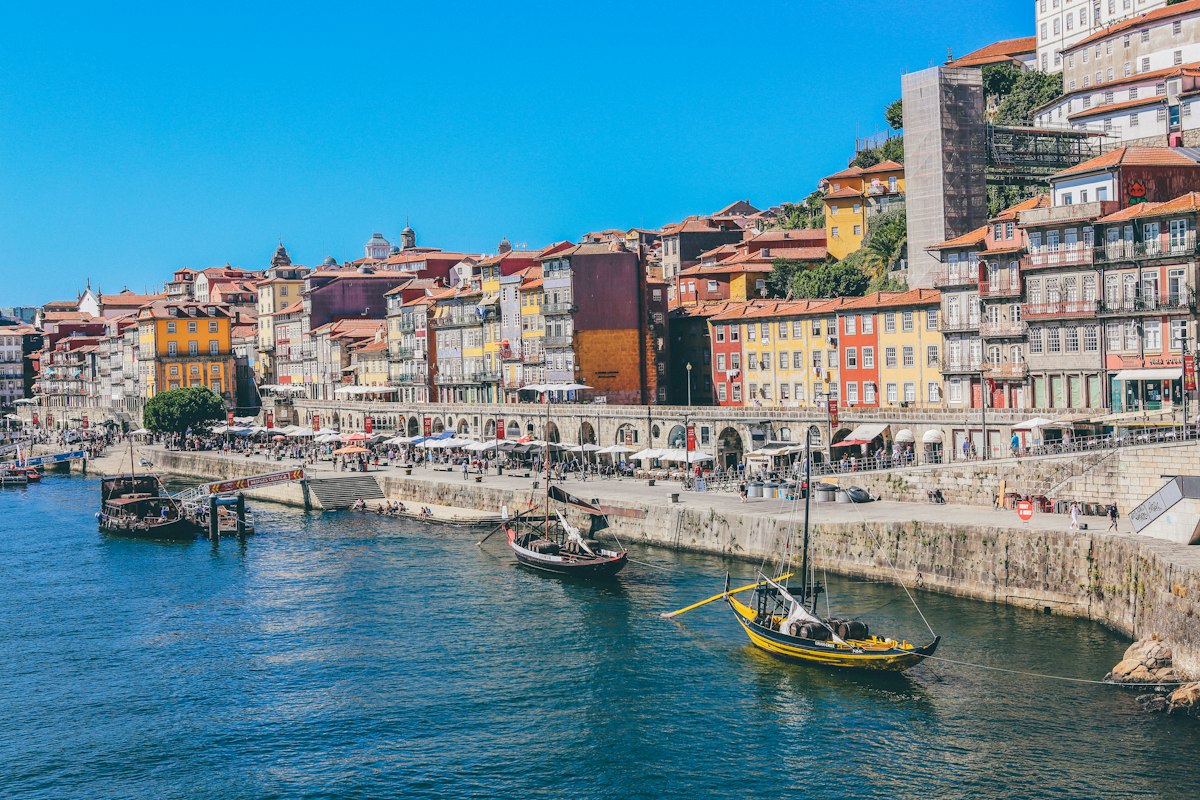
Thirty minutes south of Lisbon, across the Tagus on the Vasco da Gama bridge or through the elegant geometry of the Ponte 25 de Abril, a limestone mountain range descends toward the Atlantic in a cascade of Mediterranean pines, wild orchids, and hidden coves whose waters rival the Aegean for transparency. This is the Serra da Arrábida — Portugal's most biodiverse terrestrial ecosystem and, increasingly, the Lisbon establishment's answer to a question that has preoccupied Mediterranean elites for centuries: where can one find genuine coastal beauty within commuting distance of a capital city?
The Geography of Privilege
The Arrábida peninsula occupies a geological anomaly that explains its extraordinary beauty. The serra — a protected natural park since 1976 — is one of the last remnants of Mediterranean scrubland in Western Europe, its microclimate sheltered from Atlantic winds by the mountain's north-facing slope, creating conditions warm enough for species that properly belong in Greece or southern Turkey. The result is a landscape of almost hallucinogenic lushness: Aleppo pines draped over limestone cliffs, Phoenician junipers older than the Reconquista, and beaches — Praia dos Galapinhos, Praia de Galapinhos, Praia do Creiro — where the water is so clear that fishermen complain the fish have nowhere to hide.
This natural protection has also limited development. The park's conservation status prohibits new construction within the serra itself, creating an absolute constraint on supply that has made properties on the park's periphery — in Azeitão, Palmela, and the coastal villages of Portinho da Arrábida and Sesimbra — among the most stable luxury investments in the Lisbon metropolitan area. While Cascais and Estoril have absorbed the bulk of the capital's luxury residential demand, the Arrábida peninsula has attracted a different buyer: quieter, more nature-oriented, less interested in the social performance of the Linha de Cascais and more interested in five hectares of vineyard with an ocean view.
Azeitão: The Wine Village That Became a Lifestyle Address
If the Arrábida coast provides the drama, Azeitão provides the substance. This village at the serra's northern foot has been the centre of Portuguese Moscatel production since the 18th century — the sweet, amber wine that is to the Setúbal peninsula what Port is to the Douro. The José Maria da Fonseca estate, founded in 1834, still occupies the village centre, its baroque manor house and hundred-year-old cellars forming a monument to winemaking continuity that has few equivalents in Europe.
But Azeitão's appeal has expanded far beyond wine tourism. The village's Saturday market — a heaving assembly of sheep's cheese from the serra, fresh bread from wood-fired ovens, charcutaria from the Alentejo border, and cut flowers from local gardens — draws a crowd that mixes local farmers with Lisbon architects, British retirees, and a growing cohort of remote-working professionals who discovered during the pandemic that a village with a world-class food market, a protected natural park, and a 35-minute train to Lisbon's Entrecampos station was not a compromise but an upgrade.
Property prices in Azeitão have reflected this discovery. Quintas — the Portuguese term for rural estates, typically combining a main house, outbuildings, and agricultural land — that sold for €400,000 to €600,000 in 2019 now command €800,000 to €1.5 million. Renovated quintas with pool, vineyard, and serra views have crossed the €2 million threshold. Yet compared to equivalent properties in Sintra (€3 million+) or Cascais (€5 million+), the Azeitão market remains a relative-value proposition that sophisticated buyers are only beginning to exploit.
Sesimbra: The Fishing Town Reimagined
At the peninsula's southern extremity, Sesimbra presents a Portuguese coastal town that has resisted the standardisation afflicting much of the Algarve. The harbour still functions as a working fishing port — Portugal's largest fleet of artisanal gillnetters operates from its quays — and the restaurants that line the waterfront serve grilled sea bream, percebes (goose barnacles), and caldeirada (fish stew) with a directness and quality that no amount of Michelin ambition can replicate. You eat with your hands. You drink Moscatel from the serra. The sunset lights up the Moorish castle on the headland above. It is, in the most literal sense, the good life.
Sesimbra's luxury market is emerging rather than established. The clifftop area above the town — where a handful of contemporary villas have been built on plots with unobstructed Atlantic views — represents the peninsula's highest-value residential segment, with recent transactions at €3,500 to €4,500 per square metre. A new boutique hotel, opened in 2025 in a restored 17th-century convent above the harbour, has introduced the town to the design-conscious travel audience for the first time. The building's conversion — stone walls, lime plaster, terracotta floors, and a rooftop pool with views to the Berlengas archipelago — offers a template for the sensitive luxury development that Sesimbra's geography and culture demand.
The Moscatel Effect
Wine has always been the Setúbal peninsula's economic backbone, and the region's denominação de origem controlada — Moscatel de Setúbal — is one of the oldest protected wine designations in the world. But the peninsula's wine story is evolving. Alongside the traditional Moscatel producers, a new generation of winemakers is planting international varieties — Syrah, Touriga Nacional, Alicante Bouschet — on the serra's sheltered slopes, producing structured reds that have begun appearing on Lisbon's finest restaurant lists and attracting investment from wine professionals who see the Arrábida terroir as Portugal's next great discovery.
For the luxury property buyer, the wine connection is not merely cultural but financial. Vineyard estates in the Arrábida DOC zone are eligible for agricultural tax treatment that substantially reduces the effective cost of ownership, while producing a wine that — unlike most vanity-vineyard projects — has genuine commercial value. A five-hectare estate with planted vines, a renovated quinta, and serra views can generate €50,000 to €80,000 annually from wine production while appreciating as residential real estate. It is the rare investment that pays dividends in both euros and evenings on the terrace.
The Infrastructure Question
The Arrábida peninsula's Achilles heel has always been access. The road from Lisbon — via the A2 motorway and the N10 — is efficient but lacks the rail connectivity that has made Cascais and Sintra such successful residential satellites. That is changing. The Fertagus suburban rail service, which crosses the Tagus on the Ponte 25 de Abril, now connects Setúbal to central Lisbon in 50 minutes, with stops at Entrecampos and Roma-Areeiro that place commuters in the capital's business districts without a car. Plans announced in 2025 to extend the Lisbon Metro's Linha Vermelha to the south bank — with a terminus at Barreiro, 15 minutes from Azeitão — would, if realised by the projected 2030 completion date, transform the peninsula's connectivity and its property market in equal measure.
The peninsula has also benefited from Lisbon airport's southern approach path, which brings international flights directly over the serra — a visual introduction to the landscape that has, by several estate agents' accounts, prompted more than a few impulse property enquiries from business-class passengers who looked down and saw paradise.
The 2026 Outlook
Setúbal and the Arrábida peninsula enter 2026 as Portugal's most compelling emerging luxury address — a market where natural beauty, cultural depth, wine heritage, and relative value converge in a proposition that the Algarve lost decades ago and that Comporta, for all its allure, cannot match in diversity. The buyer who recognises this — who sees in Azeitão's quintas and Sesimbra's clifftops the same potential that early movers saw in Comporta in 2015 — will find a market that is generous with both beauty and returns. The serra waits. It has been waiting, in geological patience, for 150 million years.
Portugal Latitudes explores Portugal's most exceptional destinations, luxury real estate and refined living. Join the circle →