Setúbal & the Tróia Peninsula: How the Arrábida Coast's Secret Estuary Became Portugal's Most Ecologically Refined Luxury Address
March 24, 2026 · 14 min read
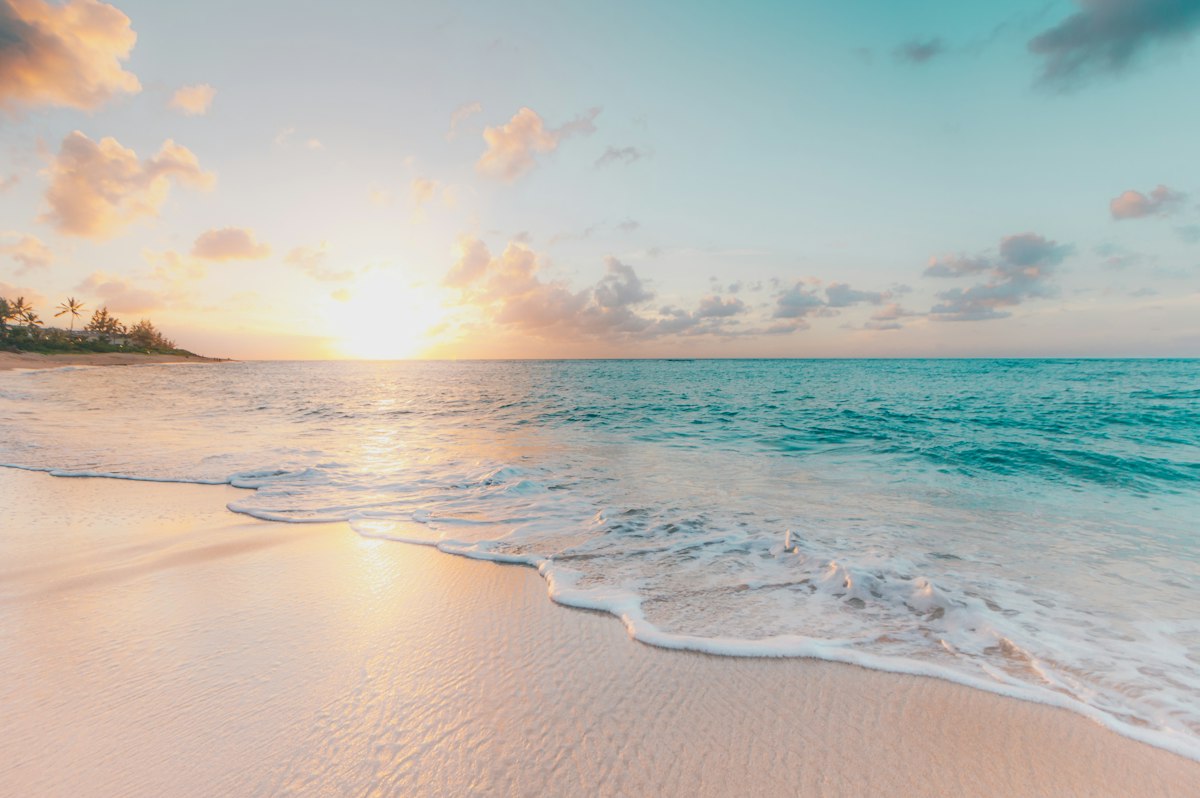
Forty-five minutes south of Lisbon, where the Serra da Arrábida plunges into the Atlantic with the geological drama of a coast that refuses to submit quietly to the sea, a different Portugal reveals itself. This is not the golden limestone of the Algarve, nor the granite solidity of the Minho, nor the urban sophistication of Lisbon's riverside terraces. This is something older and wilder: a landscape where the Sado estuary — one of Europe's last genuinely undeveloped estuarine systems — creates a boundary between the cultivated world of the Setúbal Peninsula and the fourteen-kilometre sand spit of Tróia that stretches into the Atlantic like a geological afterthought.
The resident bottlenose dolphin population — approximately thirty individuals who have made the Sado estuary their permanent home, one of only three such resident estuarine pods in Europe — is not a tourism amenity. These dolphins have occupied this estuary since at least the Roman period, when the fish-salting factories of Cetóbriga (the settlement whose ruins are still visible on Tróia's northern tip) depended on the same fish stocks that sustain the pod today. When a developer markets "dolphin views" from a Tróia apartment, they are not selling proximity to a managed wildlife experience. They are selling adjacency to an ecological relationship that predates the Portuguese nation by approximately two millennia.
The Arrábida Factor
The Serra da Arrábida — a 35-kilometre limestone ridge that runs parallel to the coast between Setúbal and Sesimbra — functions as the region's defining geographical gift and its most effective development constraint. Designated as a Natural Park in 1976, with subsequent marine protection extending to the coastal waters below the ridge, Arrábida guarantees something that no amount of planning legislation alone could achieve: the permanent preservation of one of the western Mediterranean's most biodiverse coastal ecosystems within commuting distance of a European capital.
The park's botanical significance is extraordinary. Over 1,400 plant species have been catalogued within its boundaries, including several endemic to the limestone micro-habitats of the serra. The Mediterranean-type maquis vegetation that covers the seaward slopes — dense, aromatic, and virtually impenetrable — creates a landscape that feels more like Croatia's Dalmatian coast or Sardinia's eastern shore than anything visitors expect to find within an hour of Lisbon. The beaches below the ridge — Galapinhos, Portinho da Arrábida, Figueirinha — are consistently ranked among Europe's finest, their turquoise waters a consequence of the limestone geology that filters runoff and the marine protection that limits boat traffic.
For the luxury property market, Arrábida's protected status creates a structural constraint that mirrors the dynamics of Monaco's building height limits or Saint-Tropez's conservation zone: the most desirable landscape is permanently removed from development, which concentrates demand and inflates values in the areas that remain buildable. Properties with unobstructed Arrábida views — whether on the Setúbal side of the serra or across the estuary on Tróia — command premiums of 40 to 60 per cent over comparable properties without the view. And because the view cannot be blocked by future development, this premium is, in investment terms, structurally guaranteed.
Tróia: The Peninsula That Time Forgot
The Tróia Peninsula is a geographical anomaly: a sand spit fourteen kilometres long and, at its narrowest, barely 200 metres wide, separating the Sado estuary from the open Atlantic. Its northern tip, connected to the mainland by a ferry from Setúbal that takes twelve minutes, holds the ruins of Cetóbriga — a Roman fish-processing complex that was, between the first and fifth centuries AD, one of the largest industrial operations in the western Roman Empire, producing the fermented fish sauce garum that was shipped across the Mediterranean.
The ruins are remarkable not merely for their archaeological significance but for what they reveal about the peninsula's temporal character. Tróia has been, across two millennia, a place of cyclical occupation and abandonment — settled by the Romans, abandoned to sand and scrub during the medieval period, rediscovered as a bathing resort in the nineteenth century, developed tentatively in the twentieth, and now, in the twenty-first, the subject of Portugal's most ambitious coastal luxury development programme.
The Tróia Resort — operated by Sonae Turismo and anchored by the 200-room Tróia Design Hotel — represents the peninsula's current interpretation of itself. The architecture, by Portuguese firms Promontório and RISCO, adopts a deliberately understated language: low-rise, horizontally oriented, clad in materials (wood, concrete, corten steel) that weather into sympathy with the surrounding dunes. The golf course, designed by Robert Trent Jones Jr., routes through stone pines and maritime vegetation with a sensitivity to the peninsula's fragile ecology that earlier development proposals conspicuously lacked.
Residential properties on Tróia currently trade between €350,000 for two-bedroom apartments and €2.5 million for the most substantial villas — prices that represent, by Algarve standards, extraordinary value for the combination of beach quality, ecological setting, and proximity to Lisbon. The peninsula's development density is controlled by environmental regulation at approximately one-fifth of what comparable beachfront land in the Algarve would support, which means that each property commands a proportionally larger share of the landscape than its purchase price might suggest.
The Moscatel Economy
Setúbal's viticultural identity is dominated by a single grape — Moscatel de Setúbal — that produces one of Portugal's most historically significant fortified wines. The Denominação de Origem Controlada (DOC) for Moscatel de Setúbal, established formally in 1907 but recognising a winemaking tradition documented since the fourteenth century, covers the limestone and clay slopes of the Arrábida foothills, where the grape achieves a concentration of flavour that has attracted comparisons to the great Muscats of Pantelleria and Samos.
The wine estates — José Maria da Fonseca (founded 1834), Bacalhôa (whose azulejo-decorated palace is itself a national monument), and the newer boutique operations that have established themselves on plots where economics once favoured only large-scale production — constitute a wine tourism infrastructure that is, in quality if not yet in reputation, competitive with the Douro. The difference is accessibility: where the Douro's quintas require a three-hour drive from Porto, Setúbal's estates are forty minutes from Lisbon's city centre, making them viable for afternoon visits rather than requiring overnight commitment.
For the luxury property buyer, the Moscatel region offers a proposition that combines agricultural authenticity with proximity: quintas with functioning vineyards, period houses with azulejo-decorated interiors, and views across the Sado plain to the estuary beyond — all within a commute of central Lisbon that is shorter than many residents of London's Home Counties endure daily.
The Seafood Capital
Setúbal's claim to be Portugal's seafood capital is not the reflexive boosterism that most coastal towns indulge. The city's fishing fleet — operating from the Doca de Pesca, a working harbour that sits, almost confrontationally, alongside the tourist marina — is the largest on the Portuguese Atlantic coast south of Peniche. The choco frito (fried cuttlefish) that appears on virtually every restaurant menu in the city is not a regional curiosity but a dish of genuine gastronomic distinction, the cuttlefish sourced from the estuary's mudflats and fried with a lightness that belies the apparent simplicity of the preparation.
The restaurant scene extends well beyond cuttlefish. Casa Santiago, in the city's old quarter, has served grilled fish and shellfish with an almost aggressive lack of pretension since 1976 — plastic tables, paper cloths, fish grilled over charcoal on the pavement outside, and a wine list that begins and ends with Moscatel and the excellent reds of the Península de Setúbal DOC. The food is extraordinary not because of technique or presentation but because of the quality of the raw materials and the confidence of a kitchen that has been cooking the same dishes for five decades and sees no reason to change.
The Connectivity Equation
Setúbal's relationship with Lisbon is defined by the Vasco da Gama Bridge and the A2 motorway — infrastructure that has, over the past two decades, transformed the city from a provincial industrial port into a functional extension of Lisbon's metropolitan housing market. The commute — 35 to 50 minutes by car, depending on traffic and the specific destination within Lisbon — is competitive with travel times from many of Lisbon's northern suburbs and significantly shorter than commuting from the increasingly popular Silver Coast towns of Ericeira or Peniche.
The Fertagus suburban rail service, operating across the 25 de Abril Bridge from Setúbal to Lisbon's Roma-Areeiro station, offers a public transport alternative that takes approximately one hour — a duration that is long by northern European standards but that provides, for the price of a monthly pass at €120, a genuine car-free option for daily commuters. The planned extension of Lisbon's metro network to the south bank of the Tagus, currently in the approval phase, would reduce this connection time and, more importantly, integrate Setúbal into the metropolitan public transport network in a way that would materially affect property values throughout the peninsula.
The Investment Horizon
The investment thesis for Setúbal and Tróia rests on three structural dynamics that distinguish the region from Portugal's more established luxury markets. First, the Arrábida Natural Park creates a permanent supply constraint on the most desirable landscape — a constraint that, unlike planning regulations, cannot be reversed by a change of political administration. Second, the Sado estuary's ecological status (Natura 2000, Ramsar Convention, Important Bird Area) extends this protection across the waterway that defines the region's character. Third, the proximity to Lisbon — closer than the Algarve by a factor of three — positions the region as a viable primary residence location rather than merely a holiday home destination.
Current pricing reflects a market that has not yet fully absorbed these structural advantages. Prime Tróia beachfront trades at approximately €3,500 to €5,000 per square metre — roughly half the price of equivalent properties on the Algarve's Golden Triangle and one-third of comparable beachfront in Cascais or the Lisbon Riviera. Arrábida-view properties in the Setúbal hills trade at €2,000 to €3,500 per square metre, prices that seem almost anomalous given the natural amenity they command.
The Setúbal region's moment has the quality of inevitability about it. Lisbon's expansion south of the Tagus is not a speculation but a demographic fact. The Arrábida's beauty is not a matter of opinion but of botanical and geological record. The estuary's dolphins are not a seasonal attraction but a permanent ecological presence. In a country where luxury property buyers have, for decades, looked almost exclusively to the Algarve, the Arrábida coast offers something the southern coast increasingly cannot: proximity, authenticity, and the structural guarantee that the landscape which makes it beautiful will never be built upon.
Part of the Latitudes Media network
Explore more: Mauritius · Dubai · Monaco · Riviera · Italy · Saint-Barth · Spain · Maison