Sortelha: How Portugal's Most Perfectly Preserved Granite Fortress Village Became the Serra da Estrela's Most Hauntingly Beautiful Luxury Address
March 2026 · 14 min read
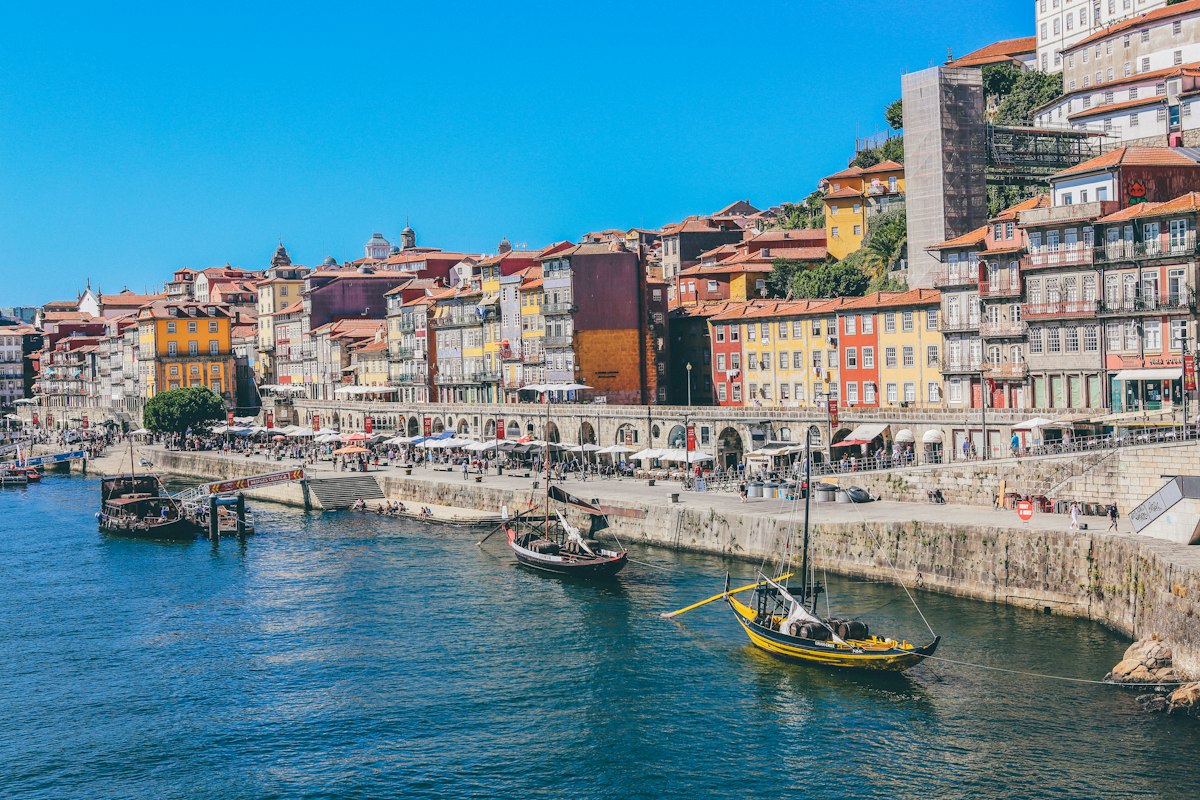
There are villages in Portugal that have been restored to attractiveness. Sortelha has not been restored at all. It has simply persisted — a granite fortress settlement of perhaps forty permanent residents, perched on a tor of massive boulders in the Beira Interior, where houses are not built upon the rock but incorporated into it: walls emerging from living granite, doorways cut through natural formations, staircases carved from the mountain itself. The effect is not architectural but geological, as though the village were a mineral formation that happened to develop rooms, windows and chimneys. To enter Sortelha through its medieval gateway is to understand, with immediate physical certainty, what European settlement looked like before the invention of comfort — and to recognise that comfort, while pleasant, is not the only criterion by which a place of habitation should be judged.
The Fortified Logic
Sortelha exists because of the Reconquista — the multi-century Christian campaign to recapture the Iberian Peninsula from Moorish rule that gave Portugal its territorial shape and its foundational mythology. In 1228, King Sancho II granted Sortelha its foral (charter), establishing it as one of a chain of fortified settlements along the contested border with the Kingdom of León. The castle that crowns the village — a square keep of massive granite blocks, positioned atop the tor's highest point and accessible only through a narrow passage between house-sized boulders — was designed not for aesthetic pleasure but for a single practical purpose: to be impossible to take.
Seven centuries after the border wars ended, Sortelha's military architecture retains its power to intimidate. The walls, three metres thick in places, enclose a settlement area of approximately two hectares — a compression of habitable space that creates the village's distinctive character. Within the walls, every building shares party walls with its neighbours; every passage is narrow enough to defend; every window is small enough to serve as an arrow loop. The spatial vocabulary is one of enclosure, protection and the efficient use of stone. For the contemporary visitor, accustomed to the expansive spatial language of modern architecture, the experience is initially claustrophobic and ultimately liberating — a reminder that human habitation need not consume vast resources of land and material to achieve intensity and beauty.
The Granite Continuum
Sortelha's defining material is granite — not the polished, dimensioned granite of contemporary construction but the raw, silver-grey granodiorite of the Beira Interior, worked with the minimum intervention necessary to create habitable space. Houses are built from granite blocks quarried within metres of their final position. Roofs are covered with granite slabs (lajes) rather than ceramic tile. Garden walls, animal pens, bread ovens and wine presses are all constructed from the same material, creating a monochromatic unity between settlement and landscape that few places on earth can equal.
This material unity produces an aesthetic effect that is simultaneously austere and profoundly moving. Sortelha contains no decorative architecture. There are no carved portals, no painted facades, no architectural flourishes of any kind. The beauty of the village resides entirely in the relationship between worked stone and natural stone — in the way a dressed granite lintel meets an undressed boulder, or a mortared wall transitions seamlessly into living rock. This is an architecture of necessity elevated to poetry by the skill of anonymous masons who understood their material with an intimacy that no formal architectural education can provide.
The Silence Economy
Sortelha's most remarkable luxury asset is also its most difficult to commodify: silence. The village lies thirty kilometres from the nearest town of any size (Sabugal, population 4,500) and ninety kilometres from Guarda, the nearest city. There is no through-traffic. There is no commerce beyond a single café-restaurant near the gateway and a handful of artisan workshops. There is no nightlife, no entertainment infrastructure, no organised leisure activity of any kind. What there is, from approximately 9 PM to 7 AM, is a silence so complete that visitors from urban environments frequently report difficulty sleeping on their first night — the absence of ambient noise being, paradoxically, more disturbing than its presence.
This silence is not emptiness but a positive quality — a sensory condition that permits forms of perception and cognition that ambient noise renders impossible. In Sortelha's silence, one hears the wind moving across the granite tor. One hears the bells of goats on the hillside below the walls. One hears the seasonal variation in birdsong — hoopoes in spring, swifts in summer, the year-round commentary of ravens nesting in the castle keep. These sounds, normally buried beneath the acoustic sediment of modern life, become, in Sortelha, the primary sensory environment. For the buyer who has exhausted the pleasures of noise — who has dined in every acclaimed restaurant, attended every significant cultural event, purchased every available luxury — Sortelha offers the ultimate premium experience: the luxury of hearing nothing.
The Restoration Opportunity
Sortelha's residential market barely exists in the conventional sense. There is no estate agency, no online listing platform, no development pipeline. Properties change hands through local networks — a conversation at the café, a family connection, a notice pinned to the community board at the câmara municipal. Prices, when transactions occur, are remarkably modest: a granite house of 80 to 150 square metres within the walls, requiring complete interior renovation but structurally sound (granite structures do not suffer the damp problems that plague schist and limestone buildings), can be acquired for €30,000 to €80,000. Fully restored properties — of which perhaps a dozen exist within the walls — command €150,000 to €350,000, reflecting the substantial cost of renovation in a location where every material must be transported by hand through the medieval gateway.
The restoration challenge is real but not insuperable. Portuguese heritage regulations (DGPC — Direção-Geral do Património Cultural) require that restorations within classified villages maintain external material authenticity — granite walls, granite roofing, traditional joinery — but permit contemporary interior interventions. This regulatory framework has produced, in the most accomplished restorations, an architectural dialogue of extraordinary quality: minimalist contemporary interiors contained within walls that have stood for five centuries, heated by underfloor systems invisible beneath stone paving, illuminated by discreet lighting that reveals the granite's mineral texture without competing with it. The best Sortelha restorations represent a standard of architectural taste that surpasses the vast majority of purpose-built luxury residences.
The Network of Stone Villages
Sortelha belongs to a network of twelve Aldeias Históricas de Portugal (Historic Villages of Portugal), a heritage programme established in 1991 to preserve and promote the Beira Interior's most architecturally significant medieval settlements. The network includes Monsanto (built around and between massive boulders), Castelo Rodrigo (commanding the Côa valley), Idanha-a-Velha (Roman Igaeditania, with a Visigothic cathedral), Linhares da Beira (granite castle overlooking the Mondego valley) and Piódão (a schist amphitheatre in the Serra do Açor). Together, these villages constitute one of Europe's most remarkable concentrations of preserved medieval vernacular architecture — a resource that Portugal has marketed with characteristic understatement and that the international property market has been correspondingly slow to discover.
The programme has brought infrastructure improvements — restored pathways, discrete signage, upgraded water and electricity supply — without altering the villages' fundamental character. This light-touch approach reflects a Portuguese cultural instinct that distinguishes Portugal's heritage management from the more interventionist models common in France, Spain and Italy: the understanding that preservation means not making things look new but preventing them from falling down. The result is a network of villages that feel inhabited rather than curated, lived-in rather than restored — a quality of authenticity that constitutes, for the discerning visitor and potential buyer, the highest form of luxury.
The Frontier Aesthetic
Sortelha's deepest appeal is existential rather than aesthetic. The village sits on what was, for three centuries, the frontier of Christendom — a border zone where the possibility of violence was constant and the built environment reflected a permanent state of alertness. That frontier condition has long since ended, but the architecture it produced continues to communicate a set of values — resilience, economy, collective defence, the primacy of necessity over decoration — that feel increasingly relevant in an era of resource constraint and environmental uncertainty.
For the buyer who has grown weary of luxury's conventional vocabulary — the infinity pool, the home cinema, the wine cellar, the spa — Sortelha offers a radical alternative: a place where luxury is redefined as the possession of massive, permanent, beautiful walls; where the view from the window encompasses fifty kilometres of uninhabited landscape; where the materials of one's home are identical to the materials of the mountain; and where the passage of time, rather than degrading value, deepens it. This is not luxury as the market understands it. It is luxury as the Reconquista knights who founded Sortelha would have understood it: the security of stone, the command of height, and the silence in which to appreciate both.
Portugal Latitudes covers the nation's most exceptional destinations, from Algarve coastlines to historic interior villages. Request access →