Tavira: How the Algarve's Most Gracefully Preserved Baroque Fishing Town Became Southern Portugal's Most Culturally Distinguished Luxury Address
April 1, 2026 · 12 min read
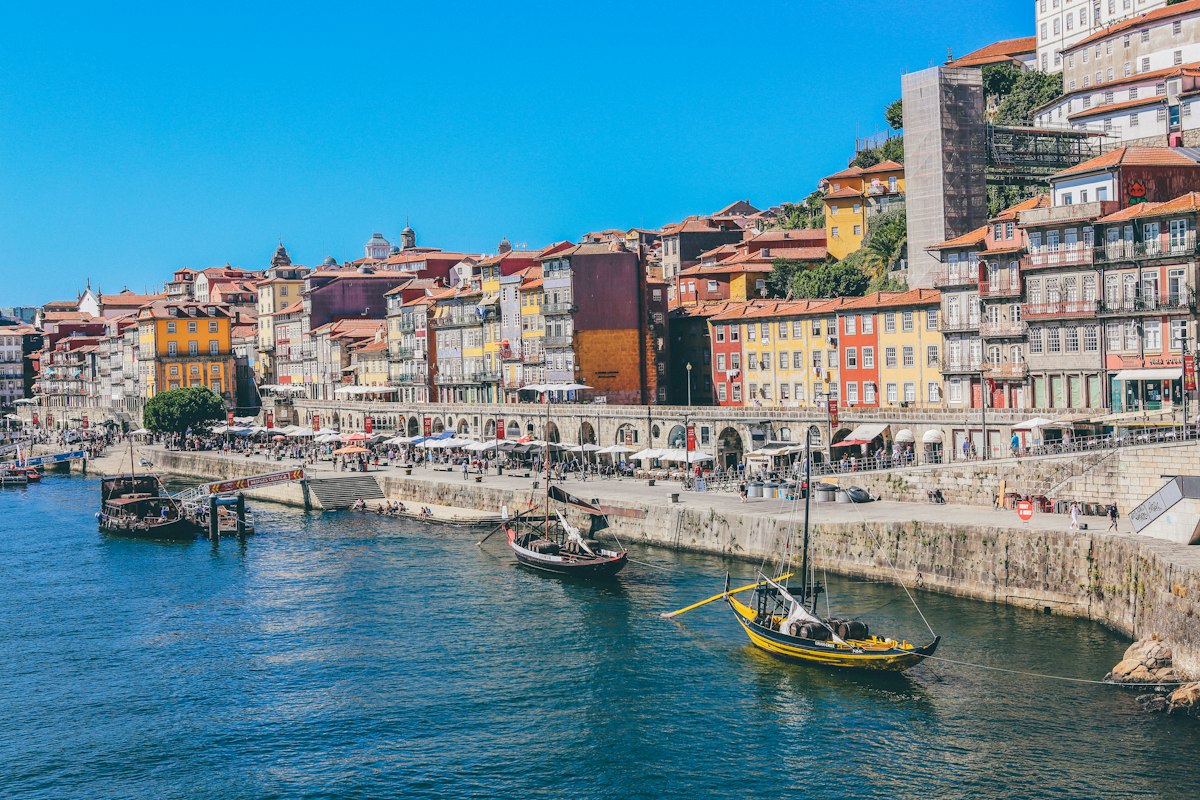
There is a moment, crossing the ancient Roman bridge that spans the Rio Gilão in the centre of Tavira, when the Algarve you thought you knew — the Algarve of cliff-top resort complexes and golf courses carved from limestone scrubland — simply ceases to exist. In its place stands a town of such quietly composed architectural beauty that first-time visitors frequently stop walking and stand still, trying to reconcile what they see with what they expected. Thirty-seven churches in a town of barely 15,000 inhabitants. Rooflines composed of the distinctive four-hipped telhados de tesoura — scissor roofs — that are Tavira's unique architectural signature, their terracotta tiles creating a warm geometry visible from the castle walls above. Palace facades decorated with azulejo panels that range from the geometric Moorish-influenced patterns of the sixteenth century to the narrative religious scenes of the Baroque, each panel a document of changing aesthetic sensibilities and persistent craftsmanship. And beneath it all, the river — tidal, unhurried, fringed by salt pans that have been worked continuously since Roman times — moving through the town with a presence that shapes everything from the quality of light to the rhythm of daily life.
The Architecture of Devotion
Tavira's extraordinary concentration of churches — a density that exceeds any town of comparable size in Portugal — is the architectural legacy of a fishing economy that generated wealth out of all proportion to the town's physical dimensions. From the fifteenth century through the seventeenth, Tavira's tuna fisheries, managed through an elaborate system of fixed nets called armações that intercepted the annual bluefin migration along the Algarve coast, produced revenues that rivalled those of much larger ports. This wealth was directed, with remarkable consistency, into ecclesiastical construction. Each fishing fleet, each merchant guild, each noble family sought to express its status and devotion through the commissioning of a church — not a chapel or a shrine but a fully articulated church, with carved altarpieces, gilded retábulos, and azulejo programmes that required the sustained engagement of Lisbon's best craftsmen. The result is a townscape in which religious architecture is not a punctuation mark but a continuous presence: the Igreja de Santiago with its Romanesque origins visible beneath Baroque additions; the Misericórdia with its Renaissance portal, one of the Algarve's finest; the Igreja do Carmo with its gilded interior whose density of carved and polychromed woodwork creates an almost hallucinatory optical environment.
The Salt and the Light
If the churches are Tavira's vertical heritage, the salt pans are its horizontal one. Extending along both banks of the Rio Gilão as it approaches the Ria Formosa lagoon system, Tavira's salinas form a geometric landscape of rectangular pools whose colours — silver, pink, ochre, and the impossible violet of concentrated brine — shift with the seasons and the angle of light. Salt production here predates written records. The Romans valued Tavira's salt for the production of garum, the fermented fish sauce that was the ancient world's most traded condiment. The Moors refined the pan system, introducing water-management techniques that increased yields and quality. And the Portuguese, inheriting this infrastructure, maintained it through centuries of changing economic conditions because Tavira's salt — hand-harvested, sun-dried, and naturally rich in minerals — consistently commanded premium prices in European markets. Today, the salinas are experiencing a renaissance. A new generation of producers, many of them drawn from outside the traditional salt-working families, is marketing Tavira's flor de sal — the delicate crystal crust that forms on the surface of evaporation pans during the hottest days — as a luxury culinary product that competes with Guérande and Maldon at the premium end of the artisan salt market.
The Ria Formosa Frontier
Tavira's position on the edge of the Ria Formosa — one of Europe's most ecologically significant coastal lagoon systems — gives the town a relationship with landscape that no inland Algarve settlement can match. The Ria Formosa extends for sixty kilometres along the coast, a dynamic system of barrier islands, tidal flats, salt marshes, and navigable channels that supports one of the highest concentrations of birdlife in the Western Palearctic. From Tavira, small boats cross the lagoon to the Ilha de Tavira — a barrier island whose Atlantic-facing beach, long and virtually undeveloped, offers a swimming experience that is the antithesis of the Algarve's crowded resort strands. The crossing itself — ten minutes through channels where wading birds feed in water so clear that the seagrass meadows below are visible in detail — functions as a decompression chamber between urban life and island stillness. Property along the Ria Formosa edge of Tavira has become increasingly sought after by buyers who understand that the lagoon is not merely a view but a living system whose daily transformations — the tidal rhythms, the seasonal bird migrations, the changing colours of the salt pans — provide a quality of visual engagement that static ocean panoramas cannot replicate.
The Quiet Luxury
Tavira's emergence as a luxury destination has been characterised by restraint rather than transformation. Unlike the western Algarve, where international investment has produced a landscape of gated communities and branded resort developments, Tavira has absorbed its growing affluence within existing structures. The most desirable addresses are not new builds but restored townhouses — palacetes whose facades, protected by conservation regulations, conceal interiors that have been carefully adapted for contemporary living while retaining original features: azulejo panels, carved stone doorframes, timber-beamed ceilings, and the generous proportions of rooms designed for a Mediterranean climate where shade and air circulation are architectural priorities. The boutique hotel movement has followed the same logic: Tavira's finest accommodation is found not in purpose-built resort structures but in converted historic buildings — a former convent, a palace, a merchant's townhouse — where the architecture provides what no amount of investment in a new building can buy: the accumulated patina of centuries. Restaurants in Tavira reflect this philosophy. The town's best tables are found in establishments where the food — grilled fish from the morning catch, cataplana cooked in copper vessels, lamb from the serra interior — is served with a simplicity that treats ingredients as the luxury and presentation as its servant. In Tavira, the quiet is the point.
The Enduring Bridge
The Roman bridge at Tavira's centre has been rebuilt, extended, and restored so many times over two millennia that archaeologists debate how much original fabric remains. But its function has never changed: it connects the two halves of the town, the fishing quarter and the mercantile quarter, the secular and the sacred, the everyday and the exceptional. Standing on it today, looking downriver toward the Ria Formosa as the late afternoon light turns the water to burnished gold, one understands why Tavira has resisted the pressures that have transformed much of the Algarve coast beyond recognition. The town's beauty is not fragile; it is structural. It is embedded in the geometry of the rooflines, in the rhythm of the azulejo panels, in the relationship between the built fabric and the water that runs through it. Tavira does not need to become something else to attract the discerning visitor. It needs only to remain what it is: a place where twenty centuries of continuous habitation have produced an environment of such layered, quiet, and entirely unpretentious beauty that to spend time within it is to be reminded of what architecture and landscape can achieve when they are given the rarest luxury of all — time enough to get it right.