Tomar: How Portugal's Templar City Became the Interior's Most Mystically Compelling Luxury Address
March 20, 2026 · 14 min read
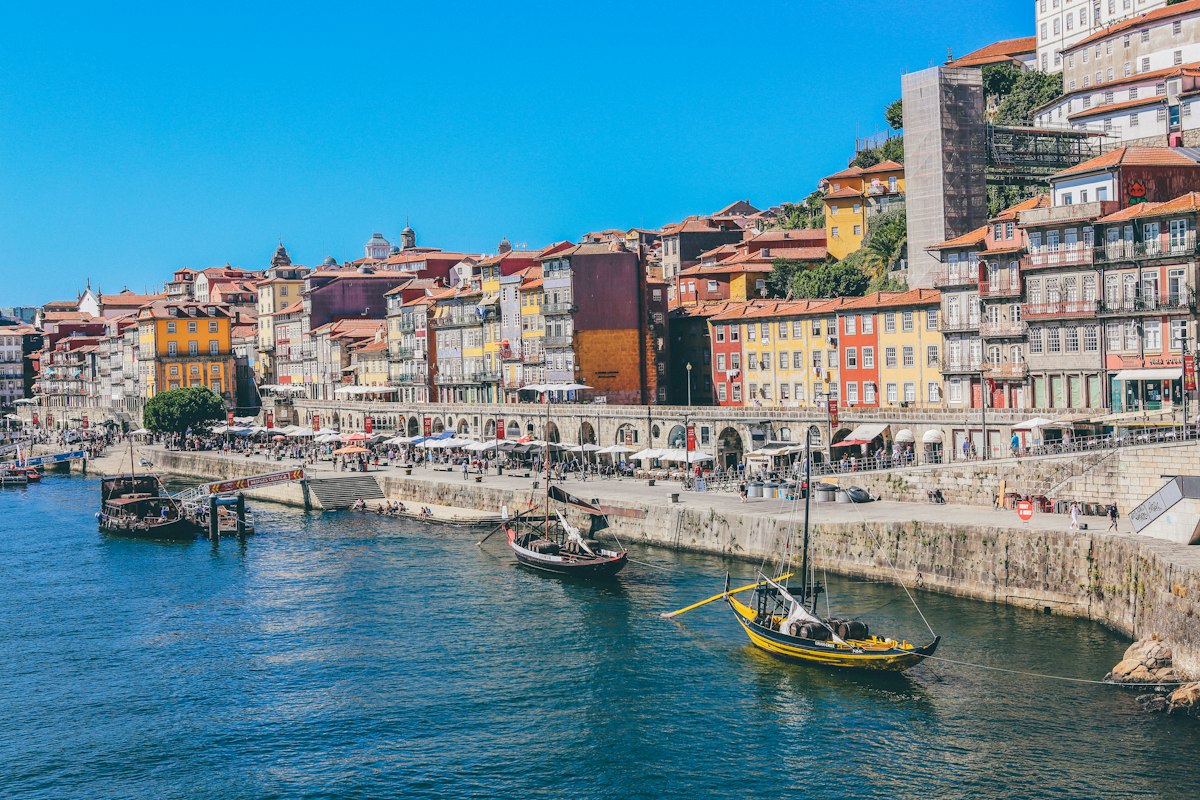
There are cities that reveal themselves immediately — their charm evident from the first plaza, the first café terrace, the first glimpse of water. And then there is Tomar, a city that withholds its deepest secrets behind seven centuries of accumulated mystery, where the greatest medieval military order in Christendom built its spiritual headquarters on a forested hilltop above the Nabão River, and where that inheritance now anchors one of Portugal's most quietly compelling luxury propositions. In a country where coastal properties dominate international attention, Tomar represents something rarer: interior luxury rooted not in beach proximity but in historical density, spiritual resonance, and architectural grandeur that predates the Age of Discoveries by two hundred years.
The Templar Inheritance
The Knights Templar arrived in Tomar in 1160, when Grand Master Gualdim Pais established the castle and the Charola — the sixteen-sided rotunda modeled on Jerusalem's Church of the Holy Sepulchre — as the order's Portuguese headquarters. When the Templars were dissolved in 1312, Portugal's King Dinis performed one of history's most elegant institutional manoeuvres: he simply renamed them the Order of Christ, transferred all assets, and continued operations under a new banner. The Convent of Christ that grew over the following centuries — a UNESCO World Heritage Site since 1983 — represents an unbroken continuum of power, faith, and architectural ambition spanning Romanesque, Gothic, Manueline, Renaissance, and Mannerist styles within a single compound.
This heritage does more than attract tourists. It establishes Tomar as a city where monumental architecture is not exceptional but ambient — where a walk to the bakery passes through streets whose proportions were established by medieval urban planners, where the central Praça da República is framed by a 15th-century church whose Manueline portal would be the centrepiece of any European capital. For the luxury buyer who has exhausted the charms of Lisbon's Chiado and the Algarve's cliff-top villas, Tomar offers something irreplaceable: a living relationship with deep history, calibrated to human scale.
The Nabão River Corridor
Tomar's luxury real estate market organises itself along the Nabão River, which bisects the city with a gentleness that has attracted settlement for millennia. The most coveted properties are the riverside quintas — historic estates with walled gardens, fruit orchards, and direct river access — that line the banks upstream from the medieval centre. These properties, typically ranging from €600,000 to €1.2 million for substantial renovated examples, offer the paradox that defines Portuguese interior luxury: estate-scale living at a fraction of coastal prices, in settings of genuine historical distinction.
The Mouchão Park — a river island transformed into public gardens in the 19th century — creates a green axis through the city centre that elevates the microclimate and the psychology of the surrounding streets. Properties overlooking the Mouchão command premiums of 20-30% not because of any rational calculation of green-space proximity, but because of what the view represents: a city that chose beauty over efficiency, that preserved an island of leisure in the heart of its commercial district, that understood — centuries before contemporary urbanism articulated the concept — that proximity to nature is not a luxury but a necessity.
The Festa dos Tabuleiros: Living Heritage as Value
Every four years, Tomar stages the Festa dos Tabuleiros — a procession of 600 women carrying towers of bread and flowers on their heads through streets decorated with millions of paper flowers. The festival, whose origins trace to the Holy Spirit cult introduced by Queen Isabel in the 14th century, transforms the entire city into a living artwork for a week. For the luxury property owner, the Festa represents something that no amount of capital can manufacture: authentic communal heritage, a tradition so deeply embedded in the city's identity that it structures the civic calendar, the social hierarchy, and the physical maintenance of the historic centre. Properties in the procession route's path — the Rua Serpa Pinto, the Praça da República, the Rua de São João — benefit from a four-yearly renovation cycle driven by civic pride rather than market forces.
The Renovation Renaissance
Tomar's property market has undergone a quiet transformation since 2020, driven by three converging forces. First, Portugal's digital nomad visa programme has introduced a cohort of location-independent professionals who value quality of life, fibre-optic connectivity, and cultural density over beachfront proximity. Second, the Lisbon-Porto real estate inflation has pushed savvy Portuguese buyers to discover interior cities where €400,000 buys a renovated 300-square-metre townhouse with garden — a proposition impossible within 100 kilometres of either capital. Third, and most subtly, the UNESCO designation has attracted a new generation of conservation-minded developers who understand that Tomar's architectural stock is not an obstacle to modernisation but a competitive advantage.
The result is a renovation ecosystem that balances preservation with contemporary comfort. Former convents become boutique hotels. 16th-century merchant houses are converted into apartments with underfloor heating, home automation, and rooftop terraces that frame the Convent of Christ against the evening sky. The best renovations — by firms like Souto de Moura's Porto office and a growing cohort of Lisbon practices seeking interior commissions — achieve a dialogue between old and new that is architecturally rigorous and emotionally resonant: exposed stone walls meeting polished concrete, medieval timber ceilings supporting contemporary lighting design, ancient courtyards reimagined as outdoor living rooms.
The Gastronomy of the Interior
Tomar's culinary identity reflects the Ribatejo region's position as Portugal's agricultural heartland. The city's restaurants serve a cuisine rooted in the river and the surrounding plains: lamprey and shad from the Nabão and Zêzere rivers, slow-cooked kid and lamb from the limestone uplands, bread soups thickened with egg and cilantro, and the region's distinctive queijadas — small cheese pastries whose recipe has remained unchanged since the 16th century. The Taverna Antiga, housed in a 17th-century building on the Rua Serpa Pinto, has become a destination for Lisbon food writers who recognise in its menu the last authentic expression of Ribatejo grandmothers' cooking. Restaurante Beira Rio, with its river terrace and wood-fired grill, offers the kind of unhurried, ingredient-driven dining that defines the Portuguese interior at its best.
For the luxury resident, Tomar's food culture offers something that cannot be replicated in Portugal's cosmopolitan centres: direct access to producers. The Saturday market along the Nabão brings small-scale farmers, cheesemakers, and olive oil producers within walking distance. The surrounding hills host estates producing some of the Tejo wine region's most compelling bottles — robust reds from Castelão and Trincadeira grapes, crisp whites from Fernão Pires — at prices that would be comic in the Douro or the Alentejo. This proximity to source is not merely convenient; it represents a relationship with landscape and season that is, for a growing cohort of ultra-high-net-worth individuals, the ultimate luxury.
The Strategic Calculus
Tomar's investment proposition rests on a convergence of structural advantages that are becoming increasingly difficult to find in Southern Europe. The city sits 130 kilometres north of Lisbon — close enough for a day trip, far enough to maintain its identity and its pricing independence. The A1 motorway provides 90-minute access to the capital; the planned high-speed rail link, if it follows the central corridor route currently under discussion, would reduce this to under 45 minutes. The Castelo de Bode reservoir, fifteen minutes east, offers 60 kilometres of pristine lakefront — a water body so vast and so underexploited that it represents perhaps the last significant freshwater luxury-estate frontier in Western Europe.
But the deepest strategic advantage is cultural. Tomar is not a city that can be replicated, franchised, or disrupted. Its value proposition — the Templar heritage, the UNESCO Convent, the river landscape, the festival tradition, the architectural stock — is embedded in seven centuries of accumulated history. No amount of capital can build a competitor. No development can dilute the supply. In a real estate market increasingly dominated by interchangeable luxury product — the same branded residences, the same infinity pools, the same concierge services — Tomar offers the rarest commodity of all: authenticity that cannot be manufactured, at prices that have not yet reflected its true value.
Portugal Latitudes
Premium intelligence on Portuguese luxury real estate, lifestyle, and investment.
Request Access →