Valença do Minho: How Portugal's Most Monumentally Fortified Border Town Became the Alto Minho's Most Strategically Commanding Luxury Address
April 1, 2026 · 12 min read
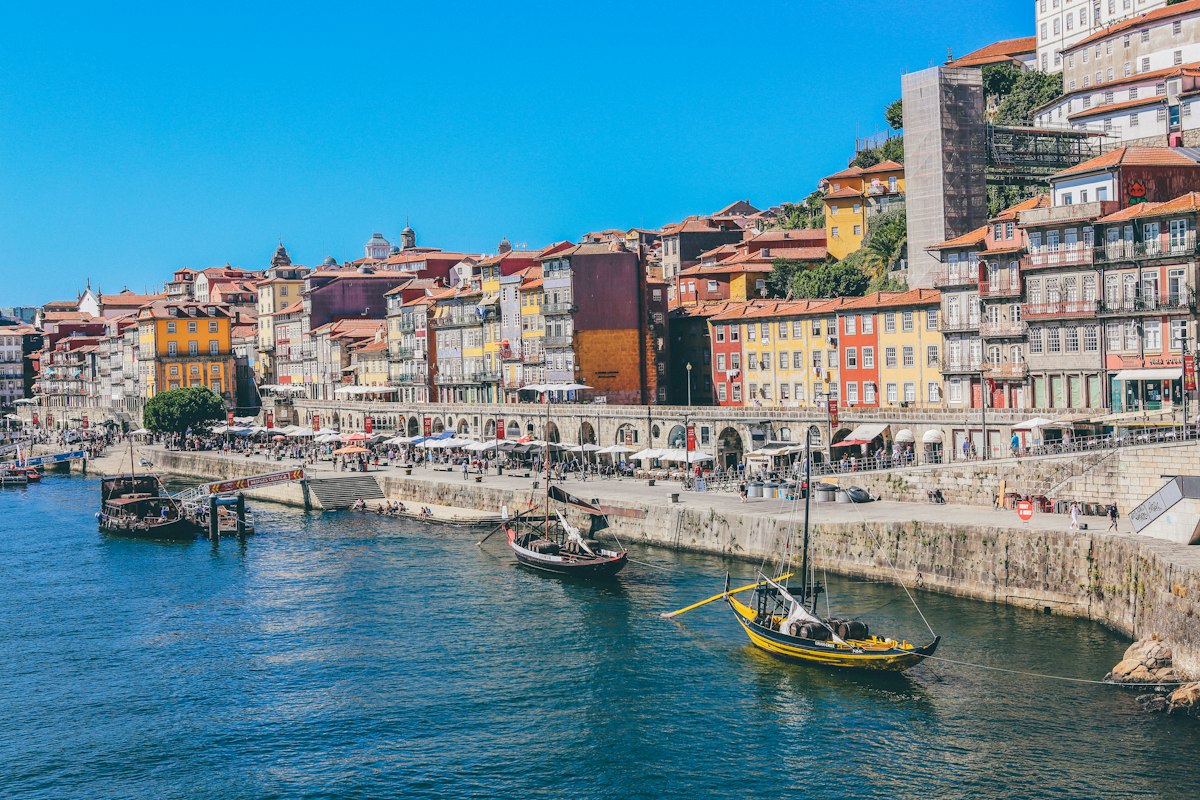
The first thing you understand about Valença is its position. Perched on a granite promontory above the River Minho — that languorous, green-banked waterway that has served as the border between Portugal and Spain since the twelfth century — the town commands views that explain everything about its history and its future. To the north, across the iron bridge designed by Gustave Eiffel's engineering firm, lies Tui and the ancient kingdom of Galicia. To the south, the terraced hillsides of the Alto Minho descend through vineyards of Alvarinho grapes toward the Atlantic. And enclosing the old town on all sides, rising in massive double walls of granite that took three centuries to complete, stands one of the most impressive military fortifications in Western Europe: a Vauban-influenced masterpiece of bastioned architecture that transforms the hilltop into a star-shaped citadel of such geometric perfection that it appears, from the air, less like a town than a theorem in stone.
The Architecture of Paranoia
Valença's fortifications are not a single construction but a palimpsest of defensive anxiety spanning from the medieval period to the eighteenth century. The earliest walls date to the reign of Sancho I, who recognised the hilltop's strategic value in the interminable border conflicts between Portugal and the various Spanish kingdoms. But the fortress as it exists today is substantially the product of the seventeenth and eighteenth centuries — the period when the Portuguese Restoration War (1640–1668) and subsequent conflicts with Spain demanded military architecture of a sophistication that went far beyond medieval walls and towers. Military engineers, drawing on the principles established by the French master Vauban, redesigned Valença as a double fortress: two interconnected but independently defensible citadels (the Praça Forte and the Coroada) joined by a fortified passage, each surrounded by its own system of bastions, ravelins, and covered ways. The result is a defensive complex that could absorb an assault on one citadel while the other remained intact — a redundancy of protection that reflects the existential seriousness with which the Portuguese viewed their northern border. Walking the ramparts today, through the deep-set gates and along the bastioned walls where cannon once commanded every approach, you feel the weight of three centuries of strategic calculation compressed into granite.
Life Within the Walls
What makes Valença unusual among European fortress towns is that the citadel never became a museum piece. Within the massive walls, life continues with an intensity that the fortress's designers might have appreciated. The narrow streets of the old town — paved in granite, lined with buildings that press against the fortification walls with the confident familiarity of centuries — house a permanent population, a cathedral (the Igreja de Santa Maria dos Anjos, with its Romanesque origins visible beneath Baroque additions), and a commercial culture that has evolved directly from Valença's historic role as a border trading post. The weekly market, which fills the citadel's open spaces with vendors selling linen, pottery, handicrafts, and the region's celebrated smoked hams, draws visitors from both sides of the border in a continuation of the cross-frontier commerce that has defined Valença's economy since long before European integration rendered the border a formality. On market days, the fortress feels exactly as it should: alive, crowded, purposeful — a place where military architecture serves civilian life rather than constraining it.
The Vinho Verde Terroir
The countryside surrounding Valença produces some of the finest expressions of Alvarinho — the grape variety that has elevated the Minho from rustic wine country to one of Europe's most exciting white wine regions. The sub-region of Monção e Melgaço, which includes the vineyards visible from Valença's ramparts, is the historic heartland of Alvarinho production: a microclimate where the Atlantic influence is tempered by the river valley's protection, producing grapes of unusual aromatic complexity and mineral precision. The best producers — Soalheiro, Anselmo Mendes, Palácio da Brejoeira — craft wines that rival the finest Albariños of Rías Baixas across the border in Galicia, sharing the same grape variety (the spelling differs, the vine does not) but expressing a distinctly Portuguese character: slightly lower alcohol, more pronounced acidity, and a saline minerality that reflects the granite soils of the Minho. Wine tourism in this region remains refreshingly uncommercialized compared to the Douro — visits to producers are intimate, tasting rooms are often the family kitchen, and the winemaker who pours your glass is frequently the same person who pruned the vines. For visitors based in Valença, the wine landscape is accessible within minutes, and the combination of fortress architecture and cutting-edge viticulture creates a luxury proposition that no other region in Portugal can quite replicate.
The Camino Connection
Valença occupies a position of particular significance on the Caminho Português — the Portuguese route of the Camino de Santiago that runs from Lisbon (or, more commonly, from Porto) to Santiago de Compostela. The town is the last major stop in Portugal before pilgrims cross the bridge into Spain, and this liminal status — the threshold between one country and another, between the familiar and the foreign — gives Valença a spiritual weight that transcends its military history. The pilgrims who pass through the fortress gates, their backpacks and walking sticks marking them as members of a tradition that dates to the medieval period, bring an energy to the citadel that is fundamentally different from ordinary tourism: purposeful, contemplative, and connected to a network of routes and waypoints that spans the entire Iberian Peninsula. Several boutique accommodations within the fortress have positioned themselves specifically for the Camino market — offering the comfort and quality that modern pilgrims increasingly expect while maintaining respect for the journey's spiritual dimension. The combination of fortress architecture, pilgrimage culture, and border-town cosmopolitanism gives Valença a character that is genuinely unique: a place where military history, spiritual journey, and cross-cultural exchange coexist within walls designed to keep cultures apart.
The Pousada and the Future
The transformation of Valença into a luxury destination received its most significant catalyst with the establishment of the Pousada de Valença — one of Portugal's historic pousada network of heritage hotels, installed within the fortress walls in a conversion that preserved the building's military character while introducing comforts that the garrison commanders of previous centuries could not have imagined. The pousada model — state-initiated, heritage-focused, quality-controlled — represents a distinctly Portuguese approach to luxury hospitality: not the construction of new buildings but the intelligent adaptation of existing ones, with the architecture's history treated as a feature rather than an obstacle. The views from the pousada's terrace, across the Minho to Spain, compress centuries of border history into a single panorama: the river, the bridge, the Galician hills, and the fortress walls that frame everything with the geometric precision of minds that understood, with lethal clarity, the strategic value of high ground. Valença's future as a luxury address rests on this same understanding — that elevation, in every sense, is the town's defining asset. The fortress that was built to command territory now commands attention, and the strategic position that once determined military outcomes now determines real estate values. The granite walls endure. Only the nature of the battles they enclose has changed.