Vila Nova de Milfontes: How the Alentejo Coast's River-Mouth Village Became Portugal's Most Wildly Beautiful Luxury Address
March 27, 2026 · 13 min read
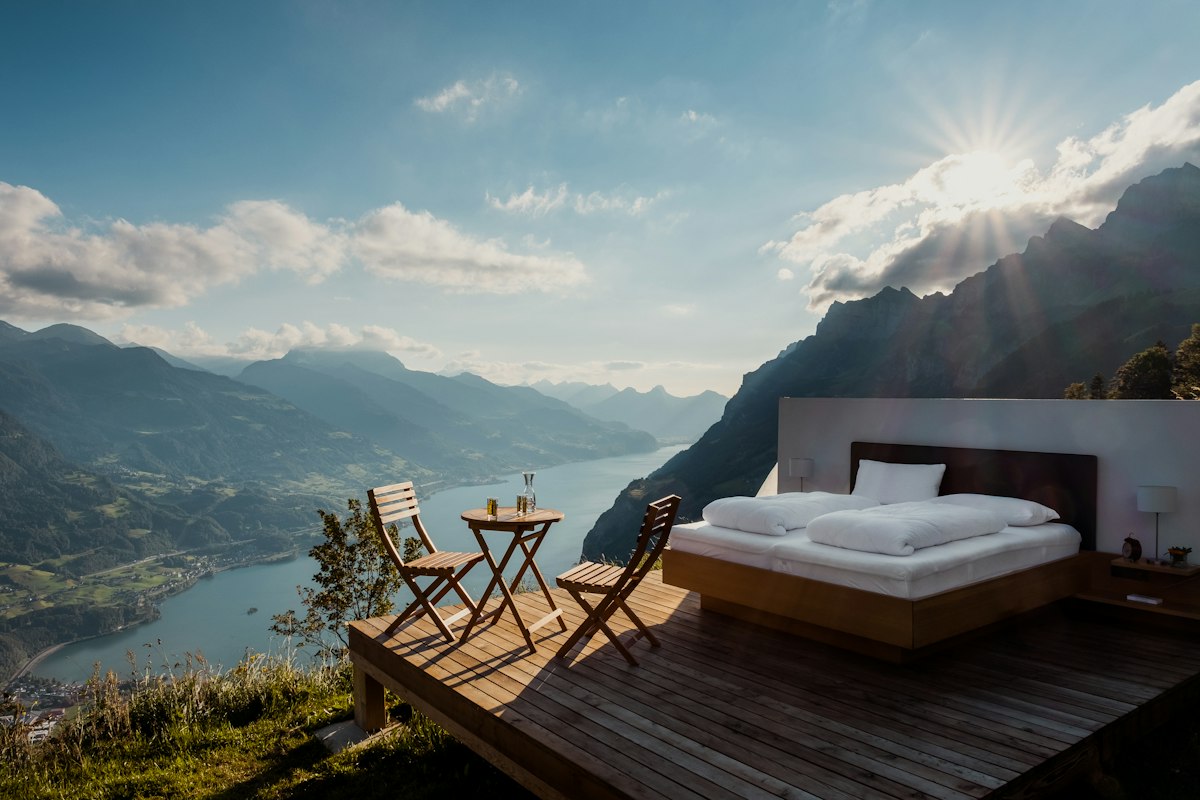
The Alentejo coast is Portugal's last secret — and Vila Nova de Milfontes is its most perfectly situated revelation. Where the River Mira completes its 145-kilometre journey from the interior hills to the Atlantic Ocean, curving in a final, languid meander past a sixteenth-century fortress and a crescent of golden sand, this whitewashed village of approximately 5,000 residents occupies a position of such natural extravagance that the mind must make a conscious effort to remember it is located in one of the least developed stretches of coastline in Western Europe. No high-rises. No marina. No golf resort. Just the river, the ocean, the cliffs, the storks nesting on the fortress walls, and a quality of light — the famously crystalline Alentejo light, unfiltered by moisture or pollution — that has been drawing painters, writers, and now a growing community of design-conscious property buyers who have recognised in Milfontes something increasingly rare: a place of genuine beauty that has not yet been compromised by its own discovery.
The Vicentine Coast: Europe's Last Wild Shore
Vila Nova de Milfontes sits within the Parque Natural do Sudoeste Alentejano e Costa Vicentina — a natural park that extends for approximately 110 kilometres along Portugal's southwestern coast, from Porto Covo in the north to Burgau in the Algarve, protecting one of the most ecologically important and scenically dramatic stretches of European shoreline. The park, established in 1995, imposes strict building restrictions that have prevented the coastal development that has transformed the Algarve to the south and much of the Mediterranean to the east. The result is a coastline that looks — and to a remarkable degree functions — as it has for centuries: a succession of cliff-backed beaches, rocky headlands, dune systems, and river estuaries that supports a biodiversity of European significance.
The white stork colonies that nest on the sea cliffs are unique in the world: storks are typically inland, freshwater birds, and their adoption of the Vicentine coast's maritime cliffs as nesting sites — a behaviour observed nowhere else — has made the park an ornithological pilgrimage destination. The peregrine falcon, the Bonelli's eagle, the otter (in the River Mira and its tributaries), and a marine environment that supports bottlenose dolphins and, seasonally, minke whales offshore, create an ecological density that the region's sparse human population has done little to diminish.
The Fort: Where River Meets Ocean
The Forte do Mar, built in the late sixteenth century during the reign of Philip II of Spain (Philip I of Portugal) to defend the Mira estuary from the North African pirates who regularly raided the Alentejo coast, occupies the village's most dramatic position: a rocky promontory at the exact point where river becomes ocean. The fort, a compact star-shaped structure of whitewashed stone, is now a small guesthouse — one of the most atmospherically situated in Portugal — where a handful of rooms look out over the river mouth, the Atlantic, and the long, empty beach of Furnas to the south.
The juxtaposition of military architecture and natural beauty is characteristic of the Alentejo coast, where centuries of vulnerability to maritime attack produced a necklace of defensive structures — forts, watchtowers, walled villages — that now function as scenic monuments rather than strategic assets. The fort at Milfontes, with its cannons pointed at an ocean from which no enemy has appeared for three centuries, achieves a quality of peaceful obsolescence that is one of the village's most powerful aesthetic experiences: the fortress as garden wall, the embrasure as window frame, the defensive battlement as sunset-viewing platform.
The Beaches: A Taxonomy of Sand
Milfontes's beaches — and there are many, distributed along several kilometres of coastline and river frontage — offer a range of experiences that collectively constitute one of the most complete beach propositions in Portugal. The Praia de Franquia, on the river side of the village, provides calm, warm water ideal for families and swimmers discomfited by Atlantic waves — the Mira, heated by its passage through the sun-baked Alentejo interior, achieves temperatures several degrees above the ocean. The Praia do Farol, directly below the fort, faces the open Atlantic and offers the more dramatic seascape — surf, spray, the theatre of waves breaking on the harbour wall — while maintaining a sheltered southern section where the cliff provides wind protection.
South of the village, accessible by a coastal path of considerable beauty, the Praia do Malhão and the Praia das Furnas extend for several kilometres along an uninterrupted coastline of dunes, cliffs, and golden sand. These are the beaches where the Vicentine coast reveals its essential character: vast, empty, backed by nothing but the natural park's protected landscape, their scale and solitude creating an experience of oceanic encounter that the more developed beaches of the Algarve, for all their warmth and convenience, can never replicate. On a September afternoon at Malhão, with the Atlantic stretching to the horizon and not another soul in sight, the distinction between luxury and wildness disappears entirely.
The Alentejo Table: Slow Food Before the Term Existed
The Alentejo has been practising slow food since long before the movement acquired a name and a manifesto. The cuisine of the region — characterised by bread-based soups (açordas), slow-cooked pork (the black Alentejo pig, porco preto, is one of Europe's great heritage breeds), wild herbs, and the thick-crusted bread that serves as both plate and ingredient — is fundamentally a cuisine of the land, shaped by the vast, wheat-growing plains of the interior and by the poverty that compelled generations of Alentejano cooks to extract maximum flavour from minimal resources.
At Milfontes, this interior tradition meets the ocean. The percebes (goose barnacles) — harvested at extreme personal risk from the wave-battered rocks of the coast, and commanding prices that reflect both their extraordinary flavour and the danger of their collection — are the region's most celebrated marine product. The cataplana de marisco (a seafood stew cooked in a clam-shaped copper pot), the arroz de lingueirão (razor clam rice), and the simply grilled robalo (sea bass) and dourada (sea bream) represent the ocean's contribution to a table that, in its combination of terrestrial and maritime traditions, achieves a completeness that few Portuguese regional cuisines can match.
The wines of the Alentejo — the region has emerged over the past two decades as Portugal's most dynamic wine-producing area, its reds achieving a richness and complexity that has attracted international critical attention — provide the liquid complement. At Milfontes, the local producers are small, the distribution is limited, and the experience of drinking a reserva from Herdade do Esporão or Monte da Ravasqueira on a terrace overlooking the Mira estuary at sunset is one of those wine moments that no tasting room, however well-appointed, can replicate.
The Rota Vicentina: Walking as Luxury
The Rota Vicentina — a network of walking trails that extends for approximately 450 kilometres along the Alentejo and Algarve coasts — passes through Milfontes and offers what may be the finest coastal hiking in southern Europe. The Fishermen's Trail (Trilho dos Pescadores), which follows the cliff-top paths that fishermen have used for centuries to access their coastal fishing spots, provides a walking experience of extraordinary beauty and variety: cliff-top sections with vertiginous views of the ocean below, descents to hidden beaches accessible only on foot, crossings of headlands where the wind carries the salt and iodine scent of the Atlantic, and passages through aromatic scrubland where the cistus, rosemary, and wild lavender create a fragrance that is the olfactory signature of the Vicentine coast.
The Historical Way (Caminho Histórico), which follows inland routes through the cork oak forests and whitewashed villages of the Alentejo interior, offers a complementary experience: quieter, more contemplative, populated by the sounds of birdsong and distant cattle bells rather than waves and wind. Together, the two trails create a walking network that allows the visitor to experience the full range of Alentejo landscapes — coast and interior, wild and cultivated, maritime and pastoral — at the pace that this landscape demands: slowly, attentively, with frequent pauses to look, listen, and breathe.
Getting There & Practical Intelligence
Lisbon Portela airport is the international gateway, with Milfontes reached in approximately two hours and thirty minutes by car via the A2 motorway south and the IC1/regional roads west. There is no rail connection; bus services operate from Lisbon's Sete Rios terminal but are infrequent. Faro airport, in the Algarve, is approximately two hours to the south. A car is essential for exploring the surrounding coast and interior.
The optimal season extends from May to October, with July and August the warmest and most animated months (the village's population swells with Portuguese summer visitors who have been coming here for generations). The shoulder seasons — May-June and September-October — offer the best balance: warm enough for beach days, quiet enough for solitude, and with the particular quality of autumn light that makes the Alentejo coast, in September, one of the most beautiful landscapes in southern Europe. Winter brings storms, empty beaches, dramatic Atlantic weather, and prices that make the region accessible to visitors for whom summer's modest premium represented any consideration at all.
Published by Portugal Latitudes · Part of the Latitudes Media network